Where can you actually drive a kei truck once it is imported and titled? That is a road-use question, and it is narrower than the broader questions of federal import eligibility or state registration.
This article explains the kind of road restrictions buyers need to investigate. It is not a 50-state legal database, and it cannot replace the local rule that applies to your specific vehicle and route.
Road Use Is a Separate Decision
A kei truck can clear a federal import process and still face different state classification, title, insurance, or local-road rules. Think in layers: federal eligibility, state registration, then the road, speed, and area restrictions that apply where you plan to drive.
Use our federal eligibility guide and state research guide before using this page to investigate road limits.
Colorado Changes the Conversation
Colorado recently passed a law that gives kei trucks a clearer legal path forward.
Key change: Colorado has passed legislation recognizing kei vehicles as motor vehicles under state law.
The law takes effect on July 1, 2027.
Registration applications may not be available until January 1, 2028,
while Colorado updates DMV and emissions systems.
This is a meaningful shift. Before this law, registration in Colorado could be inconsistent. Some owners were denied outright, and emissions testing often created roadblocks. The new framework makes ownership more predictable for buyers in the state.
What This Actually Means
Before the new law:
- Registration outcomes varied by county
- Some owners were denied without clear reasoning
- Emissions testing caused frequent issues
After the new law:
- Ownership becomes more predictable
- Clear classification reduces DMV confusion
- The path from import to road use is significantly easier
Key Rules You Still Need to Know
This is not a full green light. Even in Colorado, real limits apply.
Colorado requirements:
- Must meet the federal 25-year import rule
- No driving on roads above 55 mph
- No highway use
- Must pass emissions testing
Practical, yes — but still limited. These restrictions are typical of how most U.S. states handle kei truck classification.
Rules vary significantly by state and change over time. Always confirm current requirements with your local DMV before purchasing or registering a kei truck.
Why Kei Trucks Are Growing in the U.S.
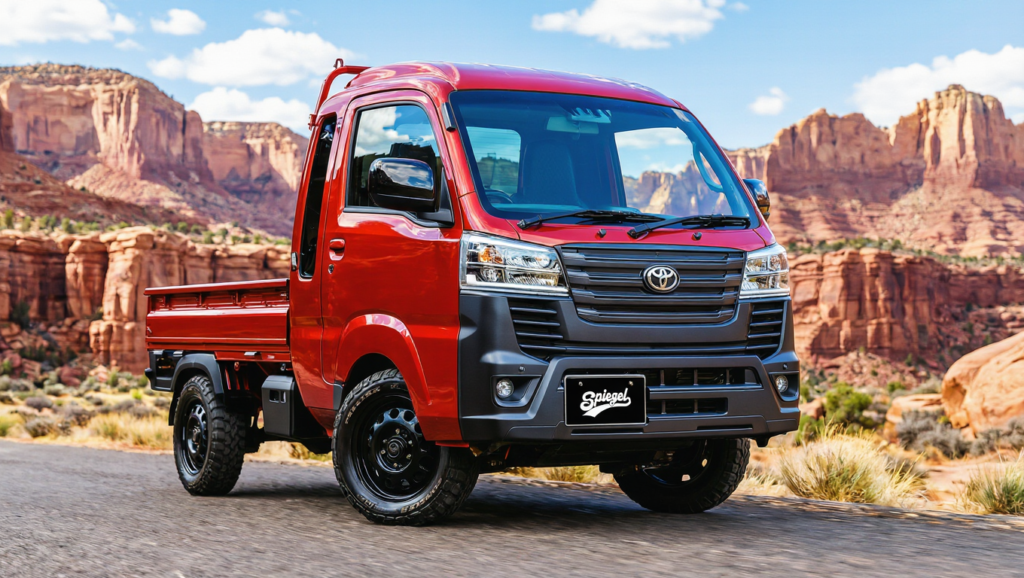
Demand is rising fast. According to NBC News, more than 7,500 kei trucks were imported to the U.S. from Japan in 2023 — a 300% increase compared to 2018, when only around 2,500 units were imported. (Source: NBC News, 2024)
Why the appeal is so strong:
- Lower upfront cost compared to full-size pickups
- Smaller, easier-to-maneuver footprint
- Simple, low-cost maintenance
- Real-world usability for everyday tasks
Kei trucks solve a fundamentally different problem than full-size American trucks. They’re not competing on size or horsepower — they’re competing on practicality.
What Buyers Actually Want
Most U.S. kei truck buyers aren’t looking for:
- Massive towing capacity
- Highway dominance
- Oversized truck bodies
They want a simple, practical tool that fits real-world tasks — and that’s exactly what kei trucks deliver.
Who Kei Trucks Work Best For
Kei trucks are ideal for:
- Farms and ranches
- Landscaping operations
- Property maintenance
- Small businesses with predictable routes
- Hobby and recreational use
The common thread is local, predictable use. That’s the environment where kei trucks excel.
Who Should Avoid Kei Trucks
Kei trucks are not ideal for:
- Daily highway driving
- Long-distance travel
- Heavy commercial towing
Expectations matter. A kei truck that’s perfect for a 10-acre farm may be the wrong choice for a 100-mile daily commute.
This Is Not a 50-State Solution
One major point worth understanding: laws vary significantly from state to state.
Even if federal import is straightforward under the 25-year rule, state laws ultimately decide how the vehicle can actually be used on public roads.
Examples of the patchwork:
- Colorado: Clearer rules effective July 2027
- Texas: State-level protections added in recent years
- Other states: Rules remain unclear or restrictive
The U.S. kei truck legal landscape is a patchwork — not a single national framework.
For a deeper breakdown of state-by-state classification and required equipment, see the Step-by-Step Guide to Making a Kei Truck Street Legal in the USA.

What This Means for Buyers
The biggest benefit of clearer laws is one word: confidence.
When rules are clear, several things happen at once:
- Buyers feel safer making a purchase
- Dealers can sell with less legal uncertainty
- The overall market grows faster
Colorado’s new law is a meaningful signal that the segment is maturing.
Could Prices Go Up?
Possibly. As demand increases, several factors push prices upward:
- Good-condition trucks become scarcer
- Japanese export demand rises across multiple markets
- Older, low-mileage examples command premium pricing
The cheapest era for U.S. kei truck buyers may not last forever. For buyers on the fence, this is worth considering.
The Bigger Market Shift
Kei trucks are evolving in U.S. perception — from “weird import” to “recognized specialty vehicle.”
That’s a significant change. It reflects years of growing visibility, community support, and now, formal legal recognition in states like Colorado.
FAQ
How far can a kei truck legally drive in the U.S.? It depends entirely on your state. Most states limit kei trucks to roads under 35–55 mph and restrict highway use. Always confirm with your local DMV before relying on a kei truck for specific routes.
Is Colorado the only state with clear kei truck laws? No. Several states have addressed kei truck classification, including Texas. However, Colorado’s 2027 law is one of the most explicit recent examples of formal recognition.
Can I drive a kei truck on the highway?
Highway use depends on state law and vehicle classification.
Many states restrict kei trucks to lower-speed roads.
Kei trucks are typically classified for roads with speed limits of 35–55 mph.
Always confirm current requirements with your state DMV before using a kei truck on highways.
What happens if my state hasn’t addressed kei truck laws? Classification often defaults to existing categories like Low-Speed Vehicle (LSV), farm vehicle, or off-road vehicle. The exact treatment varies by county and DMV office.
Will more states pass kei truck legislation? Likely yes. As demand grows, more states are addressing the legal gap. Colorado’s framework may become a model for other states in the coming years.
Final Takeaway
So, how far can a kei truck go in the U.S.?
As far as your state allows.
Not every road, not every state, not every use case — but the path is getting clearer year by year. With states like Colorado taking the lead, the future of kei truck ownership in America is shifting from uncertain to genuinely promising.
Disclaimer: This guide is for general information only and is not legal advice. Kei truck regulations vary significantly by state and change over time. Always confirm current requirements with your local DMV before purchasing, registering, or operating a kei truck on public roads.
Next Steps
Suzuki Tests Electric Kei Truck on Farms — Real-World Results
How to Make a Kei Truck Street Legal in the USA (Step-by-Step Guide)
How Kei Trucks Are Imported to the U.S. (And Why They’re Becoming Popular)
Mitsubishi Minicab Truck 2026 Update: What’s New
Daihatsu Hijet Truck Update: Smarter Safety & Changes
According to NBC News, more than 7,500 kei trucks were imported to the U.S.
from Japan in 2023 — a 300% increase compared to 2018, when only around
2,500 units were imported.
Sources:
- NBC News (2024) — “Kei trucks are gaining popularity in the U.S. for
their small size and low prices” - CNN Business (July 2024) — “The new hot truck comes from Japan and
looks like a toy” - Colorado General Assembly — HB25-1281 “Title, Register & Drive Kei Vehicles”
- NHTSA — Importation and Certification FAQs
- USA.gov — State Motor Vehicle Services
Last verified against the linked sources: July 2026
Written by KeiTruckHub Editorial Desk Editorial review: Kei Truck Kingdom editorial team Last updated: July 19, 2026