Kei trucks look cheap at first.
But in Japan, finding a good one isn’t always easy — or cheap.
Many U.S. buyers assume they can import a kei truck for a few thousand dollars and call it a day.
However, the reality of Japan’s used kei truck market is very different.
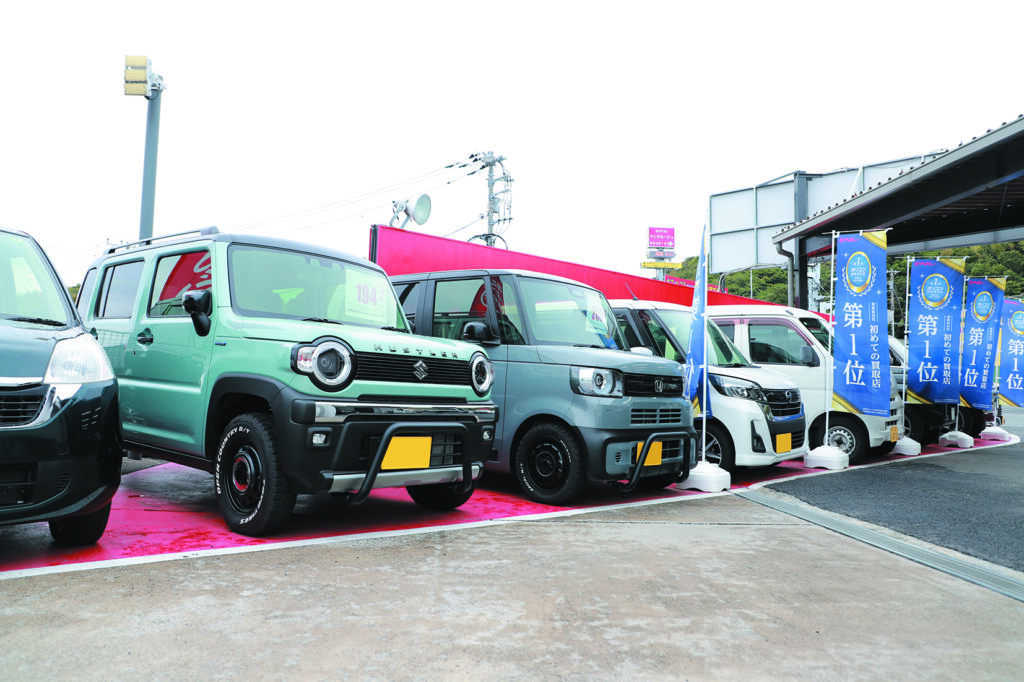
A typical used kei vehicle dealership in Japan — the kind of local shop where kei trucks are traded alongside other kei cars.
Why Good Kei Trucks Are Getting Harder to Find
In Japan, kei trucks have traditionally been work vehicles.
- Used on farms
- Used for construction
- Used for daily business
That means many used trucks have been worked hard.
Small-town Japanese vehicle shops like this one form the backbone of the kei vehicle market — including kei trucks.
At the same time:
- Demand is increasing
- Export interest is growing
- Clean vehicles are limited
As a result, good-condition kei trucks are becoming harder to find.
Real Kei Truck Prices in Japan
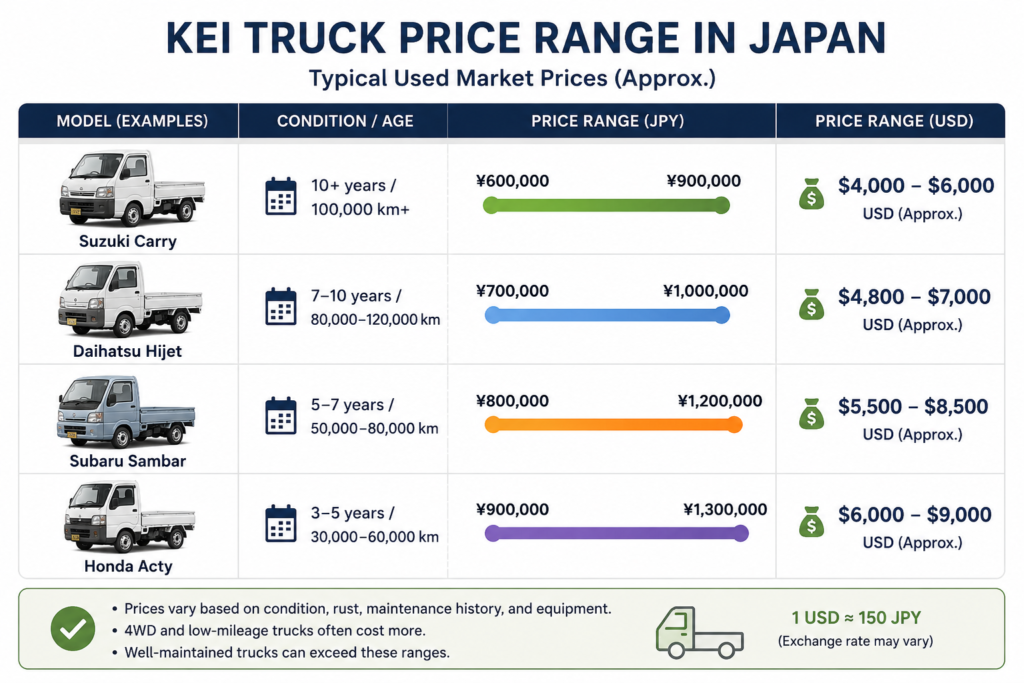
For an older, usable kei truck in Japan, the figures below are best treated as a planning range — not a guaranteed purchase price.
Typical price range:
- ¥600,000 to ¥1,000,000 (≈ $4,000–$7,000 USD)
- Higher for newer or cleaner models
Clean, low-mileage trucks can exceed this range.
Even older models often hold value better than expected.
Prices vary widely by model, age, condition, and seller. The USD figures above are rounded examples using ¥150 per $1. Check the current rate before budgeting; even a modest currency move matters once freight and fees are included.
Why “Cheap” Kei Trucks Can Cost More Later
One of the biggest misconceptions: the cheapest truck is not the best deal.
In reality:
- Cheap trucks often have hidden issues
- Repairs can add up quickly
- Rust is common
A slightly more expensive, well-maintained truck is usually the smarter choice.
What Actually Affects Kei Truck Value
Price is influenced by more than just mileage.
Key factors:
- Condition (especially rust)
- Maintenance history
- Model and trim
- 2WD vs 4WD
- Transmission type (manual vs automatic)
Condition matters more than specs.
Choosing the Right Kei Truck for Your Needs
Different models offer different strengths:
- Suzuki Carry — reliable and widely available
- Daihatsu Hijet — balanced and beginner-friendly
- Subaru Sambar — unique but less common
- Honda Acty — enthusiast favorite
But your use matters more than the model.
Example:
- Farm or work use — durability matters
- City driving — size and ease of use
- Weekend fun — personality and uniqueness
Choose based on how you plan to use it.
The Resale Advantage Most Buyers Miss
Kei trucks are not just cheap — they can also hold value.
Why?
- Strong demand in export markets
- 25-year import rule in the U.S.
- Limited supply of clean vehicles
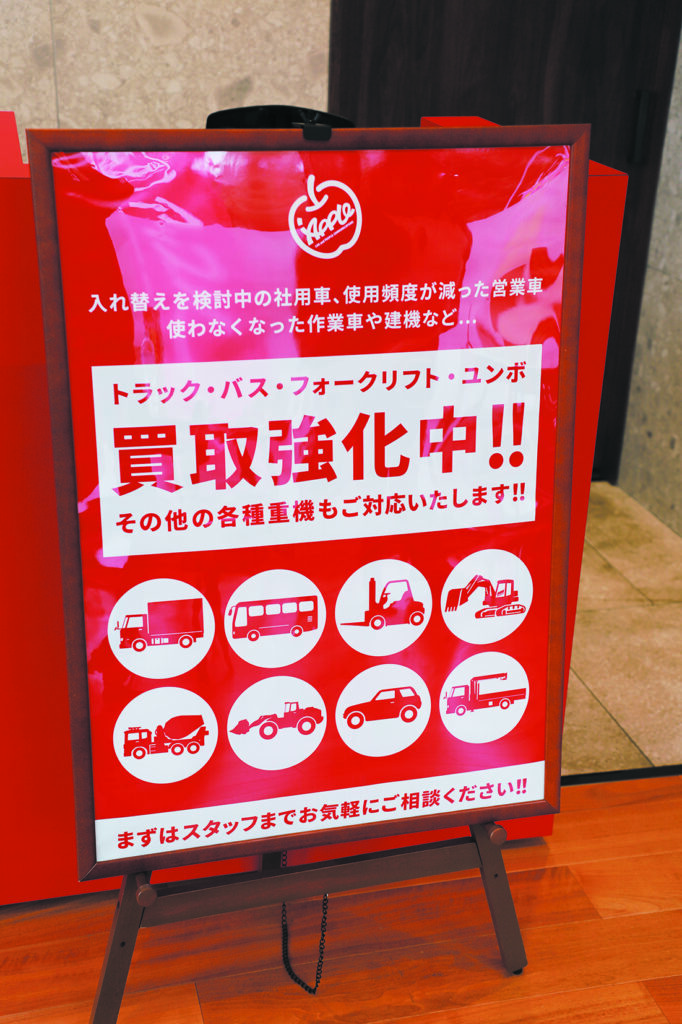
Buyback posters like this are common at Japanese dealerships — a clear sign of strong domestic demand for used commercial and kei vehicles.
A clean, correctly documented truck may retain value, but resale is never guaranteed. Treat resale as a bonus — not as the math that makes the purchase work.
Why Mileage Isn’t Always the Best Indicator
Unlike passenger cars, kei trucks often don’t accumulate extremely high mileage.
However:
- Short-distance work use
- Frequent stop-and-go driving
- Heavy-duty tasks
These can wear a vehicle faster than mileage suggests.
Always evaluate condition, not just numbers.
A Smarter Way to Buy a Kei Truck
If you’re new, keep it simple.
Beginner strategy:
- Set a realistic budget
- Prioritize condition over price
- Choose common models (Carry or Hijet)
- Check parts availability
- Confirm import and registration rules
This approach reduces risk significantly.
Why This Matters for U.S. Buyers
For American buyers, this market reality is important.
Importing a kei truck is not just about finding the cheapest option. It’s about finding the right balance between price, condition, and usability.
Understanding Japan’s used market gives you a major advantage — you avoid costly mistakes before they happen.
The Japan Price Is Not Your Landed Cost
The price on a Japanese listing is only the first number in the deal. Before you call a truck affordable, build a landed-cost estimate that includes the full trip from the seller’s lot to your driveway.
- Pre-purchase inspection or auction/export agent fees
- Inland transport to the Japanese port
- Export paperwork, ocean freight, and marine insurance
- U.S. port, terminal, customs broker, and storage charges
- Import duty, state title and registration costs, and domestic transport
U.S. Customs and Border Protection notes that a vehicle’s 25-year eligibility runs from its date of manufacture, not simply its model year. CBP also lists a 25% duty rate for trucks, although the final classification and amount should be confirmed with a licensed customs broker for your shipment. A low Japanese asking price can stop looking low once these costs are added.
A 10-Minute Price Check Before You Wire Money
Before sending a deposit, ask the seller or exporter for answers you can keep in writing:
- What is the exact chassis code and manufacture month?
- Are underbody, frame-rail, cab-corner, and bed-mount photos included?
- Can the seller provide a cold-start video and show the engine idling?
- Do 4WD, differential lock, lights, heater, and transmission operate correctly?
- Is there maintenance history, an auction sheet, or prior inspection documentation?
- Which charges are included in the quoted price, and which are still estimated?
- Can the exporter provide a written landed-cost worksheet for your U.S. port?
If a seller will not document the condition or the fees, pause. Another truck will come along. Recovering money after an overseas vehicle purchase goes wrong is much harder than walking away before the transfer.
KeiTruckHub’s Take
When the truck is roughly 6,000 miles away, the bargain you cannot inspect is usually the expensive one. We would rather pay more for honest underbody photos, a proper cold-start video, and clear paperwork than save a few hundred dollars on a fresh coat of paint.
That is not the exciting answer, but it is the one we would give a friend. Start with condition and documentation. Let the model, color, and accessories come second.
Final Takeaway
Kei trucks are affordable — but not always “cheap.”
The best trucks:
- Cost more upfront
- Save money long-term
- Provide a better ownership experience
In the end: a smart purchase beats a cheap one every time.
Sources and Date Notes
- Goo-net: Daihatsu Hijet Truck used-vehicle listings — current Japanese retail asking-price reference
- Bank of Japan: Daily Foreign Exchange Rates — verify the current USD/JPY rate before budgeting
- U.S. Customs and Border Protection: Importing classic or antique vehicles — 25-year eligibility and documentation
- U.S. Customs and Border Protection: Importing a Motor Vehicle — duty and import-process reference
- Daihatsu: 2026 Hijet Truck pricing release — new-vehicle domestic price benchmark
Last source check: July 23, 2026. Japanese listing prices change daily. The range in this article is a planning reference drawn from retail listings and KeiTruckHub’s licensed Japan-side source material, not a quote or appraisal.
Disclaimer
This article is general information, not legal, customs, tax, mechanical, or investment advice. Vehicle condition, exchange rates, freight, duty, and state registration rules can change the final cost substantially. Confirm the truck’s manufacture date and condition, obtain written quotes, and consult the appropriate U.S. agencies and qualified professionals before purchasing or importing.
Related Reading
Thinking about importing a kei truck?
Read: How to Import a Kei Truck to the U.S. (Step-by-Step Guide)
Want to avoid common mistakes?
Read: Common Kei Truck Import Mistakes: What U.S. Buyers Get Wrong
Not sure which model to choose?
Read: Best Kei Trucks for Beginners
Written by KeiTruckHub Editorial Desk
Editorial review: Kei Truck Kingdom editorial team
Last updated: July 9, 2026