Daihatsu hasn’t changed the formula — but it has made the Hijet Truck smarter where it counts.
This latest update focuses on something every owner actually cares about: safety, usability, and everyday convenience.
At a glance, the changes may seem minor. But for a truck designed to work daily in tight spaces, rural roads, and mixed traffic, these updates matter more than they appear.
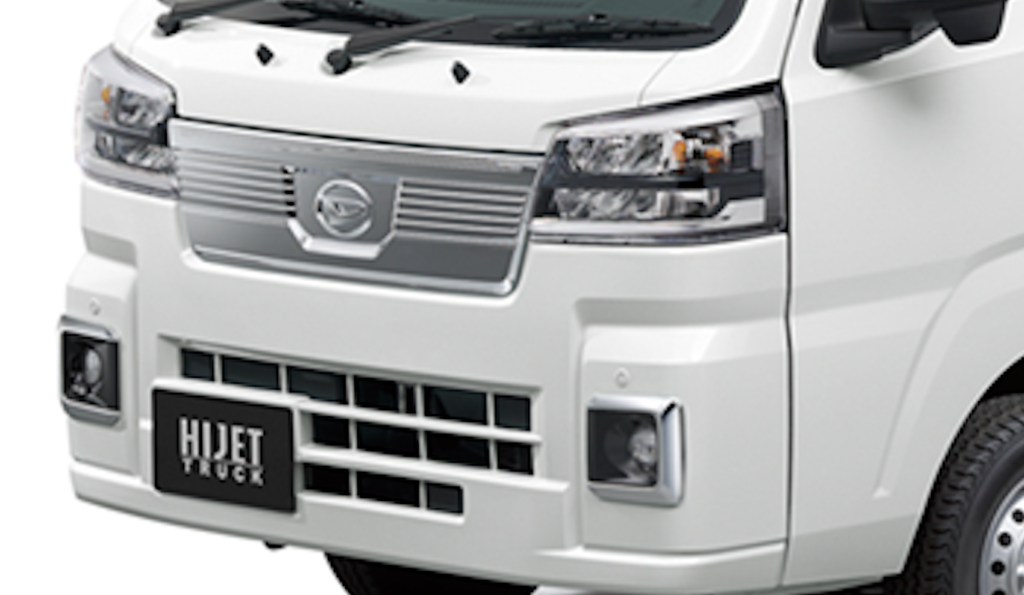
Why the Hijet Truck Still Holds Its Position
The current Hijet Truck has been around since 2014. Instead of chasing major redesigns, Daihatsu has taken a different approach: continuous small improvements.
Key milestones include:
- 2018 — Smart Assist safety system introduced
- 2021 — Major update and CVT adoption
- 2025 — Expanded safety detection
This step-by-step evolution explains why the Hijet still dominates its segment. It’s not flashy — but it works.
What Actually Changed in This Update
The biggest upgrade is in Smart Assist, Daihatsu’s safety system.
New detection features include:
- Crossing bicycles
- Oncoming vehicles during right turns
- Pedestrians entering intersections
These are real-world accident scenarios — not theoretical ones. That’s important, because kei trucks are often used in:
- Narrow roads
- Farm access routes
- Busy mixed-traffic environments
In each of these environments, the new detection features can make a measurable difference in daily safety.
Small Upgrades That Improve Daily Use
Higher trims (Extra grade) now include:
- LED headlights
- Adaptive Driving Beam (ADB)
- Side-view lamps
These upgrades may sound simple, but they directly impact usability — especially for:
- Early morning work
- Night driving
- Rural environments with poor lighting
For owners who use their Hijet Truck before dawn or after dusk, these lighting improvements are among the most welcome changes.
The Mechanical Side Remains Reliable
Under the hood, nothing dramatic has changed — and that’s intentional.
Engine:
- 660cc KF-series
- Output: 46 PS
- Torque: 60 Nm
Not powerful by U.S. standards, but perfectly matched to the job.
Transmission options:
- CVT (replacing the older automatic)
- 5-speed manual
Drivetrain:
- 2WD (RWD)
- Selectable 4WD (3 modes)
- Hi-Lo mode (on some manual 4WD models)
This is where the Hijet quietly stands out. The mechanical layout is purpose-built for real work, not for marketing brochures.
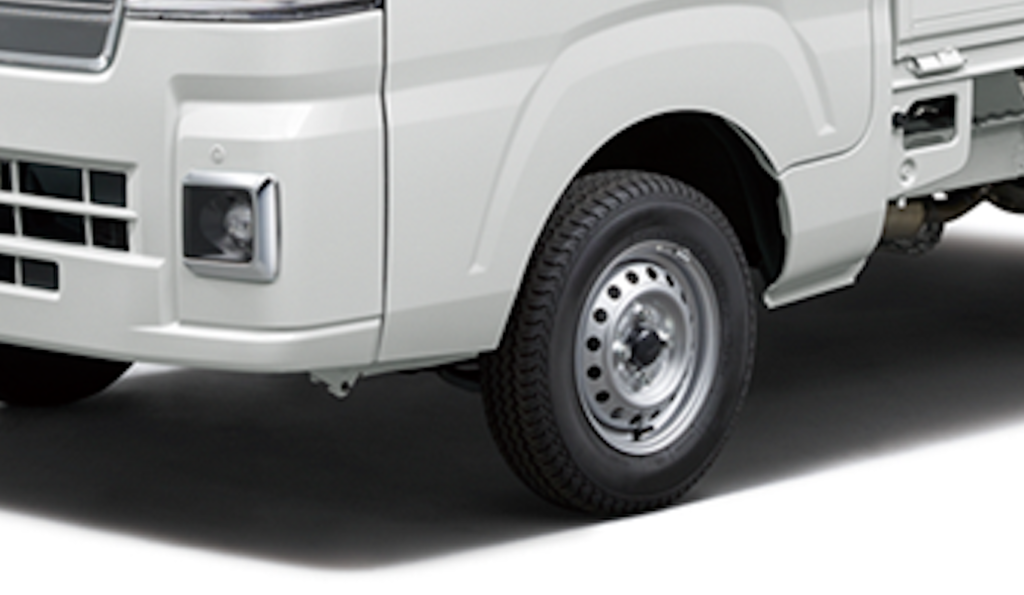
Built for Real Work Environments
The compact dimensions remain unchanged:
- Length: 3,395 mm (133.7 in)
- Width: 1,475 mm (58.1 in)
- Height: 1,780–1,885 mm (70.1–74.2 in)
But versatility is where the Hijet really shines.
Available variants include:
- Standard Truck
- Jumbo (extended cabin)
- Dump
- Panel Van
It’s still one of the most flexible kei platforms available — a single chassis that adapts to dozens of different work roles.
Why Owners Still Choose the Hijet
User feedback highlights something important: the Hijet doesn’t try to impress — it solves problems.
Owners consistently value:
- Reliability over years of daily use
- Low running costs
- Practical, no-nonsense usability
Even when they say they’d like more power, they still stick with it. That says everything about how the Hijet fits into real working life.
Why This Matters for U.S. Readers
From a U.S. perspective, this update isn’t about immediate import. It’s about direction.
The current DA16T-era Hijet Truck is far too new for the federal 25-year rule. But what this update shows is something more important: kei trucks are evolving — even if slowly.
The vehicles that will become importable in the late 2040s and 2050s are being shaped right now by updates like this one.
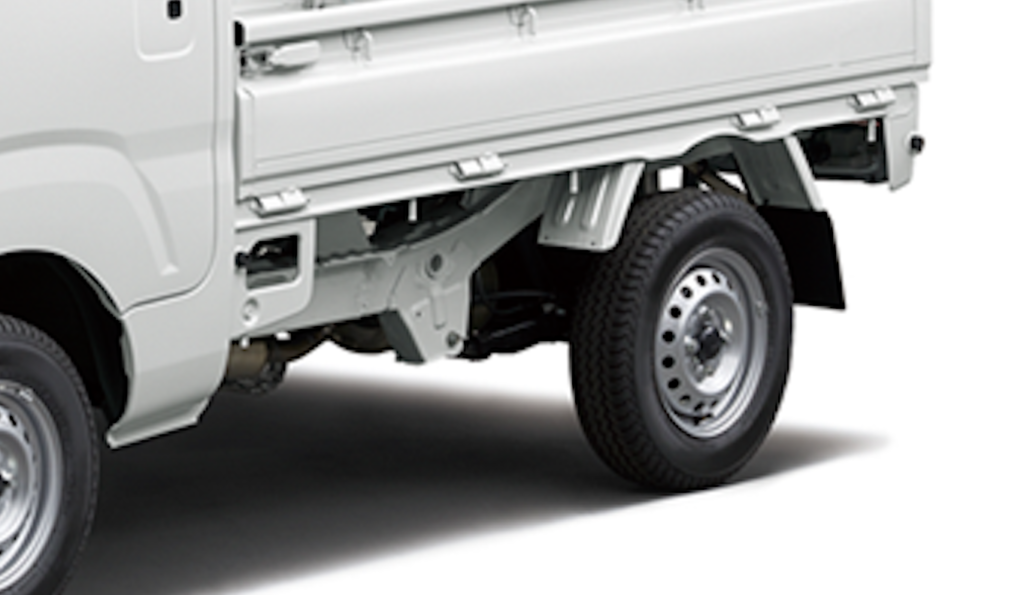
The Bigger Shift
In North America, kei trucks are often seen as:
- Cheap imports
- Simple work vehicles
- Utility-first machines
But in Japan, they’re becoming something more: refined, purpose-built tools with real user-focused improvements. That difference matters when you think about what the kei truck segment will look like a decade from now.
For more context on how the broader segment is changing, see the Mitsubishi Minicab Truck 2026 Update and Suzuki Tests Electric Kei Truck on Farms.
What Buyers Should Take Away
If you’re considering a kei truck, don’t just look at price or age.
Look at:
- Safety systems and what they actually detect
- Usability upgrades that affect daily driving
- Real-world functionality across different work environments
That’s where the Hijet stands out — and that’s where the current generation is setting expectations for the next two decades of kei truck imports.
FAQ
When can I import the updated Daihatsu Hijet Truck to the U.S.? Not for many years. The current DA16T-era Hijet is far too new to qualify for the federal 25-year import rule. Owners interested in importing a Hijet today should focus on pre-2001 models that are already eligible.
What’s the most important change in this update? The expansion of Daihatsu’s Smart Assist safety system. New detection for crossing bicycles, oncoming vehicles during right turns, and pedestrians at intersections addresses real-world accident scenarios.
Does the engine or drivetrain change in this update? No. The 660cc KF-series engine and existing transmission options remain unchanged. Daihatsu focused this update on safety and usability rather than mechanical components.
Is the Hijet Truck still considered the leader in the kei truck segment? Yes. The Hijet continues to dominate the Japanese kei truck market thanks to its reliability, flexibility, and steady stream of practical improvements like this one.
Final Thought
The Hijet Truck isn’t trying to reinvent itself. It’s trying to get better at what it already does — and that’s exactly why it continues to matter.
For Japanese buyers, this update reinforces why the Hijet remains the default choice. For U.S. readers, it’s a preview of how the next generation of importable kei trucks will be shaped by smarter safety and better everyday usability.
Next Steps
- Mitsubishi Minicab Truck 2026 Update: What’s New
- Suzuki Tests Electric Kei Truck on Farms — Real-World Results
- How Kei Trucks Are Imported to the U.S. (And Why They’re Becoming Popular)
- Best Kei Truck Interior & Exterior Upgrades Guide
- Why Complete Kei Truck Builds Are Becoming Popular
Disclaimer
Safety equipment and availability vary by grade, production date, and Japanese-market specification. Driver-assistance systems do not replace attentive driving, and a Japanese safety package does not establish compliance with U.S. federal standards or state registration rules. Confirm the exact vehicle specification and current import requirements before purchase.
Sources and Verification
- Daihatsu — Hijet Truck official model information
- Daihatsu — Hijet Truck Smart Assist safety information
- Daihatsu — February 2025 Hijet Truck specification update
- Editorial archive: Magazine Daichi / Kei Truck Kingdom (licensed source material).
Sources checked: July 24, 2026.
Written by KeiTruckHub Editorial Desk Editorial review: Kei Truck Kingdom editorial team Last updated: June 11, 2026