Suzuki has begun real-world testing of an electric kei truck with farmers in Japan.
This isn’t a concept reveal or a press event. It’s an actual field trial — and the results will shape what the next generation of kei trucks looks like.
For U.S. readers watching the kei truck market mature, this matters more than it might seem at first.
Why This Test Matters
For years, electric kei trucks have been mostly concepts and prototypes. Now, Suzuki is doing something different: putting an electric kei truck into actual farm work.
The test began in February 2026 and runs for about one year across multiple regions in Japan.
This is not about specs on paper. It’s about real usability — whether an electric kei truck can handle the kinds of jobs farmers actually do every day.
What Suzuki Is Testing
Suzuki is working directly with farmers to evaluate:
- Daily work performance
- Charging routines
- Battery usage under varied conditions
- Real-world reliability
This is a field test, not a product launch.
In some cases, the truck powers homes through Vehicle-to-Home (V2H) systems. In others, homes charge the truck. The vehicle is being tested as both transportation and a portable energy tool — a dual role that makes more sense in rural environments than in cities.
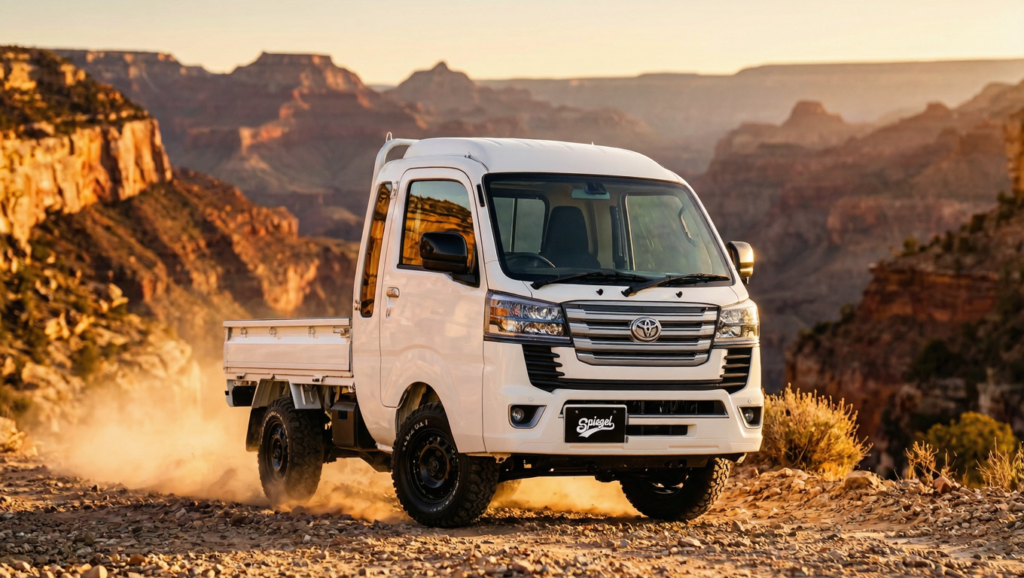
Why This Matters for U.S. Kei Truck Fans
For North American readers, this isn’t about immediate imports. It’s about where kei trucks are heading.
Most kei trucks in the U.S. today are:
- Older gasoline models
- Imported under the federal 25-year rule
But this test shows a different future — electric, quiet, and energy-connected mini trucks. The vehicles that become eligible for U.S. import in the 2050s could look very different from what’s available today.
The Bigger EV Context: Suzuki’s e Every
Suzuki already sells an electric kei van called the e Every, which gives a preview of the technology likely to appear in an electric kei truck.
Key specs:
- 36.6 kWh battery
- 257 km (160 mile) WLTC range
- Starting price: ¥3,146,000 (approx. USD $21,000)
- Exchange rate as of November 2025. Pricing applies to the Japanese domestic market.
The e Every shows that Suzuki is serious about kei-segment EVs. The electric kei truck currently being tested is the logical next step.
What This Means for Buyers
This isn’t a buying signal yet. It’s an early-stage indicator.
If you’re waiting for an electric kei truck, this test will help define which problems get solved first:
- Charging infrastructure access
- Battery range under load
- Payload limits compared to gasoline models
- Total cost of ownership versus traditional kei trucks
These are the questions that will determine whether electric kei trucks become mainstream — or stay niche.
Where Electric Kei Trucks Make Sense
Based on the structure of this trial, EV kei trucks appear best suited to:
- Farms with predictable daily routes
- Facilities and industrial campuses
- Campgrounds and rural lodging operations
- Local service fleets
These environments share three traits:
- Short, predictable routes
- Regular, controlled use
- Access to consistent charging
That’s exactly the profile where current EV technology works best.
Where They Still Struggle
Electric kei trucks may not yet suit:
- Long-distance highway driving
- Heavy-duty continuous hauling
- All-day work without charging access
At least, not yet. These are the limits Suzuki’s trial is designed to measure.
Why Real-World Testing Is Critical
Specs alone don’t tell the full story. What matters is whether the truck can actually handle the work.
Suzuki is testing:
- Vehicle uptime across long work cycles
- Performance through seasonal conditions
- Real charging habits and infrastructure use
- Operator feedback after months of daily use
That’s what will define success — not battery capacity or peak output numbers.

Safety Still Matters
EV technology isn’t the whole picture. Modern kei trucks, whether gasoline or electric, are expected to deliver:
- Collision mitigation braking
- Pedestrian and cyclist detection
- Easy operation for non-specialist drivers
Buyers care about usability and safety as much as drivetrain technology. The most successful electric kei truck will be the one that gets both right.
If you want to see how this trend connects to the broader Japanese market, see the Mitsubishi Minicab Truck 2026 Update — another example of how kei trucks are evolving rapidly in their home market.
The Bigger Shift in Kei Trucks
This trial signals a much larger change in the segment.
In the past: Kei trucks were viewed primarily as cheap work tools — simple, durable, and disposable.
Now: Kei trucks are evolving into something new:
- Electric
- Connected
- Energy-capable
- Multi-purpose
That’s a fundamentally different category from what most American buyers picture when they hear “kei truck.”
FAQ
When will electric kei trucks be available in the U.S.? Not for many years. New kei trucks aren’t sold directly in the U.S. — they enter the market through the 25-year import rule. An electric kei truck launching in the late 2020s wouldn’t be importable until the 2050s.
Can the electric kei truck power a home? Yes. Part of Suzuki’s trial includes Vehicle-to-Home (V2H) capability, where the truck can supply electricity to a home during outages or peak demand periods.
Is the test vehicle for sale? No. It’s a research prototype used in the field trial, not a production vehicle. Pricing and availability haven’t been announced.
How does the electric kei truck compare to gasoline models? The trial is specifically designed to answer that question. Early indications suggest electric versions work well for short-route, predictable use — but may struggle with long-distance or heavy continuous hauling.
Final Takeaway
Suzuki’s electric kei truck test answers a better question.
Not “Can we build it?” — but “Does it actually work?”
If the answer is yes, electric kei trucks could reshape the entire kei truck segment. If not, gasoline kei trucks will remain dominant much longer than EV advocates expect.
Either way, this is the moment the conversation changes. And for U.S. buyers paying attention, it’s a preview of what’s coming over the next quarter-century of kei truck imports.
Next Steps
- Mitsubishi Minicab Truck 2026 Update: What’s New
- How Kei Trucks Are Imported to the U.S. (And Why They’re Becoming Popular)
- Best Kei Truck Interior & Exterior Upgrades Guide
- Best Kei Truck Styling Parts That Make a Difference
- Why Complete Kei Truck Builds Are Becoming Popular
Disclaimer
This article covers a field trial, not a production vehicle or sales announcement. Range, payload, charging time, V2H capability, battery durability, and commercial availability may differ in any future model. Do not use prototype results to plan a purchase or electrical installation; confirm current Suzuki specifications, grid-interconnection rules, and qualified installer requirements.
Source: Suzuki Motor Corporation official press release (February 2026)
Photo credit: Magazine Daichi
Written by KeiTruckHub Editorial Desk Editorial review: Kei Truck Kingdom editorial team Last updated: June 11, 2026