
When we think of environmentally friendly vehicles, hybrids and EVs usually come to mind first. But there’s another powerful way to reduce environmental impact that often gets overlooked: making the vehicle itself smaller.
Kei trucks represent this idea perfectly. In this article, we explore how these compact vehicles contribute to sustainability — and why “smaller” can actually be smarter.
Rethinking What “Eco-Friendly” Really Means
In discussions about climate change, technical improvements like better fuel efficiency or longer EV range often take center stage. But there’s a more fundamental question we rarely ask:
Do we actually need vehicles this large?
Kei trucks answer this question through real-world use. They prove that smaller vehicles can still deliver the performance required for daily work and transportation — without the environmental footprint of full-size pickups.
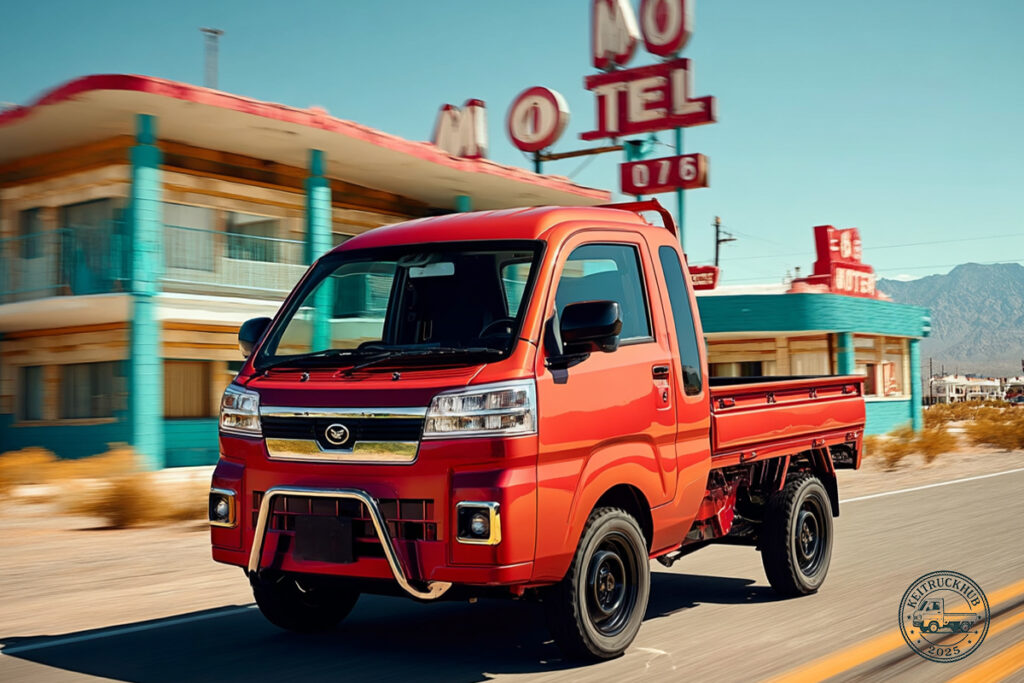
Smaller Vehicles, Smaller Footprint at Production
From a manufacturing perspective, vehicle size matters more than most people realize.
Larger vehicles require more materials — steel, aluminum, plastics, and rubber. Extracting, refining, and processing these materials consumes significant energy and generates substantial CO₂ emissions before the vehicle ever turns its wheels.
Because kei trucks are smaller and lighter, they require fewer resources from the very beginning. This reduces environmental impact across the entire production cycle.
The weight difference between a kei truck and a full-size pickup can be substantial. Choosing the minimum size necessary for the job directly leads to lower emissions throughout the vehicle’s lifecycle.
Better Efficiency in Daily Operation
In everyday operation, kei trucks are also highly efficient. While smaller size alone doesn’t guarantee sustainability, a lighter vehicle performing the same task will naturally consume less energy.
This is especially true in urban areas and short-distance logistics, where full-size trucks often carry loads far below their capacity. In these cases, kei trucks offer a much more efficient solution — and Japanese professionals have trusted them for decades for exactly this reason.
For real-world numbers, most kei trucks deliver 40–50 MPG — significantly better than any full-size American pickup. For context, see Why Kei Trucks Are Booming in America: 5 Key Reasons.
Longevity: The Hidden Environmental Advantage
From an environmental perspective, how long a vehicle lasts is just as important as how efficient it is.
Kei trucks are built for longevity. With proper maintenance, many can run for 10–20 years or more. Even after their first lifecycle in Japan, well-maintained units are often exported overseas and continue working on farms, construction sites, and campuses around the world.
This long lifespan reduces the need for new vehicle production, lowering overall CO₂ emissions and resource consumption over time. In this sense, kei trucks aren’t just efficient — they’re genuinely sustainable.
For more on why these vehicles endure so well, see Why Kei Trucks Matter: Japan’s Small Workhorse Explained.

Supporting Local, Community-Based Economies
Kei trucks also support local, community-based economies in ways that larger vehicles can’t match.
Instead of relying on large-scale logistics networks, they’re often used by small businesses, farmers, and independent service providers to operate within their neighborhoods. This reduces long-distance transportation and strengthens local connections.
What kei trucks enable isn’t just mobility — it’s commerce with a human face.
Honest Limitations
Of course, kei trucks aren’t without challenges.
Older diesel models can contribute to emissions and noise, especially in densely populated areas. Improper use — such as overloading or aggressive driving — can also increase environmental impact.
This highlights an important point: sustainability depends not only on the vehicle itself, but on how it’s used. A kei truck operated thoughtfully is far more sustainable than the same vehicle used carelessly.
The Electric Future of Kei Trucks
In recent years, electrification has begun to change the landscape for kei trucks.
Electric kei trucks are particularly well-suited for short-distance, predictable routes such as urban deliveries. When paired with renewable energy sources, they can significantly reduce emissions and contribute to low-impact logistics systems.
Imagine a small electric kei truck quietly operating within a city, powered by solar energy and serving local businesses. This represents a practical, scalable model for sustainable transportation.
For a closer look at where this is heading, see Suzuki Tests Electric Kei Truck on Farms — Real-World Results.
A Different Way to Think About Mobility
Ultimately, the environmental value of kei trucks goes beyond numbers. It reflects a simple but powerful idea:
Choose no more than what you need.
Rather than asking how much performance we can add, kei trucks challenge us to rethink size, purpose, and efficiency. It’s not about replacing all large trucks — it’s about using the right vehicle for the right job.
In that sense, kei trucks represent a balanced approach to mobility, where practicality and sustainability work together rather than against each other.
Ecology with a Human Face
Above all, kei trucks represent ecology with a human face.
This isn’t about distant power plants or abstract CO₂ reduction numbers. It’s about real people — farmers, contractors, and small business owners using compact trucks efficiently in their daily lives.
Environmental impact isn’t solved by a single technology breakthrough. It’s solved by the accumulation of everyday choices. In that sense, choosing a kei truck and using it well is a small but genuinely meaningful step toward sustainability.
A Real-World Example
To make this concrete, imagine a small construction company operating in a suburban area.
Instead of using a large 3-ton truck for every task, they switch to a kei truck for short-distance, frequent trips. The larger truck is only used when truly necessary.
The result:
- Less fuel consumption
- Fewer idle runs
- Reduced overall emissions
- No loss of productivity
When we expand this idea beyond individual vehicles, kei trucks become part of a larger system.
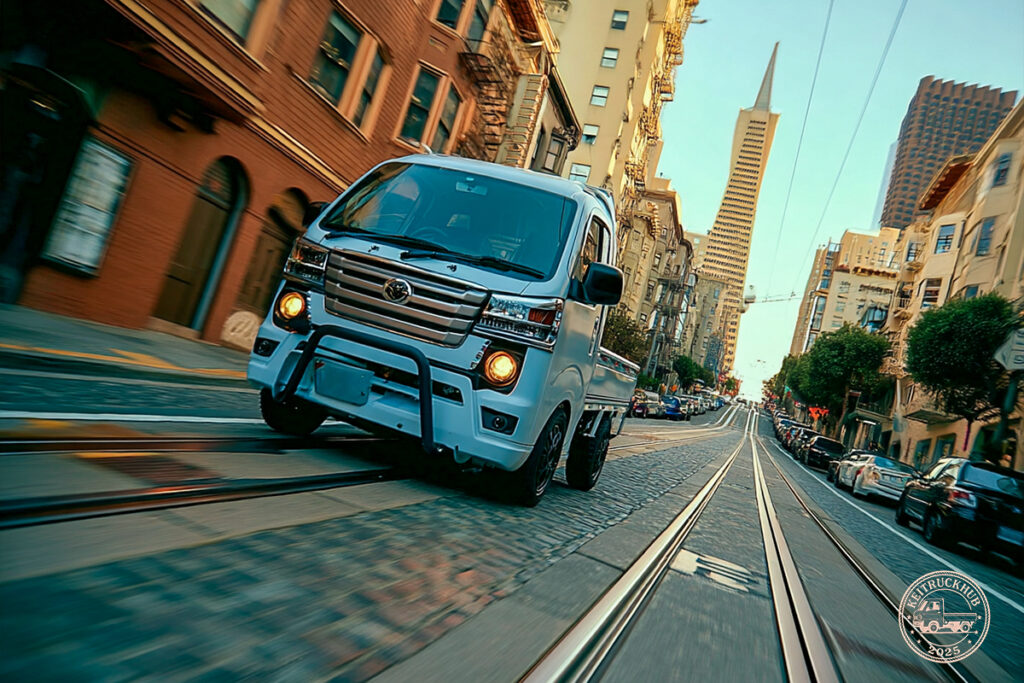
Part of a Smarter Transportation System
In a multimodal transportation network — where trucks, vans, bikes, and walking all coexist — kei trucks serve as a highly flexible middle layer, balancing mobility and cargo capacity.
Designing a sustainable logistics system isn’t just about reducing costs. It’s about optimizing the entire flow — integrating local communities, shorter distances, and smarter vehicle choices.
In this context, kei trucks aren’t just vehicles. They’re tools for building a more efficient and human-centered transportation system.
The Bigger Question
The environmental value of kei trucks can’t always be measured by numbers alone.
What makes them resonate with so many people is a simple idea: choose no more than what you need.
- Instead of constantly replacing things, we use them longer
- Instead of moving goods across long distances, we serve local communities
- Instead of maximizing size, we optimize for purpose
Kei trucks embody this mindset in physical form.
In the future, discussions about sustainability will need to move beyond technology alone. Real impact comes from practical, everyday decisions — what we drive, how we use it, and where we use it.
A kei truck isn’t just a tool. It asks a fundamental question:
How big does a vehicle really need to be?
For many tasks, the honest answer is smaller than we think.
FAQ
Are kei trucks really more eco-friendly than full-size pickups? Yes, in most practical comparisons. Kei trucks use fewer materials in production, consume less fuel in daily use (typically 40–50 MPG), and often last longer than they’re given credit for. The total environmental footprint over a kei truck’s lifetime is significantly lower than that of a full-size pickup.
Do kei trucks have lower CO₂ emissions? Yes. The combination of smaller engines (660cc), lighter overall weight, and higher fuel efficiency results in significantly lower CO₂ output per mile compared to typical American pickups.
Are electric kei trucks available? Limited models are in testing and early production in Japan. Suzuki and others are actively developing electric kei trucks for short-route commercial and agricultural use. U.S. availability under the 25-year rule won’t begin for many years.
Does owning a kei truck really make a meaningful environmental difference? For individual owners, the impact is meaningful when the kei truck genuinely replaces use of a larger vehicle. The biggest environmental gains come from using the smallest vehicle that actually fits the job — not from owning a kei truck as an additional vehicle.
Are older kei trucks still eco-friendly? Older gasoline kei trucks still have a small environmental footprint compared to full-size alternatives, but they don’t meet modern emissions standards. The long lifespan of these vehicles, combined with their efficiency, still makes them a sustainable choice in most use cases.
Final Thought
Kei trucks aren’t a silver bullet for climate change. No single vehicle is.
But they represent something genuinely valuable: a quiet challenge to the assumption that bigger is always better. For the right tasks, smaller really is smarter — and that mindset, applied across millions of daily transportation decisions, adds up to meaningful change.
Small, simple, and incredibly capable, kei trucks represent a new way of thinking about mobility in a changing world.
Disclaimer
This article discusses general environmental considerations related to kei trucks. Specific emissions and efficiency figures vary by model, year, and condition. Kei truck regulations in the U.S. vary significantly by state. Always confirm current requirements with your local DMV before purchasing or operating a kei truck.
Sources and Verification
- U.S. EPA — vehicle greenhouse-gas and smog information
- Light Motor Vehicle Inspection Organization — current kei-vehicle dimensions and displacement limits
- Suzuki — Carry fuel-economy and vehicle specifications
- Editorial archive: Magazine Daichi / Kei Truck Kingdom (licensed source material).
Sources checked: July 24, 2026.
Next Steps
- How Far Can You Drive a Kei Truck in the U.S.? Laws Explained
- Top 8 Kei Trucks in 2025: Best Mini Trucks from Japan
- Best Kei Truck Interior & Exterior Upgrades Guide
- Suzuki Tests Electric Kei Truck on Farms — Real-World Results
- Why Kei Trucks Matter: Japan’s Small Workhorse Explained
Written by KeiTruckHub Editorial Desk Editorial review: Kei Truck Kingdom editorial team Last updated: June 29, 2026