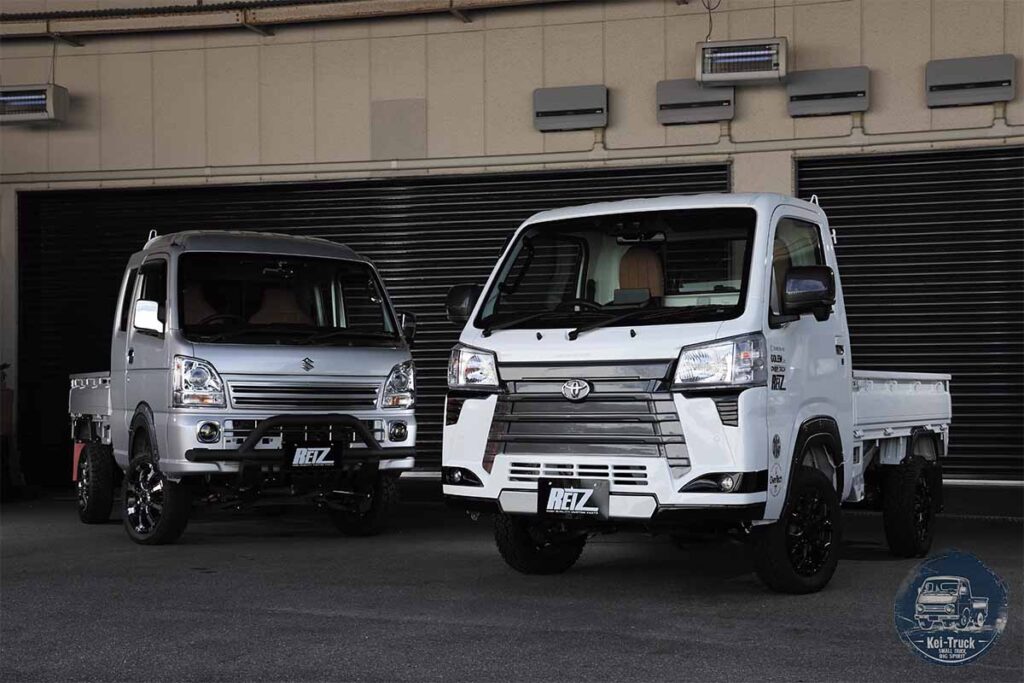
Why are kei trucks so small, and why were they created in the first place?
To understand their unique design, you need to look at Japan’s postwar history, economic recovery, and strict vehicle regulations. In this article, we break down the origins of kei trucks and how they became one of the most practical and beloved vehicle types in Japan.
Before Kei Trucks: The Role of Three-Wheeled Vehicles in Japan
Tracing their roots, we first arrive at the motorcycle-based three-wheeled trucks that were in use before the war.
Known as auto-tricycles, these were inexpensive luggage carriers responsible for small-lot deliveries in urban areas. However, as World War II intensified, automobile production shifted to military vehicles, and by the end of the war, cities were burnt out and roads and infrastructure were in ruins.
From 1945 onwards, Japan was under GHQ occupation, which imposed strict restrictions on automobile production. Only a very limited number of trucks were produced under a license system. This period laid the foundation for compact transport solutions, which would later evolve into modern kei trucks.
The Birth of the Kei Car System in 1949
In 1949, the Japanese government created a new category of vehicles called kei cars. These were extremely small vehicles, measuring approximately 2.8 meters (9.2 ft) in length, 1 meter (3.3 ft) in width, and with engines in the 150cc range.
These vehicles had two clear aims:
- Provide an affordable form of transportation that even poor households could afford
- Develop the automobile industry with limited resources and technology, with an eye toward future exports
At the same time, the Cold War was in full swing globally, and Japan — as a “showcase for the capitalist camp” — was being called upon to rapidly rebuild its economy. Unable to afford large numbers of high-displacement imports, the nation bet on small cars it could produce domestically.
The kei car system was born to set the stage for this, and what would later become kei trucks fell into this category. This framework defined the size and efficiency standards that still shape kei trucks today.
Special Demand During the Korean War and the Heyday of Three-Wheeled Trucks
The outbreak of the Korean War in 1950 was a major turning point for the Japanese economy.
Demand for supplies and industrial products for the U.S. military soared, and logistics connecting factories, ports, cities, and rural areas suddenly became more active. The vehicle of choice during this era was the three-wheeled truck — simple, inexpensive, maneuverable, and able to handle even rough roads.
It was these small, hard-working vehicles, not just large trucks, that supported post-war reconstruction and the booming economy. Meanwhile, standards for kei vehicles continued to develop, and in 1954, engine displacement was standardized to 360cc.
This change made it much more realistic to design a proper small cargo vehicle that could carry both passengers and cargo. It laid the groundwork for the creation of four-wheeled kei trucks, accelerating the transition away from three-wheeled designs.
The 1958 Midget and the First Years of the Kei Truck (1959–1963)
In 1958, Daihatsu released the three-wheeled light truck Midget, which became an explosive hit as transportation for small shops and self-employed business owners across Japan. Fishmongers, tofu makers, dry cleaners — the sight of small businesses paired with small trucks spread throughout the country.
Continuing this trend, four-wheeled kei trucks finally appeared:
- 1959 — Tokyu Kurogane Kogyo released the Kurogane Baby, setting a precedent as a rear-engine, cab-over light commercial vehicle
- 1960 — Daihatsu released the first-generation Hijet
- 1961 — Fuji Heavy Industries released the Subaru Sambar, followed by Suzuki’s Suzulight Carry
- 1963 — Honda released its first four-wheeled kei truck, the T360
Within just a few years, nearly all of the major kei truck brands that continue today were launched, and the kei truck genre quickly took shape.High Economic Growth and the “Kei Truck Warring States Period”
Japan was in the midst of rapid economic growth in the 1960s.
With the mechanization of rural areas, the influx of population into cities, and a boom in housing and infrastructure construction, demand for small trucks capable of navigating narrow roads soared. During this period, as many as nine manufacturers entered the kei truck market, ushering in what became known as the “kei truck warring states era.”
While hooded pickup trucks were common initially, cab-over designs became mainstream — they offered a wide cargo bed within a limited overall length. With road construction in preparation for the 1964 Tokyo Olympics providing additional momentum, kei trucks became established as part of Japan’s everyday infrastructure, working everywhere from rural villages to dense urban areas.
Oil Crisis, Emissions Regulations, and Standards Expansion
In the 1970s, a global energy crisis — the first oil crisis — reshaped the auto industry worldwide.
Kei trucks actually gained popularity as fuel-efficient small commercial vehicles, but at the same time, air pollution became a social issue, and emissions regulations grew stricter every year.
It became difficult to meet regulations with a small 360cc engine while still delivering work-suitable performance. As a result:
- 1976 — The upper limit on engine displacement for kei cars was raised to 550cc
- 1990 — The limit was raised again to 660cc, where it remains today
- 1998 — Size regulations were finalized at 3.4 m (11.2 ft) in length and 1.48 m (4.9 ft) in width — the same dimensions still used today
Kei trucks gradually became more robust to adapt to improved road conditions, highway driving, and rising safety expectations. These regulatory shifts improved safety and performance while preserving the compact efficiency that defined the category.
Since the 2000s: From Domestic Infrastructure to a Global Cult Favorite
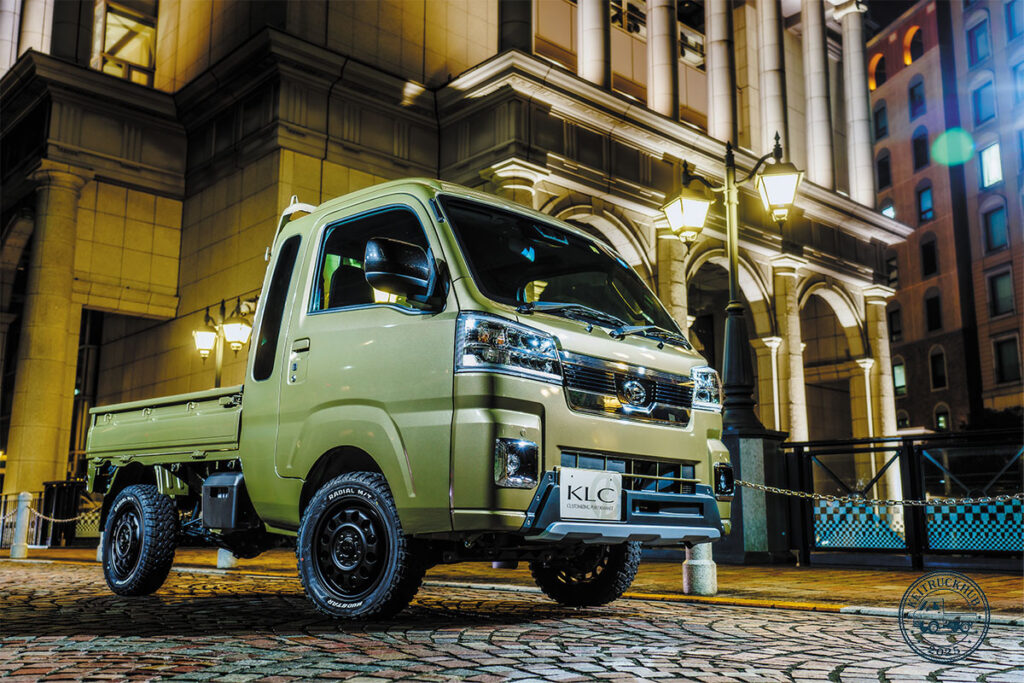
Even since the 2000s, kei trucks have remained essential to daily life in rural Japan, small businesses, construction sites, mobile sales vehicles, and even as the base vehicle for camper conversions. While factors like kei vehicle tax hikes have increased the cost of ownership, their low maintenance costs and ease of handling remain a major draw.
At the same time, Japanese kei trucks that have reached the end of their domestic service life are now being exported around the world as used vehicles. In the U.S., where the 25-year rule applies, older kei trucks can be legally imported. They’ve become popular as transportation for farms, campuses, and hobby use — and a growing number of states are passing legislation that explicitly allows them on public roads.
Once considered commonplace work tools in Japan, kei trucks are now beginning to be appreciated overseas as unusual yet remarkably practical vehicles.
For more on the U.S. import process, see How Kei Trucks Are Imported to the U.S.. For the current state of U.S. legality, see How Far Can You Drive a Kei Truck in the U.S.? Laws Explained.
Why Kei Trucks Still Matter Today
Kei trucks weren’t just created as small vehicles — they were born out of necessity.
Limited resources, strict regulations, and the need for affordable transportation shaped their design. Today, those same characteristics make kei trucks incredibly practical, efficient, and adaptable — not only in Japan, but increasingly around the world.
Understanding their history helps explain why they continue to gain popularity, especially among enthusiasts and small business owners overseas. The history of kei trucks reflects Japan’s recovery, growth, and steps toward opening up to the world.
FAQ
When were kei trucks officially created? The kei vehicle category was established in Japan in 1949. The first true four-wheeled kei trucks appeared between 1959 and 1963, when Daihatsu, Suzuki, Subaru, and Honda all launched their early models.
Why are kei trucks limited to 660cc engines? The 660cc limit was set in 1990 as part of Japan’s kei vehicle regulations. Earlier limits were 150cc (1949), 360cc (1954), and 550cc (1976). The 660cc cap balances fuel efficiency, emissions compliance, and adequate work performance.
Why are kei trucks so small? Their compact size comes directly from Japan’s postwar conditions. Limited resources, narrow rural roads, and the need for affordable transportation all pushed manufacturers toward small, efficient designs.
Which manufacturer made the first kei truck? The earliest four-wheeled kei truck was the Kurogane Baby in 1959, made by Tokyu Kurogane Kogyo. Daihatsu followed with the first-generation Hijet in 1960.
Why are kei trucks gaining popularity outside Japan? The U.S. 25-year import rule has made older kei trucks legally importable, and their practicality, affordability, and simplicity appeal to American farmers, hobbyists, and small business owners. Several U.S. states have also passed laws clarifying their road-legal status.
Final Thoughts
Kei trucks weren’t designed to impress. They were designed to solve real problems with limited resources — and that’s exactly why they’ve endured for over six decades.
From the burnt-out cities of postwar Japan to rice paddy paths, construction sites, and campground parking lots, kei trucks have quietly become one of the most successful small-vehicle categories in the world. Their story is, in many ways, the story of Japan itself: practical, resilient, and surprisingly influential.
For U.S. buyers and enthusiasts, understanding this history makes the appeal of kei trucks much clearer. They aren’t quirky imports. They’re the result of 75 years of focused engineering aimed at one question: how do you build the smallest, smartest working vehicle possible?
Disclaimer
This guide is for general historical and informational purposes only. Kei truck regulations in the U.S. vary significantly by state and change over time. Always confirm current import and registration requirements with NHTSA, EPA, CBP, and your local DMV before purchasing.
Sources and Verification
- Light Motor Vehicle Inspection Organization — history of the kei-vehicle standards
- Suzuki Digital Library — Carry model history
- Daihatsu — official product history
- Honda — T360 and Honda automobile-production history
- Editorial archive: Magazine Daichi / Kei Truck Kingdom (licensed source material).
Sources checked: July 24, 2026.
Next Steps
What KeiTruckHub Is (And Why This Site Exists)
How Kei Trucks Are Imported to the U.S. (And Why They’re Becoming Popular)
How Far Can You Drive a Kei Truck in the U.S.? Laws Explained
Top 8 Kei Trucks in 2025: Best Mini Trucks from Japan
Why Kei Trucks Matter: Japan’s Small Workhorse Explained
Written by KeiTruckHub Editorial Desk Editorial review: Kei Truck Kingdom editorial team Last updated: June 11, 2026