Many people describe SUZU-CARGO as a “license-free mini truck.” At first glance, that sounds right.
But it misses the bigger point.
SUZU-CARGO is not a kei truck alternative. It represents a completely different type of mobility—one that Japan is only beginning to define.
In this article, we explain what SUZU-CARGO actually is, why the “mini truck” label is misleading, and where this new category of vehicle fits in the global mobility landscape.
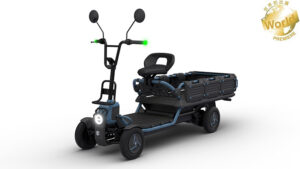
source
SUZUKI
What SUZU-CARGO Actually Is
Legally, SUZU-CARGO is not classified as a kei truck.
It falls under Japan’s newer regulatory category: “Specified Small Motorized Bicycle” (特定小型原動機付自転車).
That single classification changes everything about how the vehicle is used, taxed, and driven.
Key Specifications
| Spec | Value |
|---|---|
| Length | 1,900mm |
| Width | 600mm |
| Height | 1,000mm |
| Max Speed (Road) | 20 km/h |
| Max Speed (Pedestrian Mode) | 6 km/h |
| Cargo Capacity | Up to 30kg |
| License Required | No standard driver’s license needed |
| Registration | Required |
| Insurance | Required |
Under this legal category, no standard driver’s license is required—but riders must meet applicable age, registration, and insurance requirements.
This is not a truck. It’s a regulated mobility device that happens to look like a small truck.
Why It Looks Like a Mini Truck
The design is intentionally familiar. SUZU-CARGO includes:
- Four wheels for stability
- Rear cargo bed for carrying up to 30kg
- Reverse gear for maneuverability
- Independent suspension for ride quality
- Truck-inspired proportions
But don’t be misled by the appearance. This is NOT a kei truck replacement. It’s a fundamentally different category of vehicle designed for fundamentally different use cases.
What SUZU-CARGO Is Actually Built For
SUZU-CARGO works best in specific, controlled environments:
- Short-distance trips within a neighborhood
- Local deliveries in dense urban zones
- Facility transport (hospitals, campuses, factories)
- Small community movement (retirement villages, resorts)
- Farm-yard and property-level transport
Think of it as a “micro logistics tool”—not a general-purpose vehicle. It’s designed to solve specific problems in specific places, not replace a truck that does everything.
The Problem With the “License-Free Mini Truck” Label
The “license-free mini truck” label spreads fast on social media—but it’s fundamentally misleading.
What a Real Kei Truck Can Do
- Drive at highway speeds (75+ km/h)
- Carry up to 350kg of cargo
- Handle all weather conditions
- Work across long distances
- Support serious commercial operations
What SUZU-CARGO Can Do
- Maximum 20 km/h (about 12 mph)
- Maximum 30kg cargo capacity
- Limited weather protection
- Not highway capable
- Designed for short-range, low-speed use only
These are completely different categories of vehicle. Comparing SUZU-CARGO to a kei truck is like comparing an e-bike to a pickup—they share visual DNA but serve entirely different purposes.
Where It Fits in the Mobility Spectrum
Instead of asking what SUZU-CARGO replaces, the better question is: where does it fit?
SUZU-CARGO sits in a mobility gap:
- Faster than walking
- More capable than a bicycle
- Safer than a scooter for cargo
- Simpler than a kei truck
That “middle zone” is the key to understanding why this category exists at all. It’s designed to fill space that no existing vehicle addresses well.
Why This Matters for the Future of Mobility
Mobility is changing globally. For decades, the assumption was simple: one car covers everything.
Now, that model is breaking apart:
- Long distance travel goes to cars, trains, and public transport
- Short trips increasingly use ultra-compact vehicles
- Light cargo tasks call for specialized tools
Mobility is becoming modular—matched to specific use cases rather than trying to solve every problem with one vehicle.
SUZU-CARGO represents Japan’s attempt to formalize this shift into a new regulatory category.
Real-World Challenges
Even with strong design, SUZU-CARGO’s success depends on more than just the hardware:
- Road environment (dedicated lanes, low-speed zones)
- Parking availability at destinations
- User behavior and safety awareness
- Local infrastructure support
- Community acceptance
Hardware alone is not enough. The vehicle needs an ecosystem to work properly.
The Senior Mobility Use Case
SUZU-CARGO is often positioned as a solution for aging populations in Japan.
And yes, it helps with:
- Local shopping trips
- Short errands within a neighborhood
- Mobility after voluntary license surrender
- Independence for older residents
But it’s not a complete solution to elderly mobility challenges. Real problems also include:
- Local store availability
- Delivery service coverage
- Public transport accessibility
- Community support networks
SUZU-CARGO addresses one piece of a larger puzzle—not the entire puzzle itself.
Where It Works Best
SUZU-CARGO makes the most sense in:
- Small towns with slower traffic
- Campgrounds and resort facilities
- Farms and rural properties
- Corporate campuses and hospitals
- Fixed local delivery routes
- Retirement communities and senior housing
The common thread: places with short distances, low speeds, and predictable routes.
Where It Doesn’t Work
SUZU-CARGO is not ideal for:
- Long-distance travel or commuting
- Any highway use
- Heavy cargo transport
- All-weather daily driving
- Areas with fast-moving traffic
- Regions with harsh winters or heavy rain
Expectations matter. Choosing SUZU-CARGO for the wrong use case leads to disappointment.
Price and Adoption Reality
| Model | Price (JPY) | USD Estimate |
|---|---|---|
| SUZU-CARGO (Starting) | ¥1,493,800 | ≈ USD $9,960 |
Note: Prices reflect Japanese domestic market only and are tax-included. USD figures are based on approximate exchange rates as of July 2026. SUZU-CARGO is not currently available for U.S. import.
That pricing changes the conversation significantly. At approximately $10,000 USD, buyers naturally ask:
- How often will I actually use this?
- What specific problem does it solve for me?
- Does it save meaningful time or labor?
- Is there a simpler alternative (e-bike, kei truck, delivery service)?
“Interesting” alone is not enough at this price point. The vehicle must solve real problems better than existing alternatives.
What SUZU-CARGO Really Signals
This isn’t just about one product. It’s about a shift in mobility design.
Instead of assuming “one vehicle should do everything,” Japan is moving toward:
- Multiple specialized vehicles for specific roles
- Regulatory frameworks that match vehicle to use case
- Micro-mobility categories that fill real gaps
- Purpose-built tools rather than universal solutions
SUZU-CARGO fits that future—not as a kei truck alternative, but as a new type of vehicle entirely.
Why This Matters for U.S. Buyers
From a North American perspective, SUZU-CARGO is not going to be an immediate import consideration. U.S. regulations don’t currently have an equivalent to Japan’s “Specified Small Motorized Bicycle” category, and the vehicle is too new to qualify under the 25-year import rule anyway.
But it’s worth watching for two reasons:
- It signals where compact mobility is heading globally
- U.S. cities are increasingly interested in similar micro-mobility solutions
Kei trucks in the U.S. remain the practical, road-legal option for compact utility. SUZU-CARGO represents a different vision entirely—one that may or may not translate to U.S. markets in the years ahead.
Final Takeaway
SUZU-CARGO is not the future of kei trucks. It’s the future of local, purpose-built mobility—which is a completely different thing.
The real question is not “Is this a mini truck?” It’s “Where does this type of vehicle actually work?”
Answer that question honestly, and SUZU-CARGO becomes much more than a novelty. It becomes a signal of how mobility itself is changing.
Frequently Asked Questions
Q1. Is SUZU-CARGO a kei truck?
No. SUZU-CARGO is classified under Japan’s “Specified Small Motorized Bicycle” category. It is not legally, mechanically, or functionally a kei truck. It’s a completely different type of vehicle with different rules, limits, and use cases.
Q2. Can you drive SUZU-CARGO without a license in Japan?
Under the specified small motorized bicycle framework, a standard driver’s license is not required. However, riders must meet age requirements, register the vehicle, and carry insurance. Rules may vary by prefecture.
Q3. How fast can SUZU-CARGO go?
Maximum 20 km/h (about 12 mph) in normal road mode. In pedestrian mode, the speed is limited to 6 km/h (about 3.7 mph) to safely share space with people walking.
Q4. Can SUZU-CARGO be imported to the U.S.?
Not currently. The vehicle is too new to qualify under the federal 25-year import rule, and the U.S. does not have an equivalent regulatory category for “specified small motorized bicycles.” A U.S. import would require significant legal and mechanical work.
Q5. Is SUZU-CARGO a replacement for a kei truck?
No. Kei trucks are full-featured vehicles that handle work, cargo, and daily driving at highway speeds. SUZU-CARGO is a specialized short-distance mobility device. They serve different purposes and cannot replace each other.
Next Steps
Want to learn more about kei trucks, mobility, and Japanese vehicle categories? Explore these guides:
- Top 8 Kei Trucks in 2025: Best Mini Trucks from Japan
- Why Kei Trucks Matter: Japan’s Small Workhorse Explained
- Why America Fell in Love with Kei Trucks
- How to Make a Kei Truck Street Legal in the USA
- Why Kei Trucks Are Perfect for Cities
Disclaimer
This article is for general informational purposes only and does not constitute legal, purchasing, or import advice. SUZU-CARGO is currently available only in the Japanese domestic market and is not eligible for U.S. import under current federal regulations. Vehicle classifications, licensing requirements, and traffic laws vary by country and region. Always consult official sources and qualified specialists before pursuing any vehicle import or registration.
Sources and Verification
- Suzuki — official SUZU-CARGO concept information
- Japan MLIT — specified small motorized bicycle rules
- Editorial archive: Magazine Daichi / Kei Truck Kingdom (licensed source material).
Sources checked: July 24, 2026.
Written by KeiTruckHub Editorial Desk
Editorial review: Kei Truck Kingdom editorial team
Last updated: July 1, 2026