Importing a kei truck sounds simple at first.
You find a cheap truck in Japan, ship it over, and start driving something unique.
But in reality, many first-time buyers run into the same problems.
Small mistakes can quickly turn a $6,000 kei truck into a frustrating and expensive project.
This 2026 guide explains the most common kei truck import mistakes U.S. buyers make — and how to avoid them.
Thinking about importing your first kei truck?
Read: How to Import a Kei Truck to the U.S. (Step-by-Step Guide)
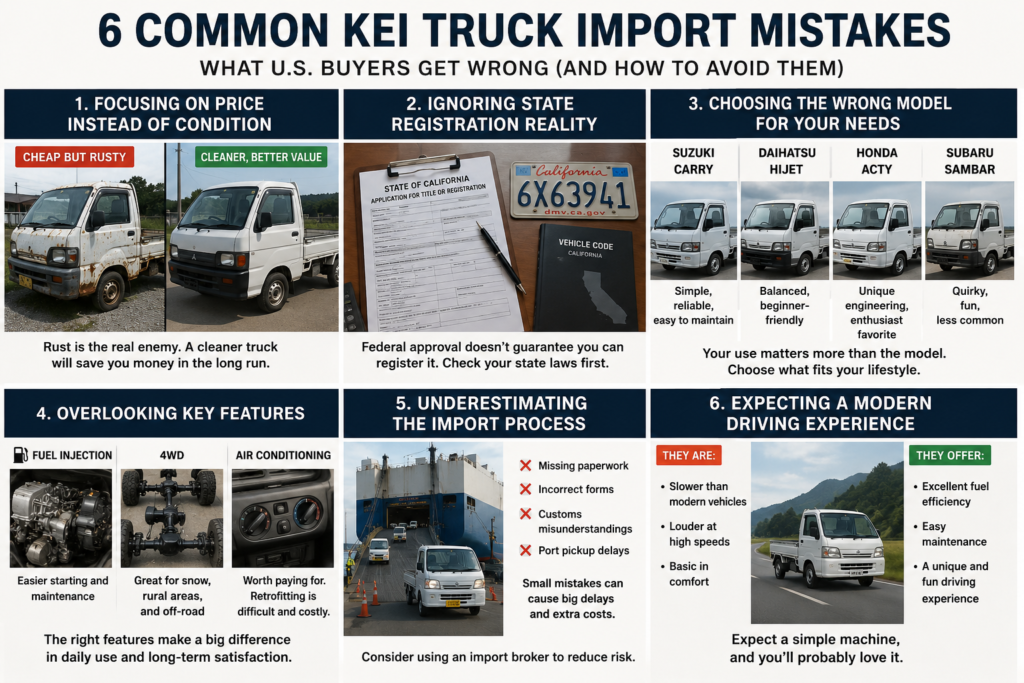
Mistake #1: Focusing on Price Instead of Condition
The biggest mistake is chasing the cheapest truck.
A $3,500 auction listing may look like a great deal. But what you can’t see often matters more than what you can.
The real issue: rust.
- Rust spreads quickly
- Weakens the structure
- Becomes expensive to repair
A slightly more expensive, cleaner truck is almost always the better choice.
Rule of thumb: Rust matters more than mileage.
Mistake #2: Ignoring State Registration Reality
Many buyers assume: if it’s legal to import, it’s legal to drive.
That’s not true.
Federal import approval and state registration are completely different. A kei truck can pass customs but still be difficult — or impossible — to register.
Always ask first: “Can I register this in my state?”
This single step can save thousands of dollars.
Kei truck laws vary by state.
Read: How to Make a Kei Truck Street Legal in the USA
Mistake #3: Choosing the Wrong Model for Your Needs
Many buyers ask: “Which kei truck is best?”
The better question is: “Which kei truck is right for me?”
Model personalities:
- Suzuki Carry — simple, reliable, easy to maintain
- Daihatsu Hijet — balanced, beginner-friendly
- Honda Acty — unique engineering, enthusiast favorite
- Subaru Sambar — quirky, fun, less common
But your usage matters more than the model.
Not sure which model to choose?
Read: Best Kei Trucks for Beginners
Examples:
- Farm work — reliability matters most
- City use — size and maneuverability
- Weekend fun — character and uniqueness
Mistake #4: Overlooking Key Features
Features can completely change your experience.
Recommended features:
- Fuel injection — easier starting and maintenance
- 4WD — useful for snow, rural areas, off-road driving
- Air conditioning — highly recommended
Retrofitting these later is difficult and expensive. Spending more upfront often saves money later.
Mistake #5: Underestimating the Import Process
Importing looks simple on paper. In reality, small mistakes cause big delays.
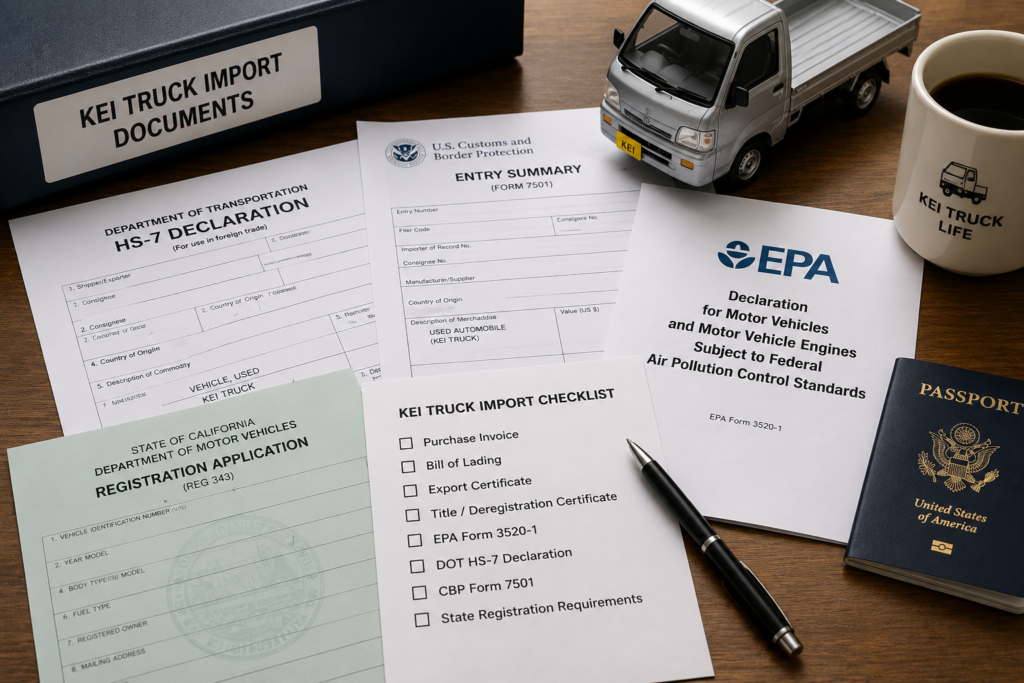
Common issues:
- Missing paperwork
- Incorrect forms
- Customs misunderstandings
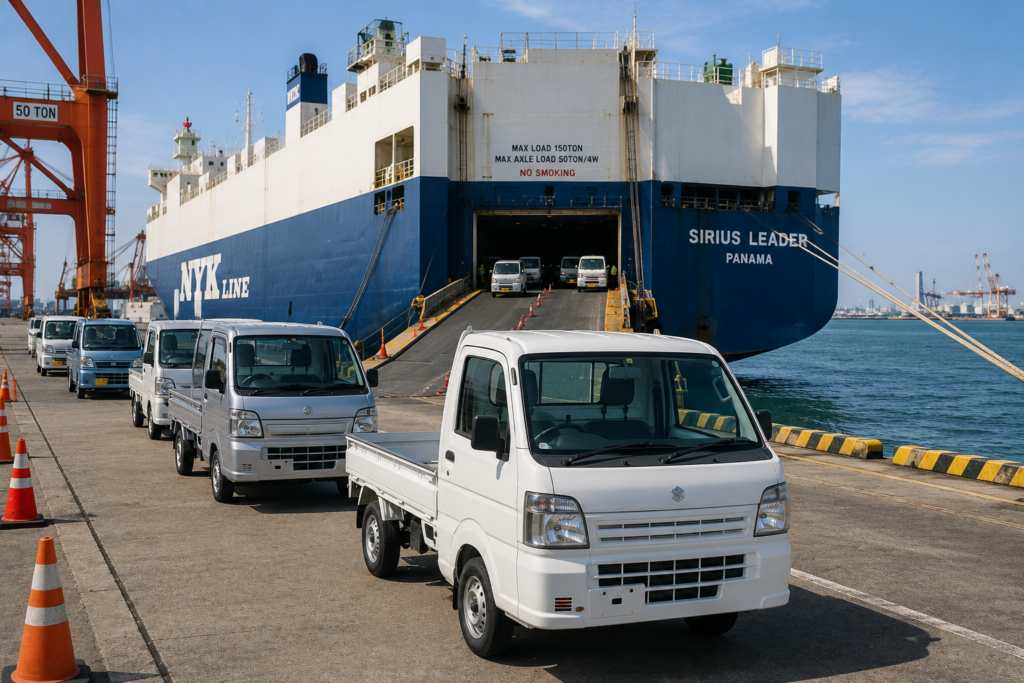
- Port pickup delays
These can lead to extra costs and storage fees.
Many beginners choose to use an import broker.
- Cost: fees vary by shipment, port, bond, and service scope; request a written quote
- Benefit: reduced risk and faster clearance
Mistake #6: Expecting a Modern Driving Experience
Kei trucks are simple vehicles.
What they are:
- Slower than modern cars
- Louder at higher speeds
- Basic in comfort
What they offer:
- Excellent fuel efficiency
- Easy maintenance
- A unique driving experience
If you expect a modern truck, you’ll be disappointed. If you expect a simple machine, you’ll love it.
So… What Should a Beginner Actually Do?
If you’re unsure, follow this approach.
Beginner recommendations:
- Easy start — Suzuki Carry or Daihatsu Hijet
- More personality — Honda Acty or Subaru Sambar
- Not sure — prioritize condition over brand
And most importantly: check your state registration rules before buying.
Four Checks to Complete Before You Pay
- Verify the exact manufacture date and NHTSA eligibility.
- Confirm EPA eligibility, the engine configuration, and the correct Form 3520-1 declaration code.
- Get the HTS classification, Chapter 99 treatment, and full landed-cost estimate from a licensed customs broker.
- Ask the state DMV about title, registration, inspection, and road-use restrictions before buying.
A legal federal import does not guarantee a state title or permission to drive on public roads.
Final Thoughts
At first, you’re just trying to avoid mistakes.
Then suddenly you’re reading auction sheets, comparing rust levels, and debating engine layouts.
That’s when it changes.
You’re not just importing a kei truck — you’re entering a unique enthusiast world.
And once you’re in, you don’t really leave.
Read: Why Kei Trucks Are Booming in America
Disclaimer: This article provides general information, not legal or customs advice. Import, tariff, title, registration, and road-use rules change; confirm the current requirements with the agencies above and qualified professionals before purchasing.
Sources and Verification
- NHTSA — U.S. vehicle importation and 25-year eligibility FAQ
- U.S. EPA — importing vehicles and engines
- U.S. Customs and Border Protection — importing a motor vehicle
- U.S. International Trade Commission — Harmonized Tariff Schedule, heading 8704
- USA.gov — state motor vehicle services
- Editorial archive: Magazine Daichi / Kei Truck Kingdom (licensed source material).
Sources checked: July 24, 2026.
Written by KeiTruckHub Editorial Desk
Editorial review: Kei Truck Kingdom editorial team
Last updated: July 19, 2026