How Kei Trucks Are Imported to the U.S. (And Why They’re Becoming Popular)

September 24, 2025

Most people don’t realize this: kei trucks don’t just “appear” in the United States. They go through a very specific process — and if you’re thinking about buying one, understanding that process changes everything.

When Did Kei Trucks Become Popular in the U.S.?

Kei trucks have been around in the U.S. for decades, but they didn’t become visible until recently.

In the early 2000s, they were mostly used in niche environments:

  • Farms
  • College campuses
  • Private land and off-road properties

Most Americans never saw one in person.

The real shift started in the late 2010s and accelerated during the COVID-19 pandemic. A few factors lined up at the same time:

  • Rising new and used vehicle prices in the U.S. market
  • A growing interest in DIY and property-based lifestyles
  • Increased exposure through YouTube creators and social media communities

Kei trucks still aren’t mainstream today. But they’re far more visible than they used to be, and the trend keeps building.

Who Actually Uses Kei Trucks in the U.S.?

Kei trucks aren’t for everyone. But for certain people, they make perfect sense.

Rural Property Owners

  • Checking fence lines
  • Hauling tools and supplies
  • Moving materials across acreage

For these jobs, a kei truck is often more practical than a full-size pickup — and much cheaper to run.

Small Business Owners

  • Landscaping crews
  • Maintenance and handyman services
  • Mobile food and vendor operations

Lower purchase cost, lower fuel cost, and easier maneuverability in tight spaces.

Farmers

  • Feed and supply transport
  • Equipment movement around the property
  • Access through narrow gates and barn entries

This is where the small size becomes a real advantage, not a compromise.

DIY and Hobby Users

  • Small custom builds
  • Weekend projects
  • General utility around the home

A kei truck makes everyday tasks easier without the bulk of a full-size truck.

Outdoor and Camping Users

  • Kei truck camper conversions
  • Lightweight overland setups
  • Simple, no-frills travel rigs

It’s not the traditional approach to overlanding, but it works — and the community around it is growing fast.

Second-Vehicle Owners

Plenty of owners don’t use a kei truck as a replacement. They use it as an addition — a dedicated tool for specific tasks that their primary vehicle isn’t suited for.

How Kei Trucks Actually Get to the U.S.

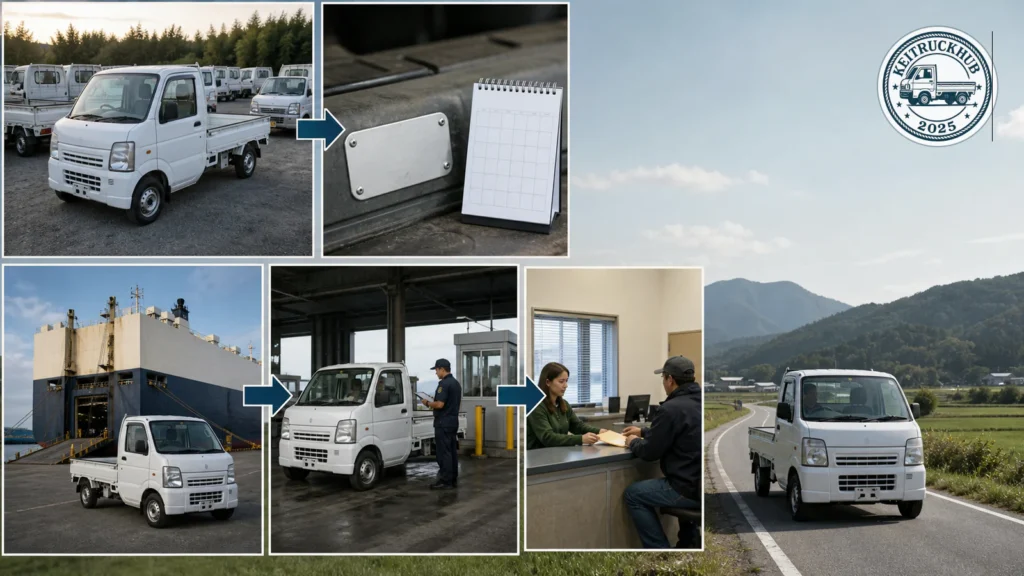
Here’s what the real import process looks like, from start to finish.

Step 1: Purchased in Japan

Most kei trucks start their journey at one of three sources:

  • Japanese auto auctions
  • Domestic Japanese dealers
  • Specialized exporters

Step 2: Export Preparation

Before leaving Japan, each vehicle goes through:

  • Title and ownership paperwork
  • Pre-export inspections
  • Export clearance with Japanese customs

Step 3: Ocean Shipping

There are two main shipping methods:

  • RoRo (Roll-on/Roll-off) — the truck is driven onto a specialized cargo ship
  • Container shipping — the truck is loaded into a sealed shipping container

Transit usually takes several weeks depending on the route and destination port.

Step 4: U.S. Import and Customs

Once the vehicle arrives, it has to clear:

  • U.S. Customs and Border Protection
  • Federal compliance checks

This is where the 25-year rule often comes into play. Vehicles that are 25 years or older may qualify for federal import exemptions, but buyers still need proper customs documentation, EPA paperwork, and state-level registration approval.

Step 5: Registration and Road Use

After import, the owner handles:

  • State-level registration
  • Insurance (which can be tricky — more on that below)
  • Any required state inspections

Rules vary significantly from state to state. Always confirm requirements with your local DMV before importing.

The Reality (What People Don’t Expect)

The process is manageable, but it’s not always smooth. Common things to plan for:

  • Paperwork delays at customs or at the DMV
  • Insurance confusion, especially with non-standard VINs
  • Wildly different rules from one state to the next

None of this is a dealbreaker — but going in informed is much better than finding out the hard way.

Awareness in the U.S. Is Growing

Kei trucks are still relatively unknown. Most Americans have never seen one in person.

But something is shifting:

  • Awareness is growing year over year
  • Interest is increasing across both rural and urban buyers
  • Active communities are forming on Reddit, YouTube, and Facebook

And here’s the interesting part: the people who discover kei trucks tend to really get them. They aren’t mainstream — but that’s part of the appeal. If you’re researching them right now, you’re already ahead of most American buyers.

The Real Insight

Kei trucks aren’t just imported vehicles. They’re part of a broader shift toward:

  • Smaller, more efficient vehicles
  • Practical tools instead of oversized status symbols
  • Simpler, lower-cost ownership

For the right person, a kei truck makes more sense than anything else on the U.S. market.

Related Guides

  • Is a Kei Truck Worth It?
  • Kei Truck MPG Guide
  • Best Parts to Buy First

FAQ

Are kei trucks legal to import into the U.S.? Many kei trucks that are 25 years or older may be eligible for import under federal rules. However, import eligibility does not automatically guarantee state registration or public-road use.

Why are kei trucks becoming popular in America? They’re affordable, practical, fuel-efficient, and well-suited to real-world tasks that don’t require a full-size pickup.

Are kei trucks hard to own in the U.S.? Not hard, but they do require some planning — especially around state registration, insurance, and parts sourcing.

Who should consider buying one? Anyone who values practicality, efficiency, and lower running costs over size and horsepower.

Final Thought

Kei trucks aren’t trying to compete with modern American trucks. They solve a different problem — and once you understand that, everything about them starts to make sense.

If a smaller, simpler, more practical truck fits your life, a kei truck might be exactly what you’ve been looking for.

Related Guides

Disclaimer

This guide is for general information only and is not legal advice or import advice. U.S. import rules, customs requirements, emissions documentation, and state registration rules can change over time. Always confirm current requirements with CBP, NHTSA, EPA, your importer, and your state DMV before purchasing or importing a kei truck.

Sources:

  • U.S. Customs and Border Protection (CBP) — Importing a Motor Vehicle
  • NHTSA — 25-Year Import Exemption
  • EPA — Imported Vehicles and Engines

Written by Kie Kotani
Editorial review: Kei Truck Oukoku editorial team
Last updated: June 15, 2026

Related Articles

Suzuki Super Carry Seat Covers: Vintage Interior Upgrade for Kei Truck

Suzuki Super Carry seat covers are one of the easiest

How Far Can You Drive a Kei Truck in the U.S.? Laws Explained

Japanese kei trucks are no longer a niche curiosity in

Suzuki Super Carry X Limited: Hard Cargo Build for Real Utility

The Suzuki Super Carry X Limited isn’t just a display

Stay in the Know!

Get direct updates from KeiTruckHub in our inbox.

Scroll to Top