The Suzuki Super Carry X Limited is more than a showroom display. Fitted with a full Hard Cargo package, it demonstrates how a kei truck can evolve into something more practical, more organized, and more versatile—without losing the simplicity that makes kei trucks appealing in the first place.
This build shows what’s possible when factory design meets thoughtful aftermarket engineering. For anyone considering a kei truck for work, weekend use, or a mix of both, it’s a useful case study.
Read more: How to Make a Kei Truck Street Legal in the USA
Why the Super Carry X Limited Stands Out
The Suzuki Super Carry is already a step above the standard Carry. It offers a larger cab, more interior room, and better everyday comfort—making it a stronger platform for mixed work and lifestyle use.
Key advantages of the Super Carry base:
- Larger cab with more legroom
- Extra interior storage space
- Comfortable for longer drives
- Balanced platform for work and leisure
That extra cabin space makes a real difference when you’re loading gear, adjusting seat position, or using the truck for both jobs and outdoor trips.
A Factory Truck With Built-In Style
Before any customization begins, the X Limited already looks the part. Suzuki added several exclusive touches that give it a more refined presence right out of the factory:
- Black front garnish
- Black fog lamp bezels
- Exclusive wheels
- Special decals and badging
These details make the X Limited feel like a mid-tier trim rather than a bare work truck—giving builders a stronger visual starting point.
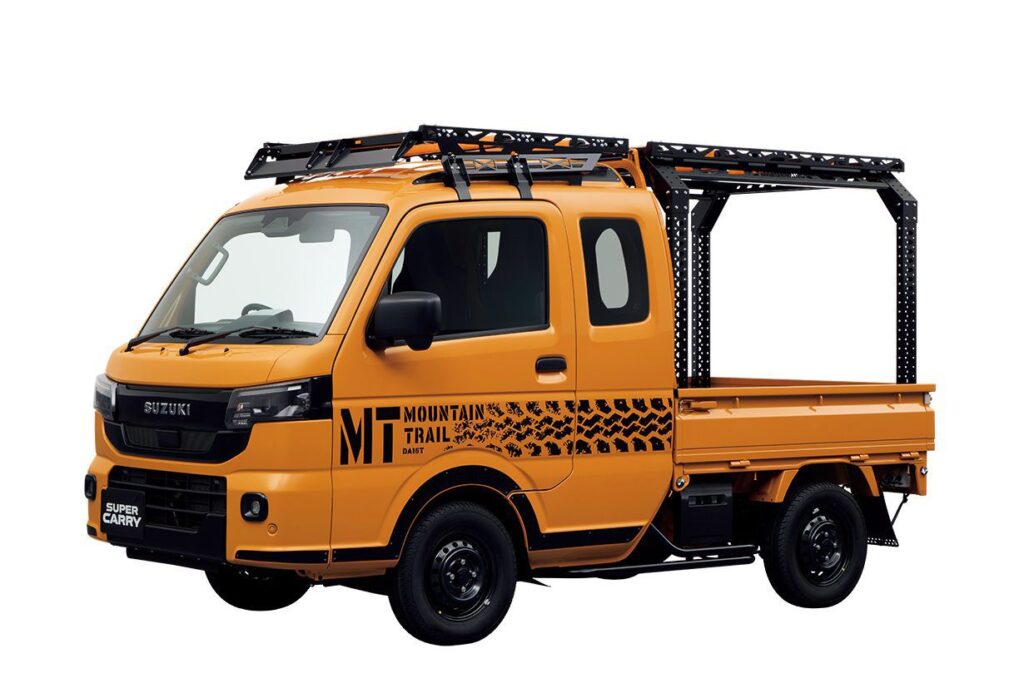
Even in display form, the Super Carry X Limited shows how a kei truck can balance work-ready function with a sharper visual identity.
Read more: Easy Upgrades That Instantly Change Your Kei Truck
How Hard Cargo Improves Real Utility
The biggest change on this Super Carry isn’t visual—it’s functional. Hard Cargo focuses on real-world usability, and this build shows exactly what that looks like when the system comes together.
The core system includes:
- Base carrier (bed-mounted platform)
- Carrier rack for vertical storage
- Utility panels for gear organization
Together, these parts improve load stability, storage organization, and cargo flexibility. For anyone who actually uses their truck—for landscaping, hauling, camping, or small business work—these upgrades pay off quickly.
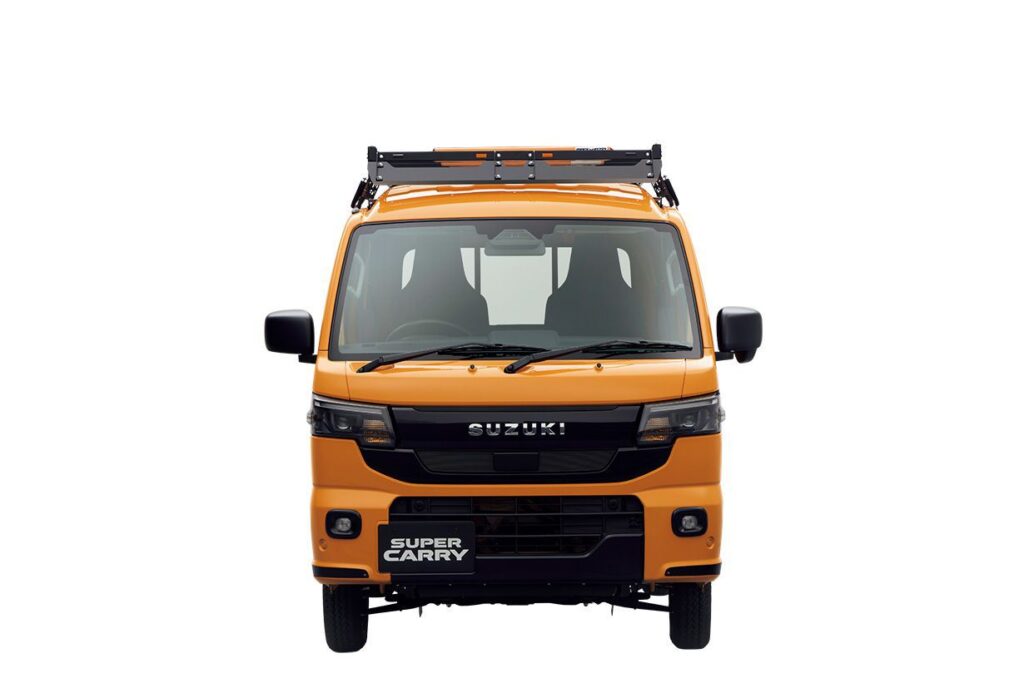
The Rack System Changes Everything
Add a roof rack and bed-mounted rack system to the base setup, and the truck becomes a genuinely capable multi-purpose vehicle. It can now carry:
- Longer items like lumber, kayaks, or ladders
- Organized gear across multiple levels
- Camping equipment, tools, or outdoor gear
- Work materials without cluttering the cabin
This kind of setup is ideal for landscapers, contractors, campers, and hobbyists who need to carry a lot without upsizing to a full-size truck.
Built for Real Use, Not Just Show
Even though this truck is displayed publicly, every part on it has a real purpose. Nothing is added just for looks.
Practical upgrades on this build include:
- Running pipe (side step and body protection)
- Mud flaps for weather and debris protection
- Utility panels for organized cargo
- Roof net for securing lighter loads
Each part improves daily usability—exactly what a working kei truck owner needs.
Why the Shin-Osaka Display Matters
This Super Carry is displayed in a major public transit hub, not a dealership or a car show. That location choice sends a message: kei trucks are no longer just for work sites or rural roads.
They’re now part of the broader lifestyle conversation—reaching commuters, tourists, and everyday people who might never have stepped into a car dealership.
Read more: Best Kei Trucks in the USA (2026 Guide)
A Kei Truck With Broader Appeal
Builds like this reflect where the kei truck market is heading. What was once seen as a simple work vehicle is becoming a modular lifestyle platform.
The shift looks like this:
- From: basic work-only vehicles
- To: multi-purpose lifestyle trucks with real utility
That evolution matters, especially in North America, where kei trucks are gaining ground as affordable, practical alternatives to full-size pickups.
Why This Matters for U.S. Buyers
For North American readers, this build is worth studying. Kei trucks are popular in the U.S. because of their compact size, mechanical simplicity, and low cost of ownership.
But builds like this Super Carry X Limited add something important: modularity and true daily usability. When paired with the right aftermarket parts, a kei truck can genuinely replace larger work vehicles for many owners.
Read more: Kei Truck Customization and Lifestyle Use
The Real Value of This Build
What makes this Super Carry work isn’t any single part—it’s the combination:
- A factory truck with genuine character
- Hard Cargo parts that improve function
- A design that stays practical, not flashy
It’s not style for the sake of style. It’s utility, done thoughtfully.
Read more: Why Kei Trucks Are Booming in America
Final Thoughts
The Suzuki Super Carry X Limited proves that a kei truck can be both a real work tool and a lifestyle vehicle—without compromise. With a well-planned Hard Cargo setup, it becomes far more capable without becoming complicated.
For U.S. buyers thinking about a kei truck, this build offers a clear message: the platform is more flexible than most people realize. The right parts turn a simple truck into a system that fits your work, your gear, and your daily life.
Read more: Best Kei Trucks in the USA (2026 Guide)
Sources and Verification
- Suzuki — Super Carry X Limited official model information
- Suzuki — Carry Hard Cargo accessory information
- Editorial archive: Magazine Daichi / Kei Truck Kingdom (licensed source material).
Sources checked: July 24, 2026.
Disclaimer
Product availability, pricing, and specifications may vary by region. Some Hard Cargo parts may require modification or professional installation for U.S. street-legal use. Always confirm compliance with local vehicle regulations before installing aftermarket components.
Written by KeiTruckHub Editorial Desk Editorial review: Kei Truck Kingdom editorial team Last updated: July 8, 2026