A wet jacket, a lunch bag and a small tool case can make a cabin feel crowded long before it runs out of advertised space. Before choosing seat covers or another organizer, decide where those three things will go.
Suzuki’s current Japanese Super Carry interior page describes storage behind the seats and an overhead shelf. Those are useful reference points, not a guarantee of the equipment on a particular used DA16T. Check its year, trim and actual cabin.
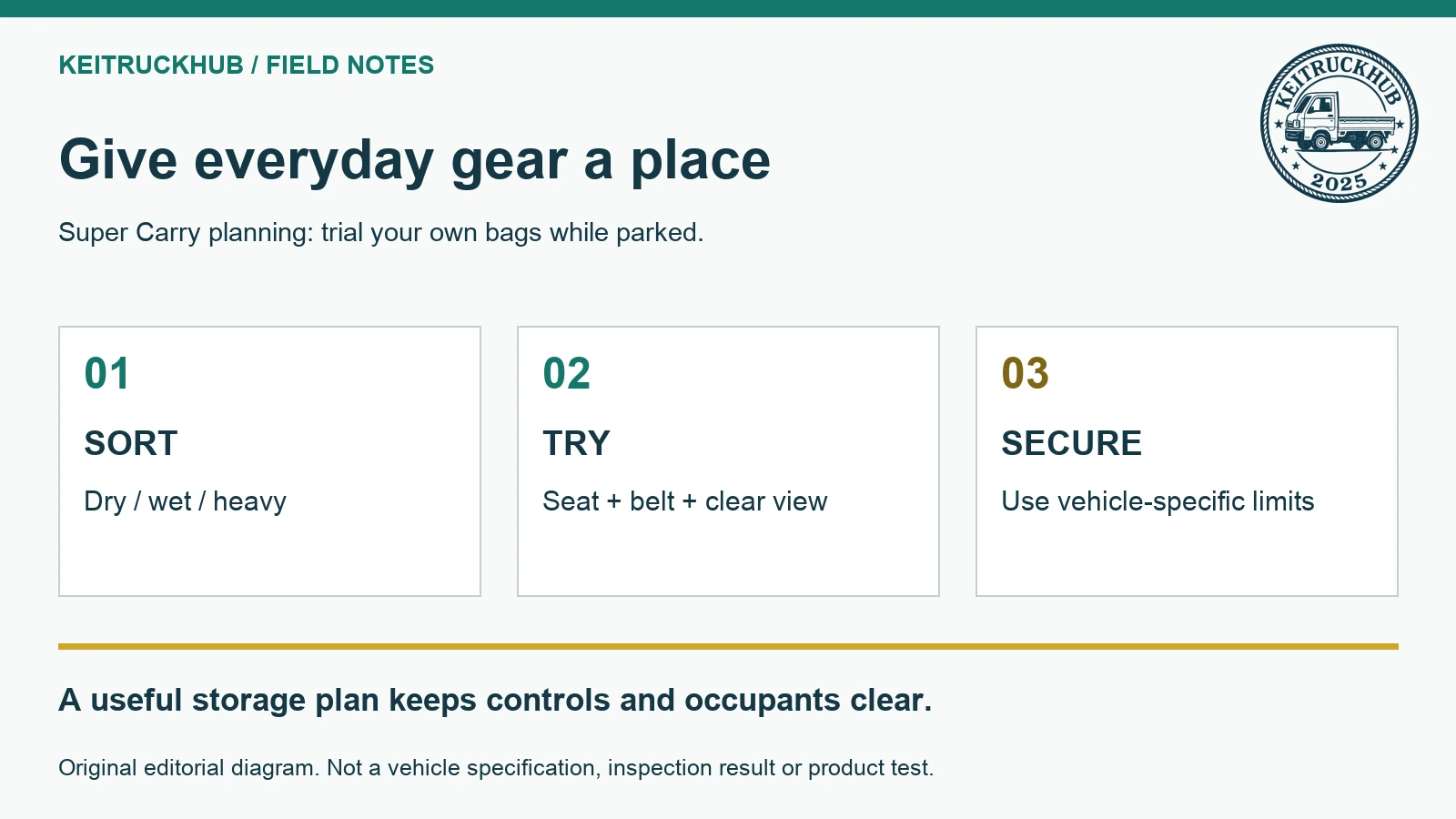
Give everyday gear a placeSuper Carry planning: trial your own bags while parked.
- SORTDry / wet / heavy
- TRYSeat + belt + clear view
- SECUREUse vehicle-specific limits
A useful storage plan keeps controls and occupants clear.
Make Three Piles Before Buying Anything
Separate what must stay dry, what is dirty or wet, and what is heavy enough to need a secure location. Documents and a jacket have different needs from loose tools. Items that can spill, give off fumes or interfere with occupants need a more suitable transport arrangement, not a convenient pocket.
| What you carry | What the location must allow |
|---|---|
| Documents and light personal items | Secure storage without blocking visibility or controls. |
| Wet clothing | Containment and removal for drying; no interference with seat or belt operation. |
| Tool case | A suitable secured location, respecting the vehicle and storage limits. |
| Phone and charging cable | No loose cable near pedals, levers or moving seat parts. |
This is a packing plan, not a list of approved mounting positions. Suzuki instructs users to secure or stow cargo so it cannot move and interfere with driving. Follow the actual vehicle’s instructions and load limits.
Try the Cabin While Parked
Park safely and set the seat to your normal driving position. Bring the actual bags and cases, or empty boxes of the same dimensions. Check that the seat locks properly, the belt and buckle remain accessible, and nothing obstructs the pedals, handbrake or other controls.
Check the passenger side with its normal occupant in mind, too. Storage that works with an empty folded seat may not work when someone travels with you. Do not assume that a position shown in a parked catalog photograph is permitted during driving.
Then remove everything once. Can you unload without dragging a case across trim, trapping a belt or repeatedly moving the seat? A storage plan that is irritating on the driveway rarely becomes easier during work.
Measure Before Ordering an Organizer
Record the available opening, usable depth and the clearance needed for seat travel. Match the exact model year and cabin variant with the accessory supplier. “Carry” alone is not enough to identify a Super Carry interior application.
Ask how the organizer is retained, what load it is rated for, and whether fitting it affects belts, airbags where equipped, wiring or service access. Avoid improvised drilling or attachments until the relevant structure and installation requirements have been assessed.
What to Leave Out
Do not fill every shelf simply because it exists. Keep the view and essential controls clear. A heavy item should not be placed overhead on the strength of a photo; confirm the applicable shelf limit and intended use.
Start with one recurring irritation and trial a reversible solution. If the jacket has a place, the paperwork stays dry and the tool case is secured without stealing passenger space, the cabin is already doing more useful work.
For the separate exterior topic, read our mild-lift guide. A lift does not solve a cabin packing problem.
Sources and Scope
- Suzuki: current Carry and Super Carry interiors
- Suzuki: Carry and Super Carry load-space information
- NHTSA vehicle import guidance
Research-based editorial guide reviewed September 23, 2026 with AI assistance. This is not a hands-on vehicle test, an inspection, a quotation, or vehicle-specific legal or technical advice. Manufacturer references describe the versions shown on those pages, not every used truck bearing the same name.