


When you first consider importing a Japanese kei truck to America, the first obstacle you encounter is something called the “25-year rule.” This federal law states that vehicles cannot be imported without meeting modern safety and emissions standards unless they are at least 25 years old from their date of manufacture. However, even vehicles that clear this 25-year threshold face state-by-state registration rules and road-use restrictions—meaning that importing a kei truck doesn’t automatically guarantee you can drive it on public roads. This guide walks you through the entire process of importing a kei truck to America, from federal regulations to state-by-state differences, actual procedures, and costs involved.
What Is the 25-Year Rule?
When discussing vehicle imports to America, the “25-year rule” is unavoidable. Formally, this regulation states that vehicles 25 years or older from their manufacture date are exempt from Federal Motor Vehicle Safety Standards (FMVSS) set by the National Highway Traffic Safety Administration (NHTSA) and emissions regulations established by the Environmental Protection Agency (EPA). In practical terms, as of 2026, kei trucks manufactured in 2001 or earlier qualify for this exemption.
The 25-year rule was born from intentions to protect classic cars and rare imports, allowing collectors and enthusiasts to enjoy historically significant vehicles. However, this rule inadvertently applies to practical vehicles like Japanese kei trucks, contributing to their quiet boom within the United States.
It’s crucial to understand that this exemption applies only at the federal level. Even if a vehicle clears customs and meets federal requirements, that’s not the end of the story. To actually drive on public roads, you must register the vehicle with your state’s Department of Motor Vehicles (DMV) and comply with state laws. And here lies a significant pitfall: some states restrict registration or public road use even for vehicles that are federally legal to import.
Kei Trucks Eligible for Import in 2026
Kei trucks eligible for import in 2026 are those manufactured in 2001 or earlier. This era includes models like the Suzuki Carry, Daihatsu Hijet, Honda Acty, Mitsubishi Minicab, and Subaru Sambar. Many of these were working vehicles used in Japan for agriculture, delivery services, and construction sites. While they have accumulated mileage, Japan’s strict vehicle inspection system (shaken) means well-maintained examples are common.
2001-era kei trucks typically feature fuel-injected engines, offering better cold-start performance, fuel economy, and easier maintenance compared to earlier carburetor models. This generation also saw increased availability of four-wheel-drive variants, air conditioning, and power steering—features that significantly enhance usability. For Americans planning to use kei trucks regularly, models from around 2000 strike a sweet spot: not too old, not too new.
State-by-State Registration Rules
Even after clearing federal regulations, kei trucks face vastly different treatment from state to state. Broadly speaking, states fall into three categories: “fully legal,” “conditionally legal,” and “registration prohibited.”
Fully Legal States
In fully legal states, kei trucks 25 years or older can be registered like standard vehicles and driven on all public roads, including highways. States in this category include Arizona, Idaho, Indiana, Kentucky, Mississippi, North Carolina, Oklahoma (excluding interstates), South Dakota, Washington, Wyoming, Massachusetts, and Texas. In these states, kei trucks are treated either as classic vehicles or small commercial trucks with no restrictions.
Conditionally Legal States
Conditionally legal states impose speed limits or road-type restrictions. For example, Florida limits kei trucks to roads with speed limits of 35 mph or less, Louisiana allows them on roads under 55 mph, and Tennessee and Ohio restrict them to roads under 35 mph. Some states also require special registration categories like agricultural plates or collector plates. In these states, kei trucks work well for urban deliveries or farm transportation but aren’t suitable for highway travel.
Prohibited or Restricted States
Some states don’t allow kei truck registration or make it extremely difficult. California, New York, Maine, Connecticut, Georgia, Nevada, Oregon, and Vermont fall into this category. These states cite failure to meet modern safety standards as justification for prohibiting public road use. California allows Off-Highway Vehicle (OHV) registration, but this limits use to private property or designated off-road areas—not public streets.
Recent legislative changes offer hope. In 2025, Colorado passed bill HB25-1281, officially allowing registration of kei vehicles 25 years or older starting in 2027. State regulations remain fluid, making it essential to verify current rules before purchasing.
Step-by-Step Import Process

Importing a kei truck from Japan to America involves four main stages: vehicle selection and purchase, shipping and transport, customs clearance and paperwork, and state registration.
Vehicle Selection and Purchase
You can acquire vehicles through Japanese auctions, import brokers, or private sales. Most American buyers use import brokers who have access to Japanese used-car auctions. Auction sheets detail vehicle condition, mileage, and repair history, helping you make informed bids. Purchase prices in Japan typically range from $3,000 to $7,000 depending on model and condition.
Shipping and Transport
Vehicles are transported to a port and shipped to America via container vessel. Shipping from Japan to the U.S. West Coast (Los Angeles, Seattle) costs approximately $1,200 to $1,500 via Roll-on/Roll-off (RORO) shipping, with slightly lower rates possible through container consolidation. East Coast shipping costs more. Transit time is typically 2 to 4 weeks.
Customs Clearance and Required Documents
This is the most complex part of the import process. When your vehicle arrives at a U.S. port, you must submit the following documents to customs:
– CBP Form 7501 (Entry Summary)
– DOT Form HS-7 (Vehicle Import Eligibility Declaration)
– EPA Form 3520-1 (Emissions Compliance Declaration)
– Copy of Bill of Lading
– Multiple copies of the purchase invoice
– Original stamped Bill of Sale
– Copy of shipping insurance policy
For vehicles 25 years or older, you check “Box 1” on DOT Form HS-7 to claim the 25-year rule exemption. Similarly, on EPA Form 3520-1, you claim the exemption for vehicles 21 years or older. Completing these forms in advance is highly recommended.
Customs duties for kei trucks are classified as “trucks,” incurring a 25% tariff on the purchase price. This is the infamous “Chicken Tax” from the 1960s, originally intended to protect U.S. truck manufacturers from European imports but now applied to Japanese imports as well. Passenger vehicles incur only 2.5%, but kei trucks almost universally face the 25% rate. For a $5,000 purchase, expect $1,250 in duties alone.
If you hire a customs broker to handle paperwork, expect fees between $300 and $600. While you can handle customs yourself, paperwork errors can result in vehicle detention and daily storage fees, so first-time importers often find professional assistance worthwhile.
State Registration
After clearing customs, the final step is state registration. You bring the vehicle to your DMV to obtain a title (proof of ownership) and license plates. Required documents typically include:
– Customs Release certificate
– Copies of DOT/EPA forms
– Purchase invoice
– Identification and proof of residency
– Vehicle inspection (VIN verification, emissions testing, etc., depending on state)
Registration fees range from $100 to $800 depending on the state, with additional state sales tax. Some states require extra inspections or documentation for right-hand-drive vehicles or kei trucks, so checking your DMV’s website or calling ahead is advisable.
Total Cost Breakdown
The total cost of importing a kei truck from Japan and completing registration typically breaks down as follows:
– Vehicle purchase price: $3,000–$7,000
– Domestic transport and port fees in Japan: $300–$500
– International shipping: $1,200–$1,800
– Import duty (25%): $750–$1,750 (based on purchase price)
– Customs broker fees: $300–$600
– State registration fees and taxes: $200–$1,000
Total: $5,750–$11,650
Additional costs may include mechanical work or parts replacement depending on vehicle condition. Whether you pick up the vehicle at the port yourself or pay for delivery to your home also impacts final costs by several hundred dollars.
By comparison, purchasing an already-imported kei truck within the U.S. typically costs $6,000 to $12,000. While buying domestically eliminates import hassles and risks, selection is limited and prices tend to be higher. Importing yourself offers freedom to choose from Japanese auctions and potential cost savings.
Import Broker vs. DIY: Which Is Better?
Kei truck imports follow two main paths: hiring a full-service import broker or doing everything yourself.
Using an Import Broker
Import brokers handle everything from vehicle selection through shipping, customs clearance, and sometimes home delivery. Total fees typically range from $2,000 to $4,000 depending on the broker. For those unfamiliar with English or Japanese paperwork, or nervous about first-time imports, this method offers the most certainty. Choosing a reputable broker is critical—check customer reviews and forum reputations carefully.
DIY Import
Handling the import yourself saves on fees but places all responsibility on your shoulders. You’ll need to access Japanese auction sites, negotiate with shipping companies, complete customs forms, and pick up the vehicle at port. However, the Reddit r/keitruck community and various forums contain detailed guides from experienced DIYers, making this entirely feasible. For those with time and energy to invest, it can be a rewarding project.
Living With a Right-Hand-Drive Vehicle
Japanese kei trucks are naturally right-hand drive. Since America drives on the right side of the road, operating a right-hand-drive vehicle requires adjustment. Left turns and passing maneuvers present reduced visibility of oncoming traffic, demanding extra caution.
However, considering how kei trucks are typically used, this issue proves less serious than it might seem. Most owners use them on farms, warehouse properties, campgrounds, or for short urban deliveries—low-speed applications where right-hand drive becomes a minor inconvenience rather than a major problem. For those not logging highway miles, the quirk is hardly noticeable in daily use.
It’s worth noting that right-hand drive isn’t illegal—American postal delivery vehicles are also right-hand drive. Drive-through ordering and toll booth transactions become slightly awkward, but many owners treat these moments as humorous anecdotes rather than serious inconveniences.
Parts Availability and Maintenance
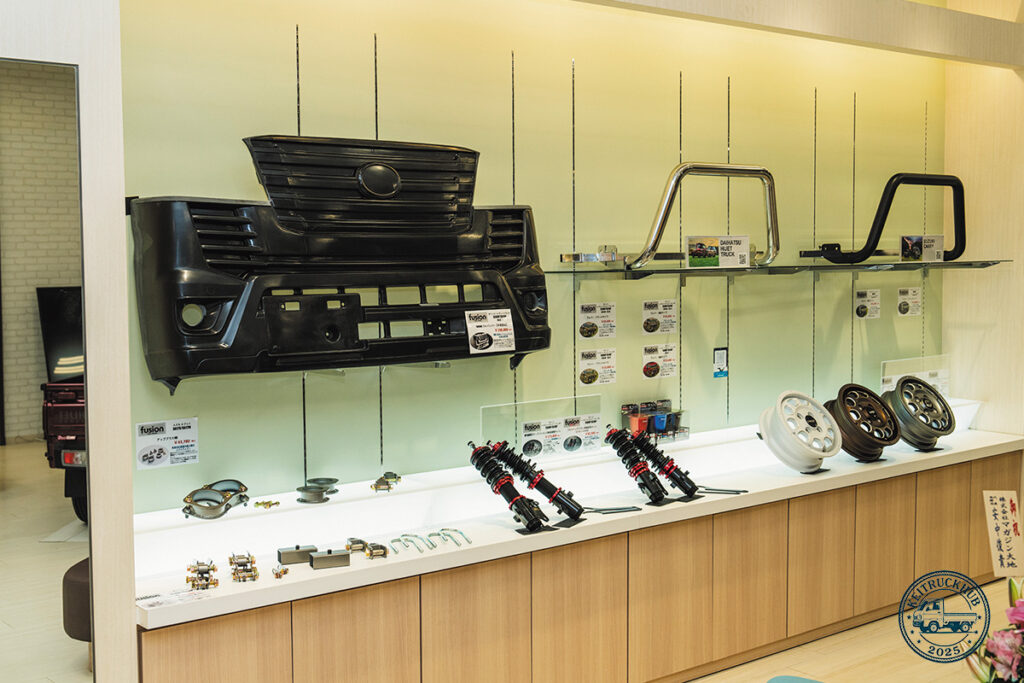
A practical challenge after import is parts availability. Kei trucks are Japan-domestic vehicles, meaning American auto parts stores don’t stock components. While consumables like oil filters, brake pads, and belts sometimes have cross-compatible alternatives from other manufacturers, engine and transmission parts remain model-specific.
Fortunately, kei truck parts suppliers have emerged within the U.S. in recent years, offering online ordering. Direct imports from Japan are also viable. While shipping costs apply, Japanese auction sites like Yahoo! Auctions, Mercari, and specialty shop websites provide access to virtually any part needed.
Maintenance-wise, kei truck engines are mechanically simple and DIY-friendly. Oil changes, brake pad replacement, and battery swaps can be performed with basic tools. Online communities share abundant service manuals and videos in both English and Japanese, creating a comprehensive resource library.
Community and Support
One of the most encouraging aspects of kei truck ownership is the thriving American community. Reddit’s r/keitruck, Facebook groups, and specialty forums buzz daily with import procedure questions, state-specific registration information, maintenance advice, and parts sourcing tips.
Regional kei truck meetup events bring owners together to exchange information and showcase custom builds. Participating in these communities ensures you’re never isolated in your kei truck journey.
Some import brokers and specialty shops offer after-sales support, including registration assistance, maintenance services, and custom parts installation. Having such resources nearby gives first-time owners confidence in welcoming a kei truck into their lives.
Pre-Purchase Checklist
Before committing to a kei truck import, verify several critical points.
First, confirm legality in your state.
Even vehicles over 25 years old may face registration restrictions or outright prohibition depending on location. Check your DMV’s website or call ahead, and consider registration in neighboring states if necessary.
Second, clarify intended use and driving environment.
Kei trucks weren’t designed for sustained 70 mph highway cruising. With 660cc engines, top speeds hover around 60-65 mph. They excel at farm work, campground transport, and urban deliveries but aren’t suited for daily 30-mile highway commutes.
Third, assess your mechanical skills and tool availability.
While mechanically simple, 25-year-old vehicles inevitably require maintenance. Can you handle basic repairs yourself, or do you have a trustworthy mechanic nearby?
Finally, understand the complete budget picture.
Beyond purchase price, factor in shipping, duties, registration, maintenance, and insurance. Build in financial cushion for unexpected expenses.
The Future of Kei Truck Imports
As of 2026, kei truck imports have surged 300% over the past five years, with approximately 7,500 units entering America annually. This trend shows no signs of slowing. Each year brings newly eligible vehicles as they cross the 25-year threshold—2027 will see 2002 models become importable, followed by 2003 models in 2028.
Political developments also warrant attention. President Trump’s statements supporting domestic kei vehicle production have sparked discussion about potentially relaxing the 25-year rule. However, revising safety and emissions standards takes time, so immediate access to newer kei trucks remains unlikely.
Still, interest in kei trucks continues growing, and state-level legislative reforms are progressing. As more states follow Colorado’s example in officially recognizing kei vehicles, import barriers will continue falling.
Final Thoughts
Importing a Japanese kei truck to America isn’t simply buying a vehicle—it’s embarking on an adventure. Mountains of paperwork, customs negotiations, DMV battles, and daily life with a right-hand-drive vehicle all become chapters in your story with this small truck.
Kei trucks are companions that supported someone’s work in Japan. They’ve traveled rice paddy paths, hauled materials, and made countless trips to morning markets. When that truck crosses the ocean to find a new owner in America, it begins a second life. This transcends mere utility—there’s deeper meaning in that journey.
The import process is complex and costs are significant. Yet owners universally report that when their chosen kei truck arrives at port and they turn the key for the first time, every challenge proves worthwhile. Japanese craftsmanship packed into a compact body, meeting new possibilities on American soil—this encounter may be the true value of kei truck importing.
If you’re seriously considering importing a kei truck, start by researching your state’s regulations, joining online communities, and listening to experienced owners. When you’re ready, browse Japanese auction sites. Somewhere among those listings, a truck is waiting for you.
🛻 Recommended Gear for Kei Truck Owners
Hand-picked products available on Amazon.
Nilight 18W LED Spot Off-Road Lights (2-Pack)
Super bright 1260LM - perfect for night trails and farm use.
View on Amazon →2-Inch Lift Kit - Suzuki Carry / Daihatsu Hijet
Compatible with DD51T, DB51T, S81P, S83P, S110P, S210P.
View on Amazon →Heavy Duty Multi-Use Cargo Net for Truck Bed
Stretchable bungee net - fits kei truck beds, ATVs, UTVs.
View on Amazon →* As an Amazon Associate, KeiTruckHub earns from qualifying purchases.