Most Americans think traditional van life requires a full-size van.
But in Japan, some builders prove otherwise — with a kei truck.
This project shows how a small kei truck can beat traditional van life on cost, efficiency, and freedom.
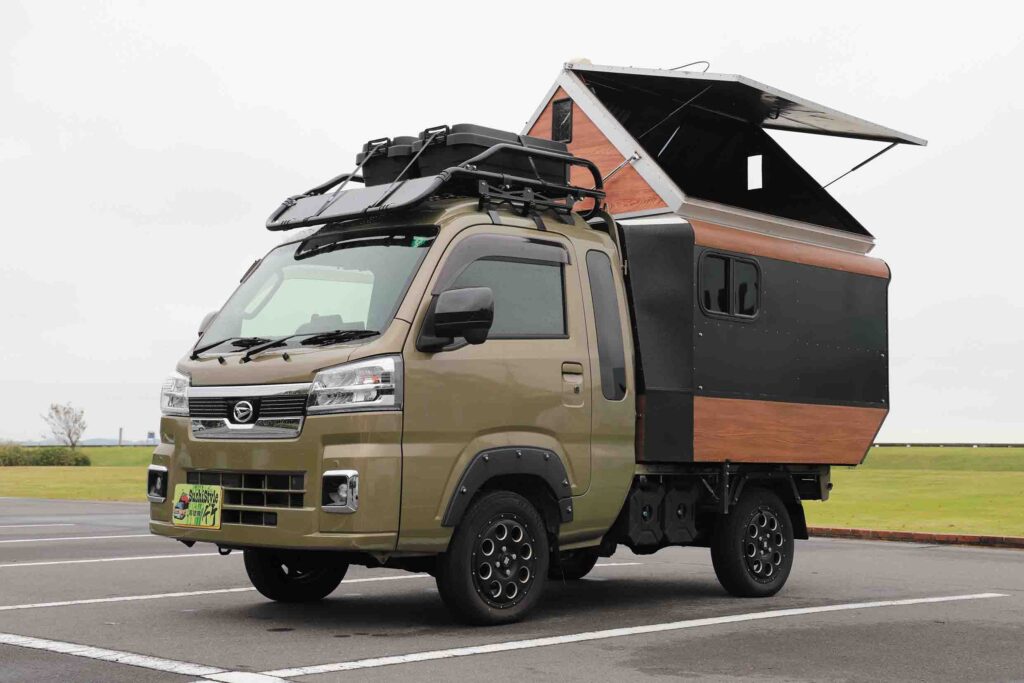
Based in Ibaraki, Japan, two creators turned a small kei truck into a fully functional mobile living space — one designed not just for camping, but for work, travel, and daily life.
Thinking about owning a kei truck like this in the U.S.?
Read: How to Import a Kei Truck to the U.S. (Step-by-Step Guide)
From Work to Travel: Why They Chose a Kei Truck
This story starts with a simple problem: how do you combine work and travel without owning multiple vehicles?
One of the builders had already been experimenting with a work-from-anywhere lifestyle.
However:
- Full-size campers were expensive
- Running costs were high
- Owning multiple vehicles wasn’t realistic
The solution? A kei truck.
Compared to larger vehicles, kei trucks offer:
- Lower purchase cost
- Lower maintenance cost
- Better fuel efficiency
- Excellent maneuverability
But the biggest advantage is freedom.
Turning a Kei Truck Into a Mobile House
Instead of treating the truck as a simple cargo vehicle, they used it as a base for something much bigger: a mobile living and working space.
The build focuses on one key idea: maximize the truck bed.
Key features of the build:
- Custom camper shell
- Expandable roof structure
- Built-in sleeping space
- Work-friendly interior layout
The result is something unique — a kei truck that functions like a tiny cabin on wheels.
The Pop-Up Roof Changes Everything
The most important feature is the roof.
Instead of a fixed camper shell, the roof opens upward.
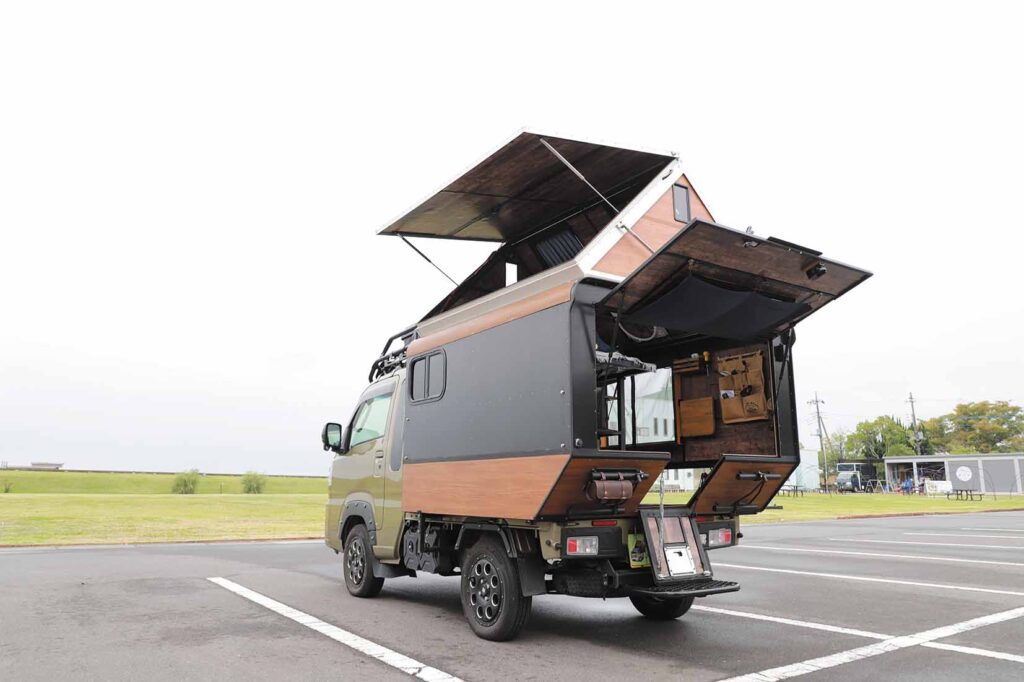
This creates:
- More headroom
- A loft-style sleeping area
- A more open interior
When closed, it remains compact and drivable. When opened, it becomes a livable space.
This dual-purpose design is what makes the build truly practical.
A Small Space That Works for Real Life
Inside, the layout is designed for actual use — not just looks.
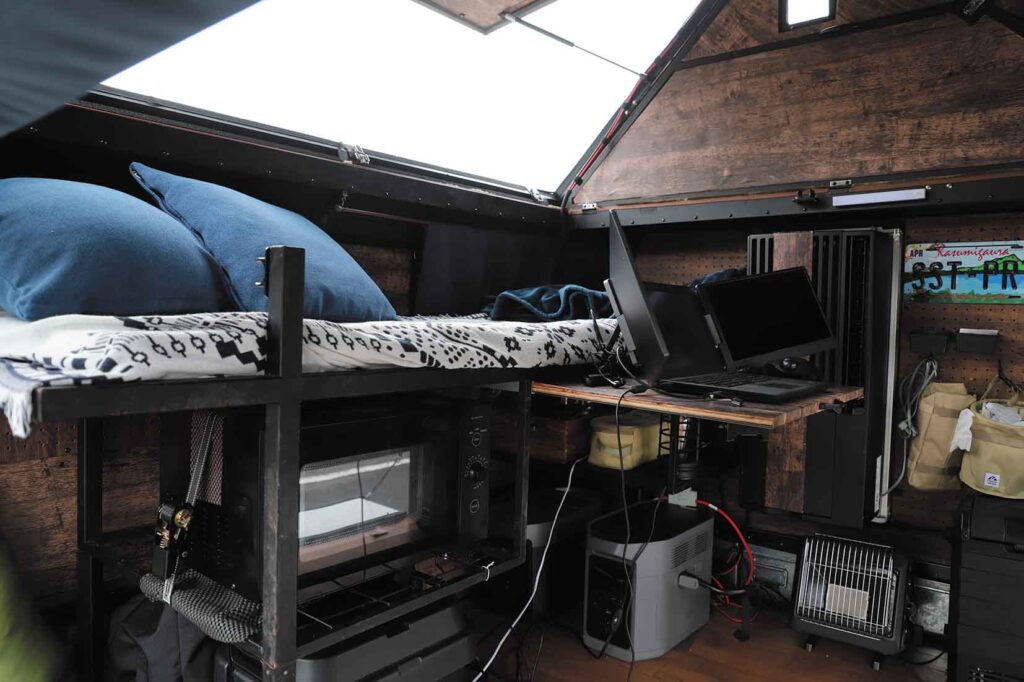
According to the build concept:
- A table and bed are always available
- Storage is built into the walls
- Work and living space coexist
This isn’t just for weekends. It’s built for daily use.
Why Kei Truck Campers Make Sense in Japan
This kind of build works especially well in Japan.
Because of:
- Narrow roads
- Limited parking
- Compact travel culture
Smaller vehicles are not a limitation — they’re an advantage. And kei trucks take that idea even further.
A Different Kind of Camper Philosophy
In North America, camper builds usually focus on:
- Bigger vans
- More power
- More space
This kei truck takes the opposite approach and beats traditional van life with less size and more efficiency.
Instead of copying large campers, it redefines the idea.
Why This Matters for U.S. Readers
Kei trucks are regulated differently depending on your state. Even if this exact model isn’t available in the U.S., the concept is important.
As kei trucks become more popular through the 25-year import rule, more people are experimenting with builds like this.
This project shows:
- What’s possible with a small platform
- How to maximize limited space
- Why simplicity can be powerful
It’s essentially “van life, but smaller and smarter.”
Read: How to Make a Kei Truck Street Legal in the USA
Curious why kei trucks are becoming popular?
Read: Why Kei Trucks Are Booming in America
More Than a Vehicle: A Lifestyle
This project is not just about a truck. It represents a different way of thinking:
- Work from anywhere
- Travel without limits
- Live with less
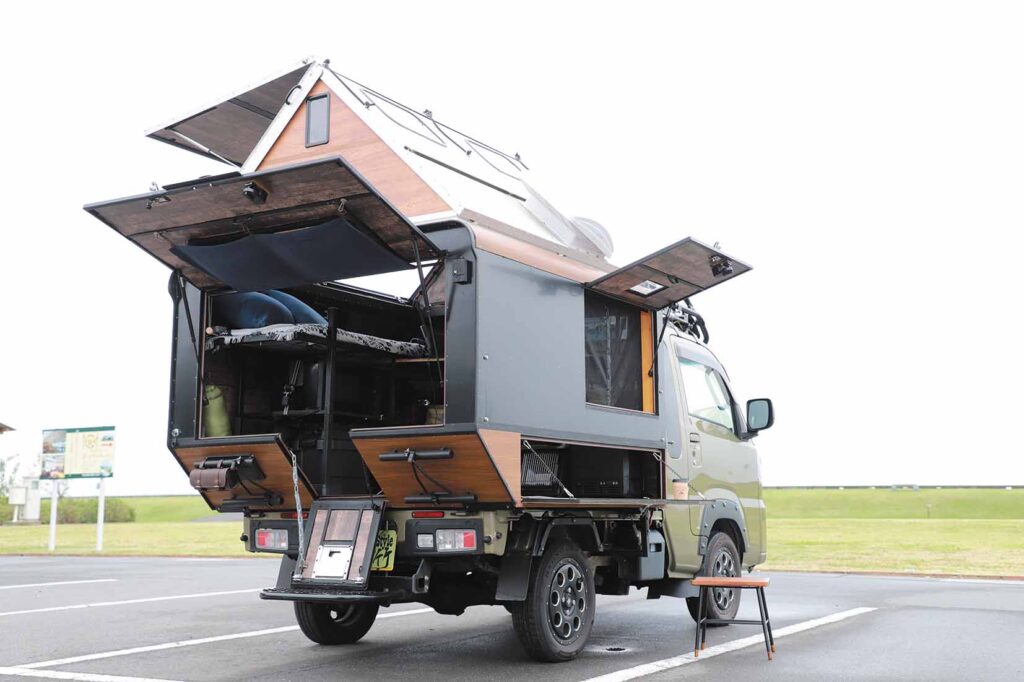
A kei truck becomes more than transportation — it becomes a tool for freedom.
Final Takeaway
This kei truck camper proves something simple: you don’t need a large vehicle to create a meaningful travel experience.
Instead: smart design + small platform = real usability.
For many enthusiasts, that’s why a kei truck mobile home can beat traditional van life — with less cost, less complexity, and more freedom.
Related Reading
Want to learn how to import a kei truck like this?
Read: How to Import a Kei Truck to the U.S. (Step-by-Step Guide)
Not sure which kei truck to start with?
Read: Best Kei Trucks for Beginners
Disclaimer
Camper conversions add weight and may alter handling, payload, electrical, propane, ventilation, and fire-safety requirements. Registration and RV rules vary by state and province. Confirm the truck's rated capacity, weigh the finished build, and have structural, fuel, and electrical work reviewed by qualified professionals before road or overnight use.
Sources and Verification
- M.Y.S Mystic — Mini POP Flyer specifications and layout
- NHTSA — U.S. vehicle importation and 25-year eligibility FAQ
- Editorial archive: Magazine Daichi / Kei Truck Kingdom (licensed source material).
Sources checked: July 24, 2026.
Written by KeiTruckHub Editorial Desk
Editorial review: Kei Truck Kingdom editorial team
Last updated: July 9, 2026