If you’re new to kei trucks, choosing the right model is one of the most important decisions you’ll make.
At first, all kei trucks look similar — small, simple, and boxy. But once you dig a little deeper, you’ll realize each model has its own personality.
Thinking about driving a kei truck in the U.S.?
Read more: How to Make a Kei Truck Street Legal in the USA
Why Model Choice Matters More Than You Think
On paper, most kei trucks seem identical:
- Small engines
- Compact bodies
- Similar payload capacity
In reality, they feel very different. Some are easier to maintain, more reliable, or simply more fun to drive.
Your choice affects how much you enjoy ownership — so it’s worth understanding what each model brings to the table.
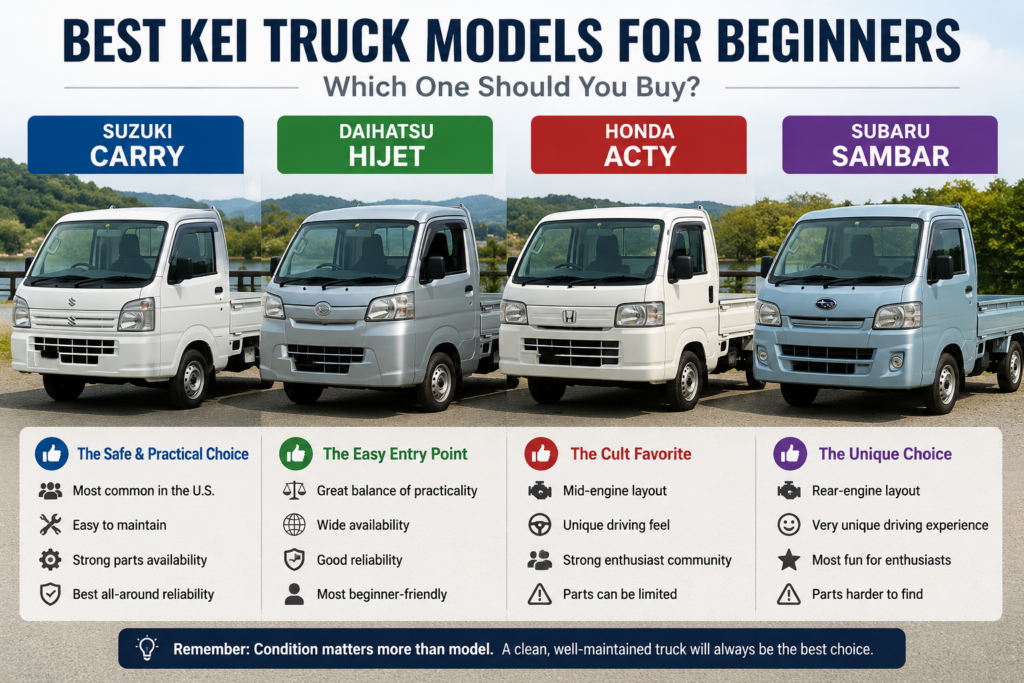
Honda Acty: The Cult Favorite
If kei trucks had a fan club, the Honda Acty would lead it.
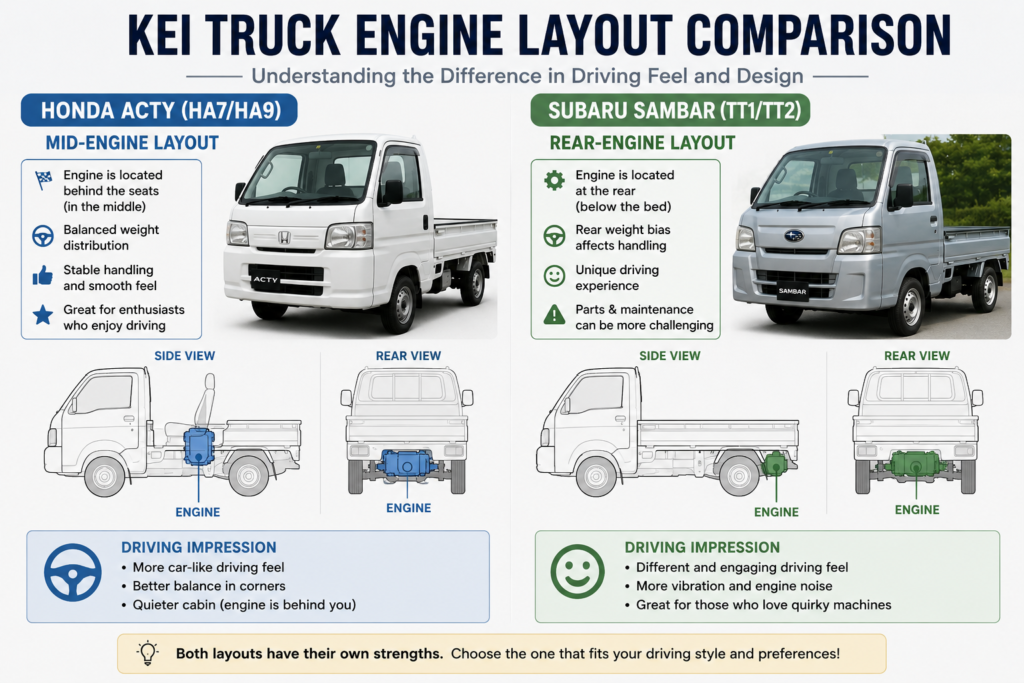
The Acty stands out for one reason: its mid-engine layout. This design gives it a unique driving feel and strong enthusiast appeal.
Acty owners tend to be passionate about their trucks. If you want something that feels special — not just practical — this is it.
Trade-off: Parts availability can be limited compared to more common models.
Subaru Sambar: The Unique Choice
The Subaru Sambar is the most unusual kei truck on the market.
It uses a rear-engine layout, which creates a different handling feel and strong character. Many enthusiasts say it’s the most fun to drive.
Trade-offs:
- Parts can be harder to find
- Fewer mechanics are familiar with it
Older Sambars in particular have a devoted following, but ownership requires more patience with sourcing components.
Suzuki Carry: The Smart Beginner Choice
If you want something simple that just works, the Suzuki Carry is your best bet.
Why?
- Most common kei truck in the U.S.
- Easy to maintain
- Strong parts availability
- Many U.S. importers specialize in it
It may not be the most exciting choice, but it’s the safest one for beginners.
Daihatsu Hijet: The Balanced Option
The Daihatsu Hijet sits comfortably in the middle.
It offers:
- Good reliability
- Easy maintenance
- Wide availability
It’s often considered the most beginner-friendly kei truck overall. If you’re unsure where to start, start here.
Ready to import your first kei truck?
Read more: How to Import a Kei Truck to the U.S.: Step-by-Step Guide (2026)
The Truth Most Guides Don’t Tell You
Here’s the reality most articles skip: condition matters more than model.
Consider these comparisons:
- A clean Hijet is better than a rusty Acty
- A well-maintained Carry is better than a neglected Sambar
Auction photos can be misleading. Rust and wear often look minor in listings but become expensive problems later. Always request detailed inspection sheets and, when possible, close-up photos of the undercarriage.
What American Buyers Often Overlook
Another key point that beginners miss: state registration matters more than model choice.
Some trucks are:
- Easy to import federally
- Hard to register in your state
Always check your local DMV requirements first. Experienced buyers check the laws in their state, then choose a truck that fits — not the other way around.
Kei truck laws vary significantly depending on where you live.
Read more: Kei Truck Laws in the U.S.: How Far You Can Drive
So… Which Kei Truck Should You Buy?
Here’s the simple answer, broken down by priority:
| Priority | Best Choice |
|---|---|
| Reliability | Suzuki Carry |
| Character | Honda Acty |
| Uniqueness | Subaru Sambar |
| Balance | Daihatsu Hijet |
The truly best choice is the one that fits your needs, your budget, and your state’s registration rules.
Quick Recommendation
- Most beginner-friendly: Daihatsu Hijet
- Easiest maintenance: Suzuki Carry
- Most unique: Subaru Sambar
- Most fun to drive: Honda Acty
Final Thoughts
This is where most people fall into the kei truck rabbit hole.
At first, you just want something cheap and useful. Then suddenly you’re comparing engine layouts, checking auction sheets, and debating Acty vs. Sambar late into the night.
And that’s the fun of it. You’re not just buying a vehicle — you’re entering a niche enthusiast world with its own culture, quirks, and community.
Curious why kei trucks are becoming so popular?
Read more: Why Kei Trucks Are Booming in America
Related Reading
Read more: How to Import a Kei Truck to the U.S.: Step-by-Step Guide (2026)
Read more: How to Make a Kei Truck Street Legal in the USA
Read more: Kei Truck Laws in the U.S.: How Far You Can Drive
Read more: Why Kei Trucks Are Booming in America
Sources and Verification
- Honda — T360 and Honda mini-truck production history
- Suzuki Digital Library — Carry model history
- Daihatsu — Hijet Truck official model information
- Subaru — Sambar Truck official model information
- NHTSA — U.S. vehicle importation and 25-year eligibility FAQ
- Editorial archive: Magazine Daichi / Kei Truck Kingdom (licensed source material).
Sources checked: July 24, 2026.
Disclaimer
Model recommendations and characteristics described in this guide reflect general trends observed in the U.S. kei truck community as of 2026. Actual reliability, parts availability, and ownership experience vary widely by individual vehicle condition, model year, and region.
Before purchasing any kei truck for U.S. import, always verify current federal import eligibility, state registration requirements, and inspection standards with U.S. Customs and Border Protection (CBP), your state DMV, and a licensed customs broker.
Written by KeiTruckHub Editorial Desk
Editorial review: Kei Truck Kingdom editorial team
Last updated: July 9, 2026