


In the land of full-size pickups, Japanese kei trucks are quietly but unmistakably gaining ground. Over the past five years, import numbers have surged 300%, with approximately 7,500 units entering America in 2024 alone. Major media outlets—The New York Times, CNN, NBC—have featured them as the “anti-Cybertruck.” Even President Trump publicly called them “really cute” and hinted at relaxing import restrictions. Why is a truck measuring just 11 feet long capturing such attention in a country where massive pickups are the norm? This article explores the value shift these small trucks symbolize and the five reasons behind their boom.
Affordable Reality: Price That Makes Sense
The average new pickup truck in America costs over $60,000 as of 2026. Popular models like the Ford F-150 and Chevy Silverado easily reach $70,000 to $80,000 when fully equipped. By contrast, imported Japanese kei trucks—including shipping and duties—cost between $6,000 and $12,000 total. For many people, this price gap is impossible to ignore.
For farmers, small business owners, side-hustle delivery drivers, and weekend DIY enthusiasts, kei trucks embody the ideal: sufficient function at an accessible price. Even without the budget for a full-size truck, you can buy a kei truck outright with cash. Owning a vehicle free of monthly payments translates to financial freedom.
Running costs amplify the appeal. The 660cc engine delivers 40–50 miles per gallon. Small tires cost around $200 for a full set. Oil changes and brake pads remain inexpensive. Insurance runs $30–$50 monthly due to low vehicle value. “Cheap to buy, cheap to maintain, yet genuinely useful”—this trifecta resonates deeply.
The Goldilocks Size Factor: Why Kei Truck Dimensions Are Just Right
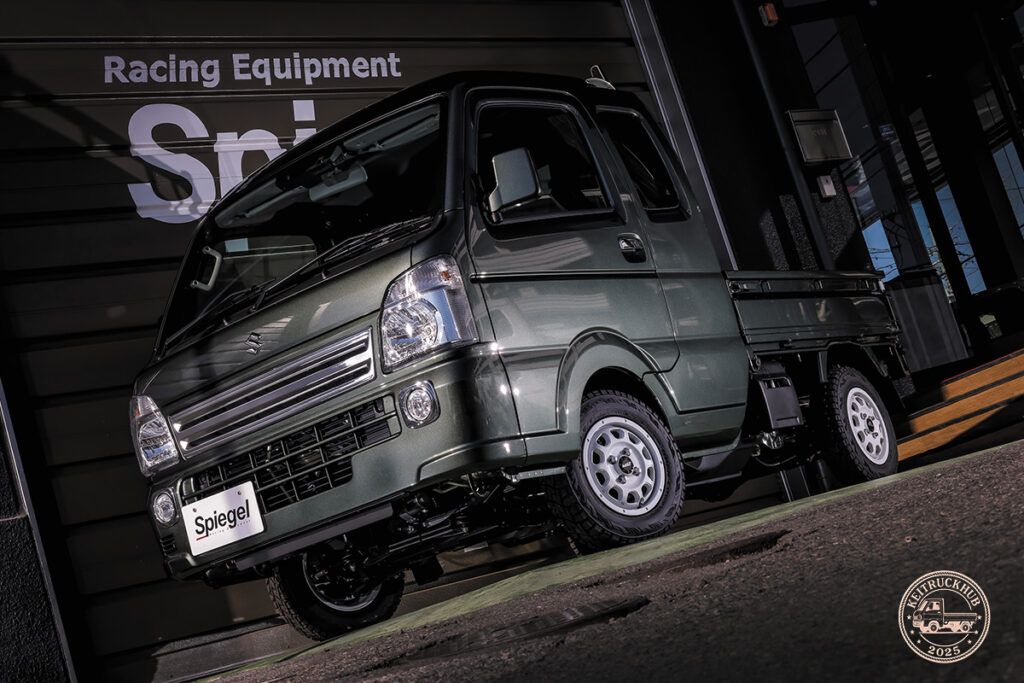
Kei trucks measure approximately 11 feet long and 5 feet wide. Yet their beds hold surprising cargo: lumber from the hardware store, bags of soil, lawn mowers, camping gear, produce for farmers markets—most everyday hauling needs fit comfortably.
American farmers and ranchers embrace kei trucks precisely for this “just right” quality. On sprawling properties where daily trips run from barn to field to livestock shed, full-size trucks waste fuel and struggle with tight turns. Kei trucks navigate narrow farm roads effortlessly, U-turn easily, and reduce daily stress through sheer maneuverability.
Urban environments showcase similar advantages. Tight alleyway deliveries, residential landscaping work, event equipment transport—kei trucks access spaces where larger vehicles can’t go. Compact parking footprints matter economically in high-rent cities.
The concept of “sufficient” is gradually gaining acceptance in America. The shift moves from “bigger is better” to “right-sized for me.” Kei trucks symbolize this evolution.
JDM Culture Meets Nostalgia
Japanese Domestic Market (JDM) culture has maintained a devoted American following for decades. Once centered on sports cars like the Skyline GT-R, Supra, and RX-7, this passion now welcomes kei trucks into its ranks.
Bringing a kei truck to a car meet generates attention rivaling any sports car. Right-hand drive, Japanese stickers, unfamiliar badges, distinctive styling—all signal “something special from another culture” that sparks curiosity. Conversations flow naturally: “Where’d you get this?” “How’s driving right-hand?” “What did it haul in Japan?” The truck becomes a connector between people.
Nostalgia for the 1990s and early 2000s also fuels popularity. Simple mechanics, minimal electronics, DIY-friendly repairs—these qualities feel refreshingly familiar to those weary of over-teched modern vehicles. “Cars used to be like this” merges with “Japanese utility vehicle” to create unique appeal.
Kei trucks carry stories. What work did they do? Which region did they serve? Each scratch and rust spot holds history. They’re not merely used vehicles—they’re “companions with backstories.”
A Canvas for Creativity: How Kei Truck Custom Culture Thrives
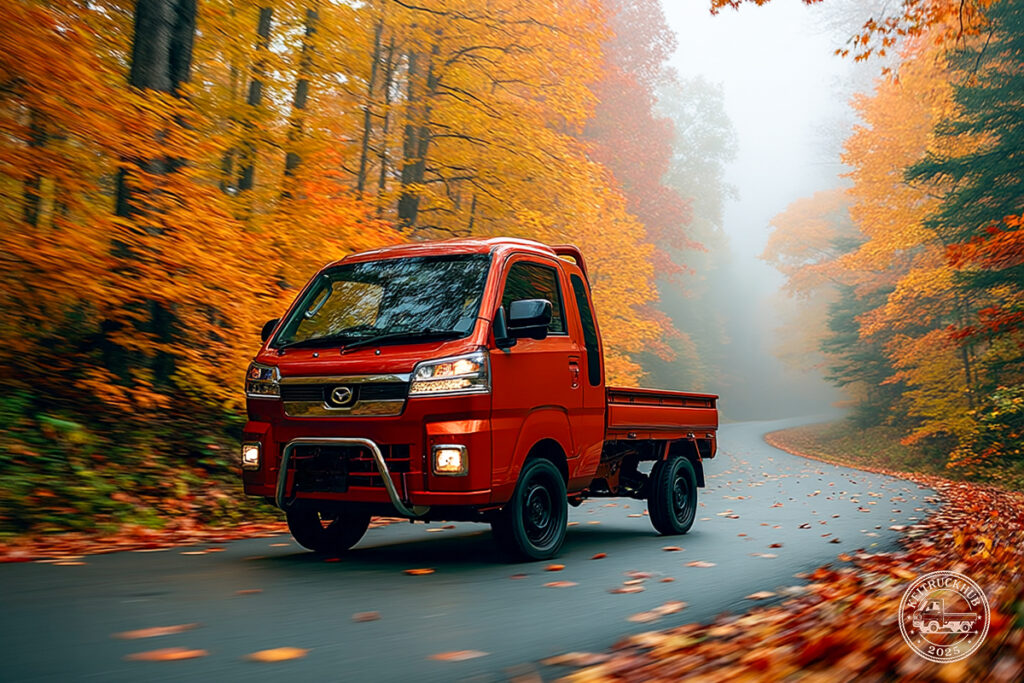
Kei trucks offer custom builders an ideal canvas. Simple designs and compact bodies invite modification in any direction.
Off-road enthusiasts install lift kits, all-terrain tires, roof racks, and LED light bars, creating miniature overlanders. Camping lovers add bed-mounted shells with sleeping quarters, kitchenettes, and solar panels for weekend adventures. Urban creatives lower suspensions, apply custom paint, and transform trucks into rolling art pieces.
YouTube hosts countless kei truck build videos, many reaching hundreds of thousands or millions of views. Viewers are captivated by ingenuity within limited budgets and small spaces. “Big possibilities from a small vehicle” resonates universally.
Mobile businesses are flourishing. Coffee machines in beds become mobile cafés. Wooden counters turn trucks into farmers market stalls. The truck itself functions as “business tool and brand identity,” with cuteness attracting customers.
Environmental Consciousness and Sustainability
As climate awareness grows, questions arise about “commuting alone in giant trucks.” Full-size pickups consume fuel heavily and emit substantial CO₂. Does anyone truly need that much vehicle?
Kei trucks represent the opposite extreme. Small engines, lightweight bodies, excellent mileage. One kei truck saves hundreds of gallons annually compared to full-size trucks—roughly 4 tons of CO₂ reduction per year. While individual impact seems modest, thousands of kei trucks create undeniable collective effect.
Moreover, most kei trucks are 25+ years old, embodying “use what exists” rather than “manufacture new.” Considering energy and resources required for new vehicle production, maintaining older vehicles also constitutes sustainability.
Younger generations increasingly embrace “consume less, choose sustainably” lifestyles. Kei trucks align with these values, attracting environmentally conscious demographics.
Symbol of Anti-Gigantism
America’s automotive market has long pursued “bigger, more powerful, more luxurious.” But fatigue with this trajectory is spreading. Vehicles too large for parking spaces, high hoods obscuring visibility, excessive power—”Do we really need this?” people ask.
Kei trucks answer that question. “Small suffices.” “Simple works.” “Right-sized brings satisfaction.” These values resonate with minimalism, tiny houses, and local-food movements—current lifestyle trends.
Media labels kei trucks the “anti-Cybertruck” not merely for size contrast. While Tesla’s Cybertruck symbolizes “futuristic, massive, expensive,” kei trucks represent “humble, compact, affordable”—the opposite pole. Neither is inherently correct; diversity of choice itself meets current needs.
On social media, kei truck owners favor the phrase “Small but mighty”—a declaration of competing through function and attitude rather than size.
The Joy of Community: Connecting with Fellow Kei Truck Enthusiasts
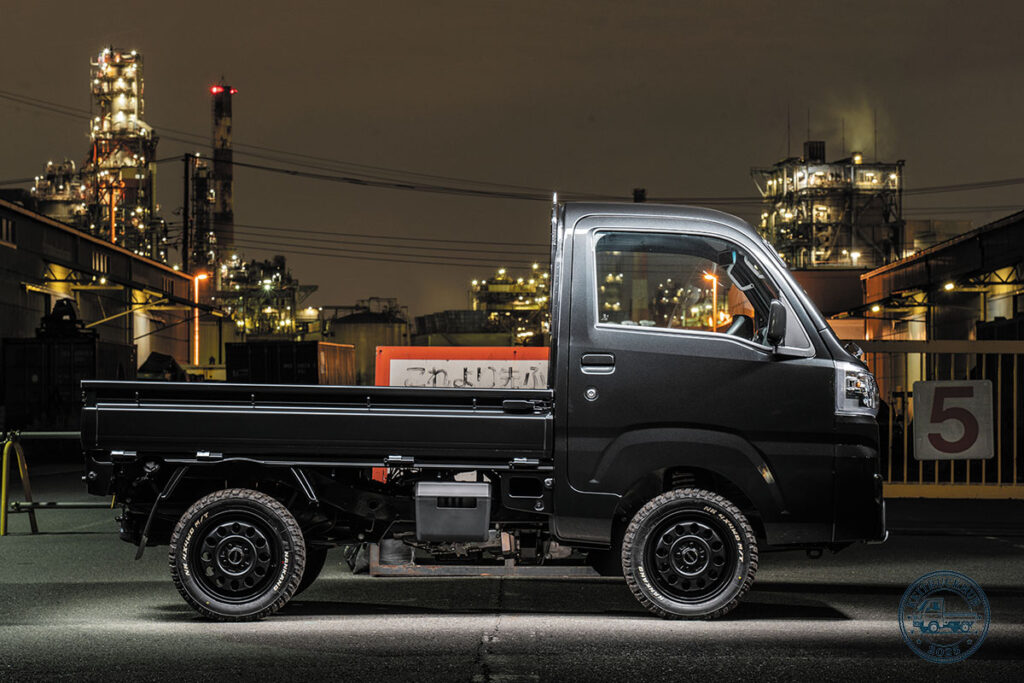
Individual owners don’t sustain the kei truck boom alone—online communities accelerate the movement.
Reddit’s r/keitruck, Facebook groups, Instagram and TikTok hashtags buzz daily with import stories, custom builds, troubleshooting, parts sourcing, and most importantly, “life with kei trucks.” It’s culture enjoyed with peers, not solitary hobby.
Regional meetups thrive. Pacific Northwest, Colorado, Texas, Florida—owners gather everywhere for information exchange and photo sessions. Prospective buyers attend these gatherings, learning from current owners. Communities generate new owners, expanding communities further—a virtuous cycle.
Kei trucks also spark conversations. At gas stations, parking lots, traffic lights, strangers approach: “Where’d you buy that?” “From Japan? Really?” These brief exchanges inject small surprises and joy into daily life.
Political Tailwinds and Regulatory Hope
In late 2025, President Trump’s post-Japan-visit comment—”Really cute trucks. We should allow production in America”—brought significant attention to the kei truck industry. The Transportation Secretary followed with “We’re considering deregulation,” triggering widespread media coverage.
Whether regulations actually change remains uncertain. Revising safety and emissions standards takes time, with expected industry pushback. Yet the fact that “government is paying attention to kei trucks” legitimized the movement, elevating it from “eccentric hobby” to “policy-worthy topic.”
This political momentum influences state-level reforms. Colorado’s official recognition of kei vehicles reflects this trend. Other states may reconsider regulations based on constituent demand and economic impact.
Voices from Real Users
Numbers and theory alone can’t capture the boom’s essence. Listening to actual owners reveals deeper dimensions.
An Oregon berry farmer says: “My old gas Carry cost $40 weekly. The electric Hijet? Eight dollars. Same work, 80% savings, and no exhaust fumes.”
A Seattle landscaper explains: “I can fit into customers’ narrow driveways and blend into residential neighborhoods. Big trucks get complaints; the kei truck gets ‘That’s adorable!'”
A Colorado camping family smiles: “Family of four goes camping. Load gear in the bed, navigate tight trails easily. Full-size trucks can’t reach where we go. The kids call it ‘the Japanese truck’ and love it.”
A Brooklyn artist says proudly: “I painted street art on it and use it for pop-up shops. Instagram gold, and it’s become a brand symbol—like a mobile gallery.”
What unites them? They see kei trucks not as “cheap substitutes” but as “perfect fits for my lifestyle.”
What Lies Beyond the Boom
The kei truck boom won’t fade as mere trend. Why? Because underlying it is fundamental shift in American values.
The “size equals success” equation is crumbling. New metrics rise: “appropriate size,” “sustainability,” “community,” “self-expression.” Kei trucks make this transition visible.
If more states reform regulations, import procedures simplify, and parts networks strengthen, kei trucks will become more accessible. Yet they probably won’t become “mainstream.” They won’t replace full-size trucks.
And that’s fine. Kei trucks serve to show “alternatives exist.” Not everyone needs to choose one. Simply knowing “this option exists” and realizing “small living can be rich”—that alone makes society more flexible.
The Big Message Small Trucks Carry
When kei trucks roll down American roads, they carry more than cargo. They transport messages: “Appropriate size suffices.” “Cherish what’s old.” “Share community and joy.”
In the land of full-size pickups, an 11-foot truck commanding attention signals something changing. That change is quiet and gradual but unmistakably spreading.
The kei truck boom isn’t simply “Japanese vehicles gaining popularity.” It’s part of a larger inquiry: “How should we live?” “What matters most?” And to these questions, small trucks answer quietly, their engines barely audible, but their message unmistakably clear.
🛻 Recommended Gear for Kei Truck Owners
Hand-picked products available on Amazon.
Nilight 18W LED Spot Off-Road Lights (2-Pack)
Super bright 1260LM - perfect for night trails and farm use.
View on Amazon →2-Inch Lift Kit - Suzuki Carry / Daihatsu Hijet
Compatible with DD51T, DB51T, S81P, S83P, S110P, S210P.
View on Amazon →Heavy Duty Multi-Use Cargo Net for Truck Bed
Stretchable bungee net - fits kei truck beds, ATVs, UTVs.
View on Amazon →* As an Amazon Associate, KeiTruckHub earns from qualifying purchases.