

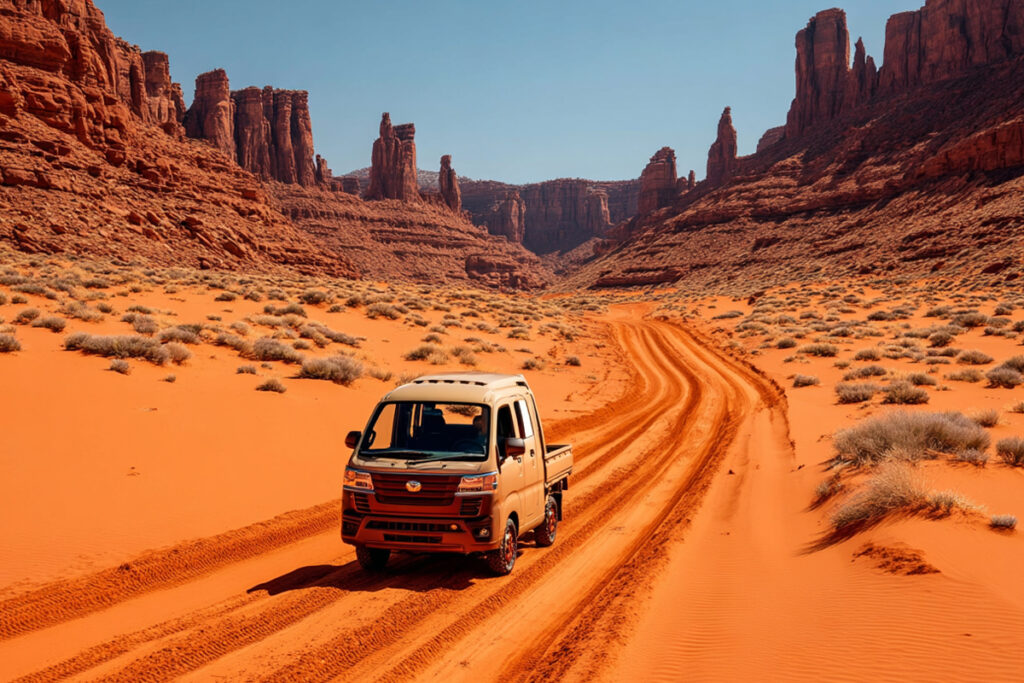
When we think of environmentally friendly vehicles, hybrids and EVs typically come to mind first. But “making the vehicle itself smaller” is another approach with significant environmental benefits. Mini trucks are a perfect example of this philosophy. In this article, we’ll examine mini trucks from an environmental perspective and explore how we should think about our relationship with vehicles.
In discussions about climate change and air pollution, technical topics tend to grab the spotlight. News about hybrid systems improving efficiency by X percent or the latest EV extending its range is easy to understand and generates excitement. But to truly reduce environmental impact, we also need to ask a more fundamental question: “Do we actually need a vehicle that large?” Mini trucks have answered this question from the field of practical use, demonstrating that “small vehicles can work just as hard.”
まず製造段階を見てみると、車両が大型化・重量化するほど、鉄、アルミニウム、プラスチック、ゴムといった資源の必要量が増加します。これらの材料の採掘、精製、加工には多大なエネルギーが消費され、CO₂や様々な汚染物質が排出されます。軽トラックと大型ピックアップトラックの重量差は数倍にもなることもあり、その影響は決して軽視できるものではありません。「必要な機能を果たせる最小のサイズ」を選択することが、ライフサイクル全体における環境負荷の低減に直接的に繋がります。
In terms of fuel efficiency during operation, mini trucks are also a rational choice. Of course, being small doesn’t automatically make them environmentally friendly if driven carelessly, but when hauling the same load the same distance, a lighter vehicle consumes less energy. This is especially true in urban and rural short-haul applications, where full-size trucks often carry loads well below their capacity – leading to the realization that “we didn’t actually need a truck that large.” Mini trucks have filled this gap and been chosen by professionals in the field for decades.
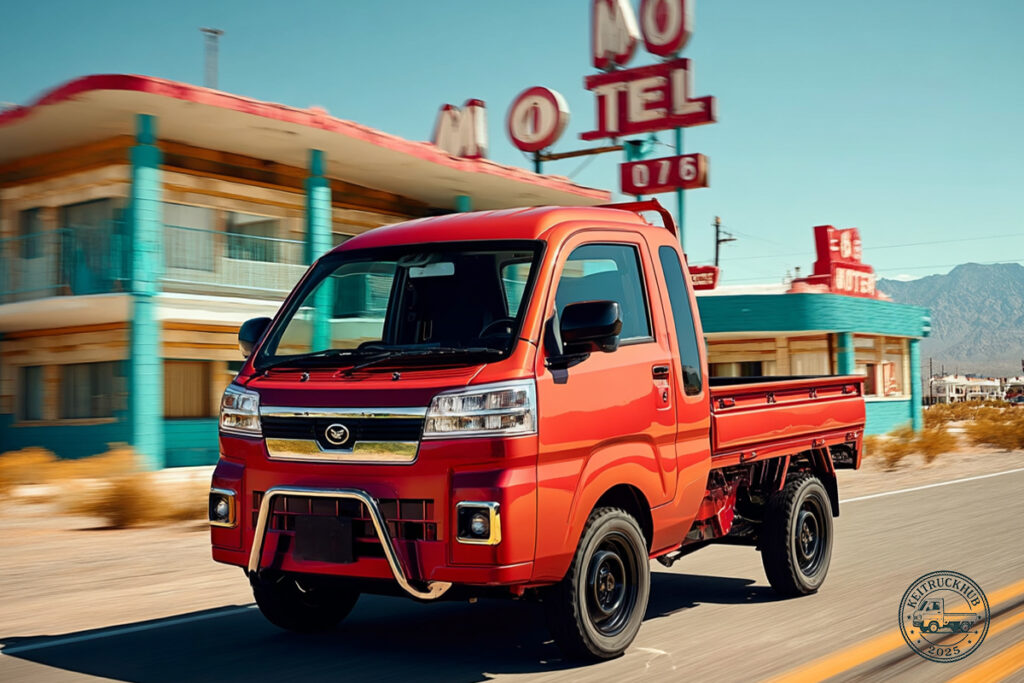
From an environmental perspective, “how long a vehicle can be used” is also a critical factor. Japanese mini trucks are built tough – with proper maintenance, they can work for 10, 20 years or more. Even after their first life ends, well-maintained units are exported overseas and find second lives on farms, construction sites, and campuses. When a single vehicle is used for a long time, it means “we don’t need to build a new one” – spreading the CO₂ emissions and resource consumption from manufacturing over many years. In this sense, mini trucks are actually remarkably eco-friendly products.
Kei trucks also pair naturally with local, community-based lifestyles. Rather than relying on massive shopping malls or distribution centers, local farm stands, small shops, and independent service providers use mini trucks to deliver goods and services within their neighborhoods. While this approach may be smaller in scale than giant logistics networks, it reduces wasteful long-distance transportation and brings people closer together – benefiting both the environment and community bonds. What mini trucks support isn’t just transportation, but “commerce with a face.”
もちろん、軽トラックにも課題はあります。古いディーゼル車は、たとえ車体が小さくても、排気ガスや騒音が地域社会の負担となる可能性があります。過積載や乱暴な運転はタイヤやブレーキの摩耗を加速させ、より多くの粒子状物質を環境に放出します。環境負荷が低いということは、「適切な使用」が前提となります。だからこそ、軽トラックの環境効果を最大限に引き出すには、車検、排出ガス規制、騒音規制といった規制と、責任あるユーザーの行動を連携させなければなりません。
近年、軽トラックの電動化・ハイブリッド化が本格化しつつあります。電動軽トラックは、短距離・定期運行という軽トラックの典型的な利用パターンに適しており、再生可能エネルギーによる充電と組み合わせることで、CO₂排出量を大幅に削減できます。太陽光パネルと蓄電池を備えた施設から、静かに街へと出発する電動軽トラックの姿を想像してみてください。それは、「エネルギーの地産地消」と「地域物流の低負荷化」を同時に実現する象徴的な光景です。
環境問題というと、「何を諦めるか」「どれだけ犠牲にするか」という議論になりがちです。しかし、軽トラックを見ていると、別のアプローチがあることに気づきます。「必要な機能を維持しながら、フォルムやスケールを再考する」ということです。大型トラックを禁止するのではなく、「この仕事は軽トラックで十分ではないか」と問いかけるのです。徐々に適切なサイズへと最適化していくことは、誰かに犠牲を強いるのではなく、実用性とエコロジーを両立させる道なのです。

Above all, kei trucks embody “ecology with a human face.” It’s not some abstract story about a massive power plant somewhere reducing CO₂ – it’s your neighborhood farmer, contractor, or delivery person efficiently moving about in a compact truck. Simply witnessing this gradually shifts our consciousness. Environmental issues can only be solved through the accumulation of individual daily choices. In that sense, choosing a kei truck and using it well is a small but tangible “vote for the environment.”
To make this more concrete, let’s consider a hypothetical example. Imagine a small suburban construction company that previously used a 3-ton truck for site visits and material deliveries. Now they’ve switched to using a kei truck for short-distance, frequent trips. The kei truck handles the multiple daily runs between the warehouse and job sites, while the larger truck only comes out a few times a week for bulk material deliveries. When you factor in not just fuel efficiency per mile, but also reduced idling time and fewer unnecessary “while we’re at it” hauls, the company’s CO₂ emissions and fuel costs could drop significantly.
環境問題を個々の車両の燃費効率から業務全体の構造化にまで広げていくと、軽トラックは驚くほど柔軟なパズルのピースとして機能します。大型トラック、バン、軽トラック、自転車、徒歩といったそれぞれ異なる特徴を持つ複合一貫輸送システムにおいて、軽トラックは「機動性がありながらも、実際の荷物を運ぶことができる」という中間的な役割を担っています。環境に配慮したサプライチェーンを設計する際に、軽トラックの活用場所を決めることは、コストの問題だけでなく、地域社会との連携や業務慣行を含めたシステム全体の最適化も考慮する必要があります。
軽トラックの環境価値は、数字だけで完璧に測りきれない面もあるかもしれません。しかし、軽トラックが多くの人の共感を呼ぶのは、「必要以上に大きなものを選ばない」「修理して長く使う」「地域や距離に合った移動手段を選ぶ」といった当たり前のことを体現しているからこそです。これからの環境コミュニケーションにおいては、派手な新技術のアピールだけでなく、こうした分かりやすい選択肢に光を当てていくことが重要になってくるでしょう。
軽トラックは単なる便利な道具ではありません。「車はどれくらいの大きさで、どれくらいの距離を、どれくらいの荷物を積めるのか」という問いを私たちに突きつけます。この問いに向き合い続けることは、環境時代のモビリティを考える上で不可欠な視点です。小さく、控えめでありながら、驚くほど働き者の軽トラックは、目立たないところで、実用エコの最前線を静かに走り続けています。