

Light trucks are used every day to load cargo and carry passengers on narrow roads. Their safety may not be flashy, but it has been supported by strict vehicle inspections and regulations, as well as technological advances and accumulated knowledge from the field. In this article, we will look at light trucks from the perspective of “safety and rules” and see how the peace of mind we take for granted is maintained.

For many people, the sight of light trucks driving on Japanese roads is a common sight. However, surprisingly, people are not aware of the many systems and efforts that go into making this “normal” possible. Light trucks in particular are often used in environments with poor road conditions and large load fluctuations, such as agricultural work and construction sites. This is why vehicle inspection systems and safety standards are even more important than for passenger cars.
Japan’s vehicle inspection system requires all vehicles, including light trucks, to undergo periodic safety and environmental performance checks. A wide range of items are inspected, including brake effectiveness, play in the steering mechanism, corrosion in the suspension and frame, the status of lights, and exhaust gas concentrations. Light trucks in particular are prone to collecting mud and salty water in the bed, which can lead to the progression of rust on the chassis and underside of the bed. Regularly lifting the vehicle to inspect the underside and making any necessary repairs plays a major role in maintaining safety.
The evolution of safety equipment cannot be overlooked. In the past, even air conditioning was an option for light trucks, and airbags and ABS were considered “luxury features.” However, driver airbags and ABS have now become almost standard, and many models are equipped with advanced safety features such as electronic stability control, collision mitigation braking, and lane departure warning. For professional drivers who drive long hours every day, these features are not just “bonuses that make driving easier,” but an important safety net that prevents accidents caused by fatigue or carelessness.
法律的に言えば、軽トラックは車体が小さいからと言って、扱いが甘いわけではない。速度制限や積載量制限、シートベルト着用義務、スマートフォン使用禁止といった基本的なルールは、乗用車や大型トラックと変わらない。むしろ、過積載や荷崩れによる事故を防ぐため、軽トラックは荷台への荷物の積み方や固定方法などについて、より厳しく監視されるべき車種と言えるだろう。荷台に高く積み上げた荷物が急ブレーキなどで前方に倒れれば、ドライバーの命に直結する重大な事故につながる可能性があるからだ。
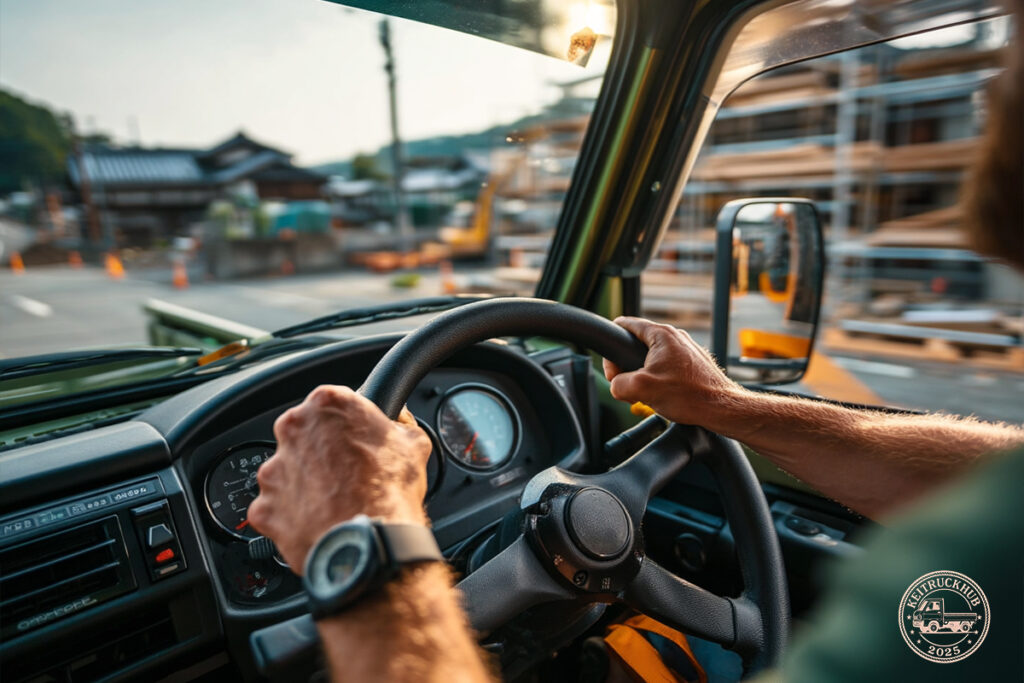
Looking overseas, the treatment of light trucks varies greatly depending on the country and region. Light trucks sold in Japan are designed to meet Japan’s safety standards and road conditions, but they do not necessarily fully meet the standards of other countries. There are a wide variety of detailed rules, such as crash test methods, pedestrian protection guidelines, and lighting and reflective material specifications, and whether they are allowed to be driven on public roads in the export destination is left to the discretion of each country. The relationship between light trucks and legal regulations is extremely diverse, with some countries limiting their use to farmland and private roads, while others allow them to be driven as low-speed vehicles at speeds below a certain level.
These differences also represent differences in the answers each country and society has to the question, “What is safety?” In countries with well-developed highway networks and high average speeds, there is a strong belief that vehicles need to be large and heavy in order to absorb the energy of a collision. On the other hand, in regions with many residential and farm roads and where low-speed driving is the norm, the idea may be to use small, agile vehicles, creating an environment where serious accidents are less likely to occur in the first place. Light trucks are vehicles based on the latter philosophy, and their safety is determined by a combination of “size,” “usage,” and “rules.”
It is essential for business operators to not only comply with laws and regulations, but also to thoroughly implement safety management themselves. Make daily inspections a habit, and frequently check tire pressure and wear, whether lights are on, and how the brakes feel. Educate drivers on how to load and secure cargo properly, and create a culture that does not tolerate overloading. Avoid long working hours and unreasonable schedules, and manage safety, including the condition of the driver. Although none of these are specified in detail by law, they are important factors that determine safety on site.
今後、技術の進歩によって軽トラックの安全性はさらに向上していくでしょう。車両の状態を常に監視し、異常があれば修理工場や管理者に自動通報するテレマティクスや、運転行動を可視化して危険運転を検知するフリートマネジメントシステムは、すでに一部の商用車に導入されています。これらのシステムが軽トラックに普及すれば、「故障する前に修理する」「事故につながる前に不具合に気づく」といった予防的な安全管理が容易になります。
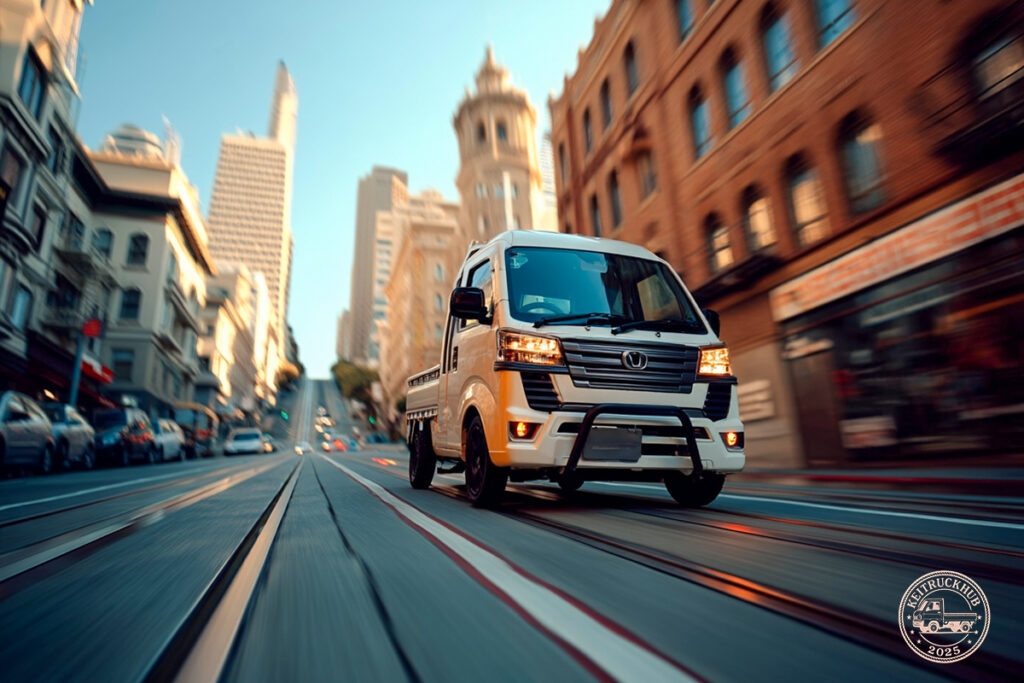
In the future, combining it with autonomous driving technology will likely become a reality. There’s no need to suddenly imagine a future where fully autonomous light trucks are driving all over the country, but there’s every chance that autonomous driving will be put to practical use in closed environments, such as limited routes on farms or within the grounds of logistics centers. The technology and know-how cultivated there may eventually be applied to driving on public roads, evolving light trucks into “vehicles that can work safely with or without a person on board.”
When we look at light trucks from a safety perspective, we realize that their small size means we have to be more careful. Because they are compact and easy to handle, drivers tend to speed and make awkward passes on narrow roads. There is also the temptation to load them with a little more cargo or to park in a tight space. How can we control these risks lurking behind the “shadow of convenience” using systems, technology, and on-site wisdom? Perhaps this is the essential theme when considering the safety of light trucks in the future.
Finally, I would like to touch on what each of us can do. For drivers of light trucks, paying attention especially on familiar roads and reminding yourself, “Today, my top priority is getting both cargo and passengers home safely,” can make a big difference, especially when you’re in a hurry. Those walking or riding bicycles near light trucks can also greatly reduce danger by simply keeping their distance and being aware of “blind spots in the cargo bed” and “differences in braking distances.” Safety is not something that can be achieved solely by cars and rules, but by the attitudes of everyone who shares the road.
Although light trucks don’t often receive much attention, they are a kind of barometer for measuring society’s safety culture. How seriously safety measures are implemented for these small vehicles and how carefully they are handled in the field will ultimately have an impact on large trucks on highways, passenger cars used for commuting, and even the next generation of mobility. Considering this, considering “light truck safety” may actually be nothing less than updating our society’s overall safety perspective. Light trucks, which operate day and night as a matter of course, can also be viewed from a different perspective as a testing ground for safety and rules. Each and every light truck fulfills its mission without accident, supported by laws and regulations, technology, and human awareness. These experiences have shaped our sense of security when it comes to the presence of light trucks. To maintain this sense, we need to continue to take a step further and consider the safety of these “little hard workers.”