


However, electric kei trucks are transforming last-mile logistics with their compact size, low noise, and high efficiency.
Built for short-distance mobility, these EV trucks offer a quiet and practical solution for modern delivery needs.
In addition, their simple structure makes them easy to operate in narrow neighborhoods, dense urban streets, and areas where larger vehicles face limitations.
Moreover, EV kei trucks consume less power compared to traditional delivery vans. Because of their lightweight design and small electric motors, they require less energy to accelerate and maintain speed. As a result, these trucks reduce operating costs for businesses while also minimizing environmental impact.
In addition, many companies are now adopting EV kei trucks for urban delivery routes. Their turning radius is small, and their compact frames make parking and loading easier than with conventional trucks. Furthermore, the quiet operation helps reduce noise pollution in residential areas, which is becoming an important consideration for city logistics.
However, EV kei trucks still face limitations in heavy-load environments. Their maximum payload is smaller than that of larger commercial EVs, which means they are best suited for light cargo. Nevertheless, their efficiency and simplicity make them ideal for use in supermarkets, small parcel delivery, mobile stores, and food distribution.
In recent years, technological improvements have strengthened the practicality of EV kei trucks. Furthermore, battery life has improved, charging times have become shorter, and regenerative braking allows for efficient energy use in stop-and-go traffic.Consequently, these trucks are gaining popularity among companies looking for sustainable and economical solutions.
In addition, EV kei trucks support more than just logistics. Additionally, many small businesses use them as mobile shops, refrigerated delivery vehicles, maintenance service trucks, and compact workstations. In addition, their adaptability allows companies to customize the cargo bed, add storage units, or install equipment without requiring a large budget.
Therefore, EV kei trucks are becoming essential vehicles in the shift toward eco-friendly city planning. Their low emissions, compact size, and affordable running costs match the growing demand for sustainable transport. As cities continue adopting clean-energy solutions, EV kei trucks will likely play an even more important role in daily life.
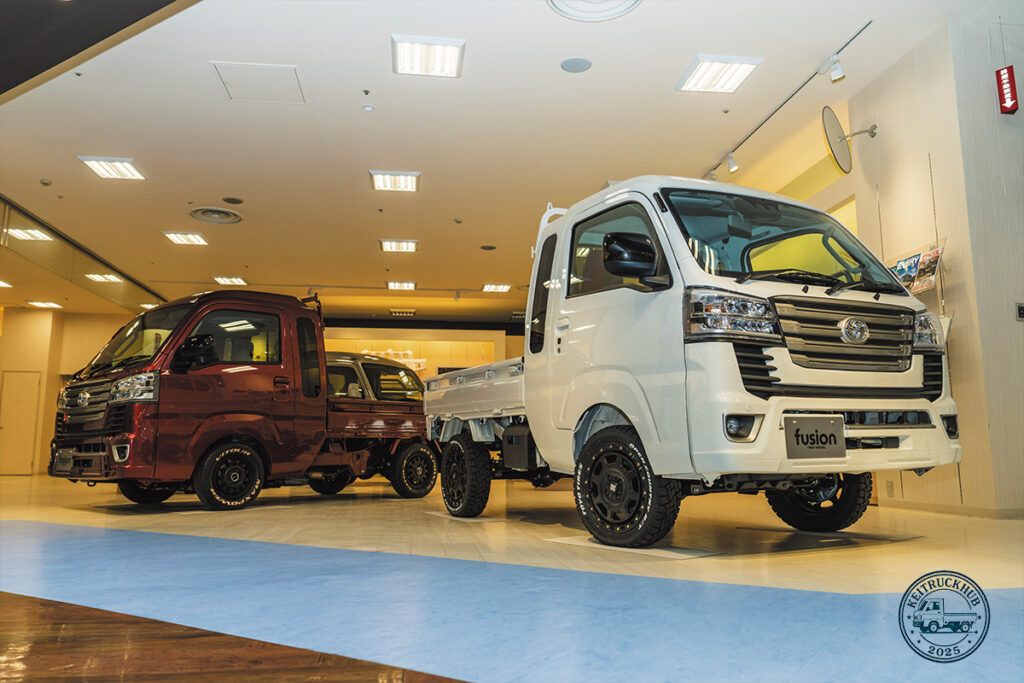
The Financial Case: Predictable Operating Costs
One of the most compelling advantages of EV light trucks is cost predictability.
While gasoline prices fluctuate with geopolitical tensions and seasonal demand, electricity rates remain relatively stable—at least in the medium term. When combined with solar power generation and battery storage systems, businesses can effectively produce their own “fuel” on-site.
For operations with fixed daily routes—delivery services, municipal vehicles operating within defined areas—costs can be calculated quite accurately from electricity consumption and utility rates. This transparency makes the business case for adoption much clearer.
Real-world calculation example:
– Gas kei truck: $0.12–$0.15/mile (at $4/gallon, 30 MPG)
– EV kei truck: $0.03–$0.05/mile (at $0.13/kWh, 3 miles/kWh)
Annual savings (10,000 miles per year): $900 to $1,200 per vehicle
Case study: A landscaping company in Portland installed a 10 kW solar array on the roof of its garage. By using daytime downtime to charge two kei trucks, the company expects to save more than $8,000 over five years—enough to help fund the purchase of a third truck.
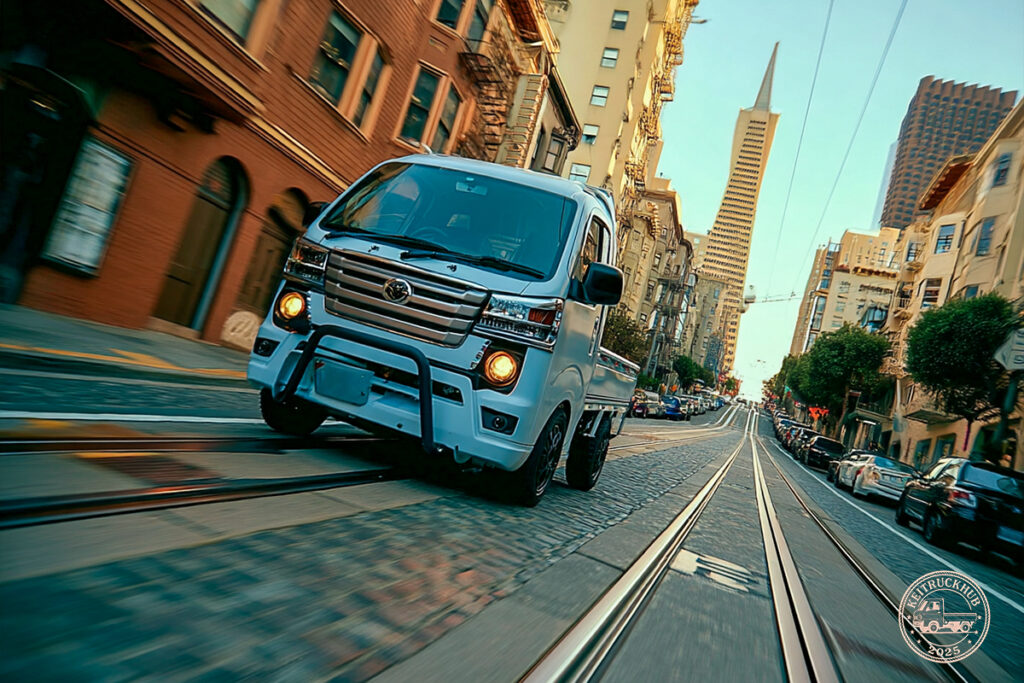
Urban Benefits: Less Noise and Cleaner Air
EV light trucks dramatically reduce noise and air pollution issues that plague urban areas.
The Early Morning Problem
Early morning and late-night deliveries in residential areas are unavoidable in cities. The idling noise and exhaust fumes from diesel trucks create significant stress for nearby residents—especially during hours when people are sleeping.
Motor-driven EV light trucks are nearly silent during startup and acceleration, and they produce zero tailpipe emissions.
Decibel comparison:
– Diesel light truck (idling): 70–80 dB
– Gas kei truck (idling): 60–70 dB
– EV kei truck (operating): 40–50 dB (conversation level)
The “Coexistence with Residents” Principle
From the perspective that vehicles operating during sleeping hours should be quieter, electrifying light trucks carries profound significance in promoting harmonious coexistence with communities.
Regulatory trend: By 2030, analysts predict 50+ major U.S. cities will implement emission-based delivery restrictions. Los Angeles, Seattle, and New York are already piloting zero-emission zones where gas vehicles face steep access fees.
Agricultural Applications: The Perfect Testing Ground
The potential for electric light trucks in agriculture is substantial—and often overlooked.
Why Farms Are Ideal for EV Adoption
Farms may appear vast, but in reality, they’re sites where the same routes are driven repeatedly. The pattern is predictable: fields to barn, barn to packing shed, packing shed to farmers market or direct-sale store.
This makes it easy to plan daily driving distances and charging timing.
merit:
1. Predictable, short routes
Most farm work involves loops under 30 miles daily—well within EV range.
2. Existing solar infrastructure
An increasing number of farmers are installing solar panels on greenhouse and warehouse roofs. This power can be used for daytime rapid charging and nighttime standard charging, creating a practical on-site energy ecosystem.
3. Low-speed operation
Farm work typically happens under 25 MPH, where electric motors excel with instant torque and no transmission losses.
Real farmer testimonial:
“My previous gas-powered Carry was costing me about $40 a week in fuel. My electric Hijet costs just $8 in electricity. For the same work, that’s an 80% savings—and I’m no longer breathing exhaust fumes all day.”(Mike.T)
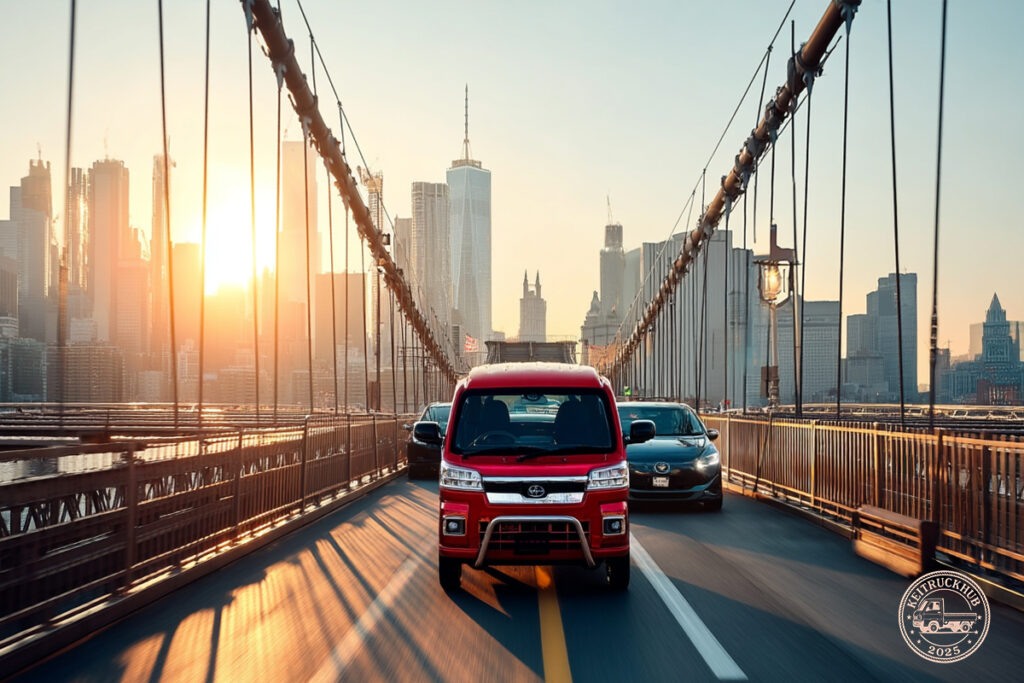
Disaster Resilience: A Rolling Power Station
Electric light trucks offer an unexpected but critical capability: they function as mobile battery storage.
Putting Vehicle-to-Load (V2L) Power to Work
Vehicles equipped with batteries can supply power to homes and evacuation shelters during emergencies. Dual-use demonstrations—utilizing trucks for deliveries and agricultural work during normal times, then as emergency power sources during disasters—have already begun in some regions.
Capacity comparison:
– Typical portable gas generator: 3–5 kW, requires fuel deliveries
– EV light truck battery: 20–40 kWh, can power refrigerators and lights for 2–3 days
Mobility for Narrow Streets
Light trucks can easily navigate mountainous terrain and narrow roads, providing the mobility needed to transport emergency power to “places where it’s truly needed.”
Pilot program highlight: After 2024’s East Coast storms, Virginia deployed electric kei trucks to isolated rural communities, powering medical equipment and communication devices where larger emergency vehicles couldn’t reach.
Challenges: The Real Obstacles Still Remain
Despite their advantages, EV light trucks face significant hurdles.
1. Rising Vehicle Prices
Even as battery costs decline, the initial investment remains substantial, making small businesses hesitant to adopt.
Price comparison (approximate):
– Gas kei truck (used, imported): $8,000–$12,000
– EV kei truck (new): $18,000–$28,000
Higher than a gasoline model by about $10,000 to $15,000
Payback period: 3-5 years depending on usage intensity
Solution: That gap is beginning to narrow thanks to the expansion of federal tax credits of up to $7,500 and additional state-level incentives. Lease programs are also starting to appear, lowering the barrier to entry.

2. Concerns About Cold Weather and Terrain
When used in cold climates or mountainous areas, several factors require verification:
– Reduced driving range due to heating use (20-40% drop below 20°F)
– Motor and battery durability on rough terrain
– Performance during extreme weather events
The bottom line: This isn’t simply “replacing an engine with a motor.” Tuning and design suited to the specific usage environment are essential.
3. Charging Infrastructure Development
The development of charging infrastructure will determine adoption speed.
Urban vs. rural divide:
– Urban distribution centers and municipal garages can relatively easily install 200V outlets and quick chargers
– Small, dispersed warehouses and rural areas often face challenges securing sufficient electrical capacity
Infrastructure bottleneck: Ironically, the “last mile” needs the most infrastructure investment to support last-mile vehicles.
Silver lining: Not being dependent on gas stations is a major advantage. With proper infrastructure development, we could see a future where light trucks operate with “local energy production and consumption” models.
The Sweet Spot: Where EVs Excel Today
Electric light trucks are beginning to be discussed as “viable options” in many workplaces because a large portion of the work that light trucks perform isn’t affected by EV weaknesses.
✅ Where EV light trucks shine:
– Short required driving ranges
– Concentrated nighttime charging at fixed times
– Frequent starts and stops (where electric drive excels)
In other words, the areas where gasoline vehicles have been weak are precisely where electric light trucks can shine the most.
Ideal applications:
– Urban delivery routes (under 60 miles/day, frequent stops)
– Campus/facility shuttles (universities, corporate parks, airports)
– Municipal services (parks maintenance, meter reading, code enforcement)
– Farm operations (short loops, existing solar infrastructure)
obile food and retail businesses (farmers markets, pop-up shops)
❌ Not yet ideal for:
– Long-haul agricultural transport (100+ miles)
– Mountain delivery in extreme cold
– Operations without reliable access to charging
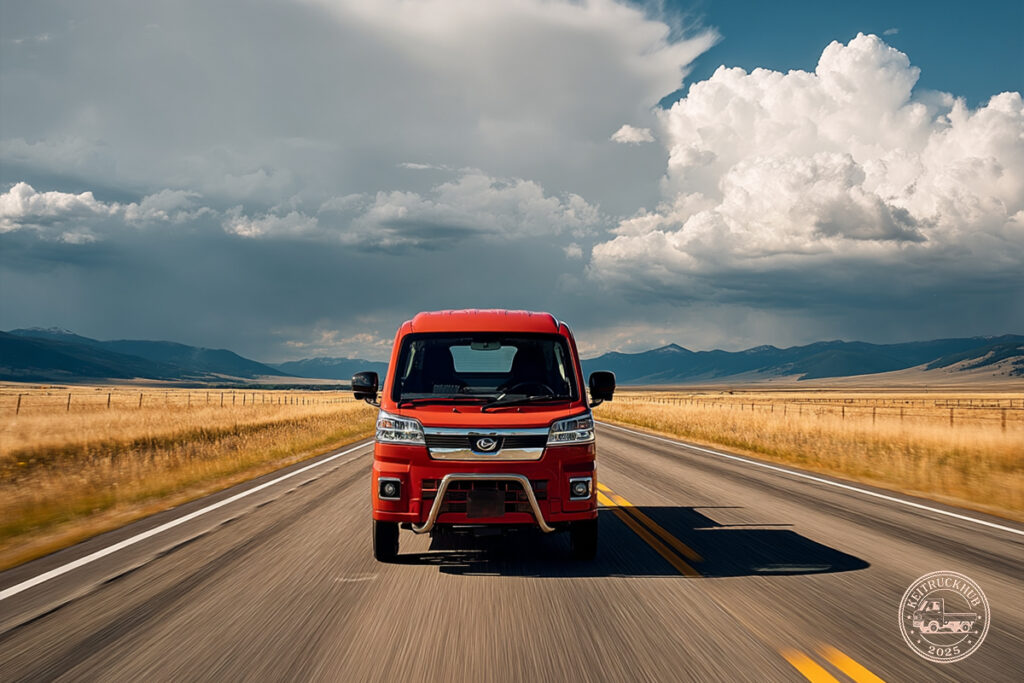
2026: A Transition Year
Around 2026 will mark a transitional period—moving from demonstration projects to actual operations.
Early Adopters Are Leading the Way
Leading local governments and companies are making the first moves, accumulating data. Subsequent operators will follow based on these results. This trend will likely occur across various regions.
Current pioneers:
– Amazon: Testing electric kei trucks for neighborhood package delivery
– Seattle Parks Department: Converted 12 maintenance trucks to electric
– Colorado wine country: Vineyards replacing gas UTVs with EV kei trucks
The Key Question
Can electric light trucks be positioned not as “mere image strategy” but as “realistic tools that balance total cost and environmental impact”?
As these early adopters publish ROI data—cost savings, maintenance intervals, employee satisfaction—the following wave of adoption will accelerate.
Community Transformation: Beyond the Balance Sheet
As electric light trucks become more widespread, the very fabric of local communities will gradually change.
Quieter, Safer Streets
If there are fewer delivery trucks idling in back alleys of shopping districts and residential areas, benefits extend beyond noise and exhaust reduction to improved road safety.
In areas with many children and elderly residents, an increase in small, quiet vehicles carries even greater significance.
Public health impact: Studies link traffic noise to hypertension, sleep disorders, and cardiovascular disease. Quieter vehicles directly contribute to healthier communities.
The multiplier effect: Even replacing just a few vehicles can transform a neighborhood’s atmosphere.
Mobile Branding: Design Products in Motion
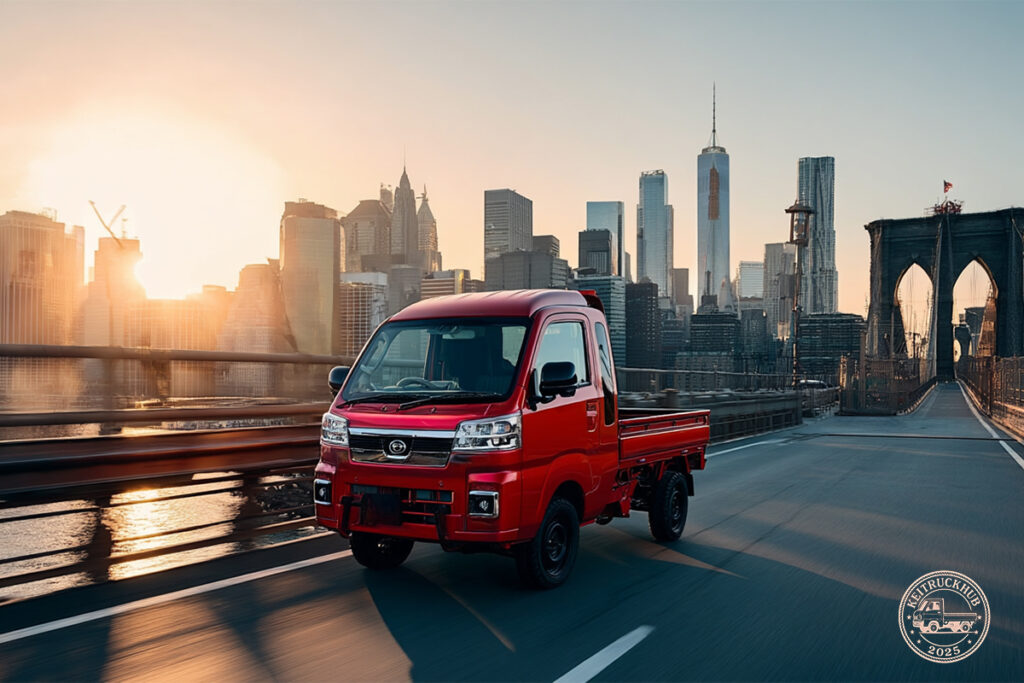
If each EV light truck blends into the city as a “designed product,” positive effects on the urban landscape can be expected.
By decorating trucks with company or municipal colors, or with illustrations by local creators, they transcend being mere work vehicles—they become “moving billboards” expressing the area’s individuality.
Example: Portland’s electric food truck fleet features designs by local muralists, transforming utilitarian vehicles into public art that reinforces the city’s green identity.
Creative challenge: Going forward, an increasingly important creative task will be finding ways to use EV kei trucks as tools that can simultaneously reduce environmental impact and contribute to better urban development.
Finding the Right Balance: Strategic Electrification
Of course, it’s neither necessary nor realistic to convert all light trucks to EVs all at once.
A Practical Approach
In cold regions or worksites involving long-distance travel, gasoline-powered vehicles will likely remain more practical for the time being.
The key: Carefully determine which jobs will benefit from EV light truck introduction to achieve a balance of environmental performance, cost, and workability.
Smart transition strategy:
1. Start with highest-use, shortest-route vehicles
2. Collect real-world data for 12-18 months
3. Expand based on proven ROI
4. Maintain gas vehicles for edge cases
As operators continue finding optimal solutions for each worksite, EV light trucks will undoubtedly quietly increase their presence as symbols of “reasonable electrification.”
A Quiet Revolution: Small Changes, Big Impact
Even a small choice can slightly improve the atmosphere and energy flow of a city.
The compound effect:
– One electric truck saves ~4 tons of CO₂ annually
– Ten trucks eliminate the noise equivalent of a small diesel fleet
– A hundred trucks transform an entire city’s delivery ecosystem
EV light trucks are reliable players in accumulating these “small-scale, high-quality changes.”
Before You Even Notice It
This quiet revolution may become part of our everyday lives before we notice.
Electric light trucks won’t announce themselves with roaring engines or flashy marketing campaigns. Their revolution is quiet by design—literally.
But make no mistake: These humble vehicles are reshaping:
– Urban logistics (cleaner, quieter cities)
– Agricultural operations (lower costs, sustainability marketing)
– Disaster response (mobile power in emergencies)
– Community character (streets that feel safer and sound better)
Conclusion: The Necessary Protagonists
Electric light trucks aren’t glamorous like Teslas or polarizing like Cybertrucks. They’re workhorses becoming smarter, cleaner, and more economical.
For businesses, they’re cutting costs while improving brand perception. For cities, they’re reducing pollution and noise complaints. For farmers, they’re leveraging existing solar infrastructure. For communities, they’re proving that sustainability and practicality aren’t opposing forces.
The “last mile” has long been the most expensive, polluting, and logistically complex part of delivery. Electric kei trucks are solving it—not with revolutionary technology, but with appropriate technology applied intelligently.
This silent revolution won’t dominate headlines. But it will make cities livable, businesses profitable, and streets safer.
The future is already here. You just can’t hear it approaching.
🛻 Recommended Gear for Kei Truck Owners
Hand-picked products available on Amazon.
Nilight 18W LED Spot Off-Road Lights (2-Pack)
Super bright 1260LM - perfect for night trails and farm use.
View on Amazon →2-Inch Lift Kit - Suzuki Carry / Daihatsu Hijet
Compatible with DD51T, DB51T, S81P, S83P, S110P, S210P.
View on Amazon →Heavy Duty Multi-Use Cargo Net for Truck Bed
Stretchable bungee net - fits kei truck beds, ATVs, UTVs.
View on Amazon →* As an Amazon Associate, KeiTruckHub earns from qualifying purchases.