Modern cities face growing challenges: traffic congestion, limited parking, and constant noise pollution. Large vehicles often make these problems worse, while smaller, more efficient options remain overlooked.
Kei trucks—Japan’s iconic mini trucks—offer a surprising solution. Their compact size, fuel efficiency, and practical design make them remarkably well-suited to urban life.
In this article, we’ll explore why kei trucks aren’t just useful in rural areas, but may actually be the ideal vehicles for modern cities.
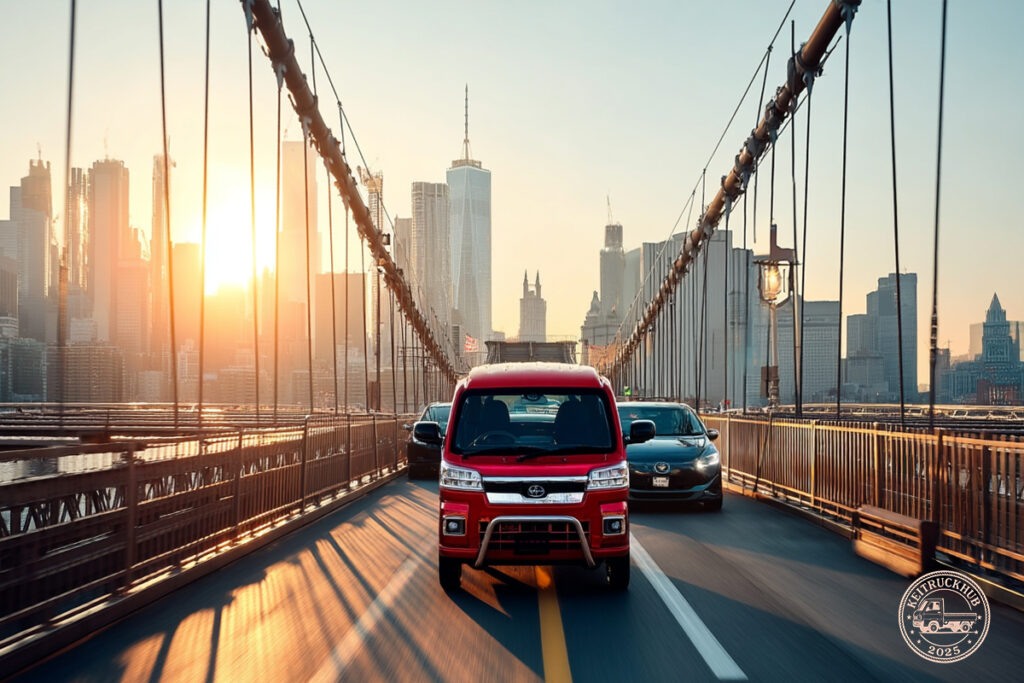
Why City Roads Favor Smaller Vehicles
Urban roads are often built with “just enough” space. Lanes are narrow, shoulders are tight, and sidewalks must share room with bicycles and pedestrians.
When large trucks enter these environments, the streets feel cramped almost instantly. The gap between vehicles and pedestrians shrinks, creating both stress and safety risks.
Kei trucks ease this pressure simply because of their size. At roughly 11 feet long and 5 feet wide, they navigate tight streets with far more comfort than a full-size pickup.
The benefits become especially clear in delivery scenarios. Instead of relying on one large truck, businesses can use several smaller vehicles to gain:
- Reduced traffic congestion
- Easier parking and loading
- Faster unloading times
- Less disruption to surrounding traffic
This approach keeps city traffic flowing while still moving the same volume of goods.
Solving the Urban Parking Crisis
Parking is one of the biggest headaches in any major city. Land is limited, lot prices keep rising, and street parking is often impossible to find.
Kei trucks help solve this problem in several ways:
- They lower parking costs because they require less space
- Two kei trucks can sometimes fit in the space of one full-size truck
- They make temporary or short-term parking far more practical
- They reduce illegal parking in tight commercial districts
For small businesses, delivery drivers, and even individual owners, this size advantage translates directly into time and money saved.
Why Smaller Vehicles Simply Work Better in Cities
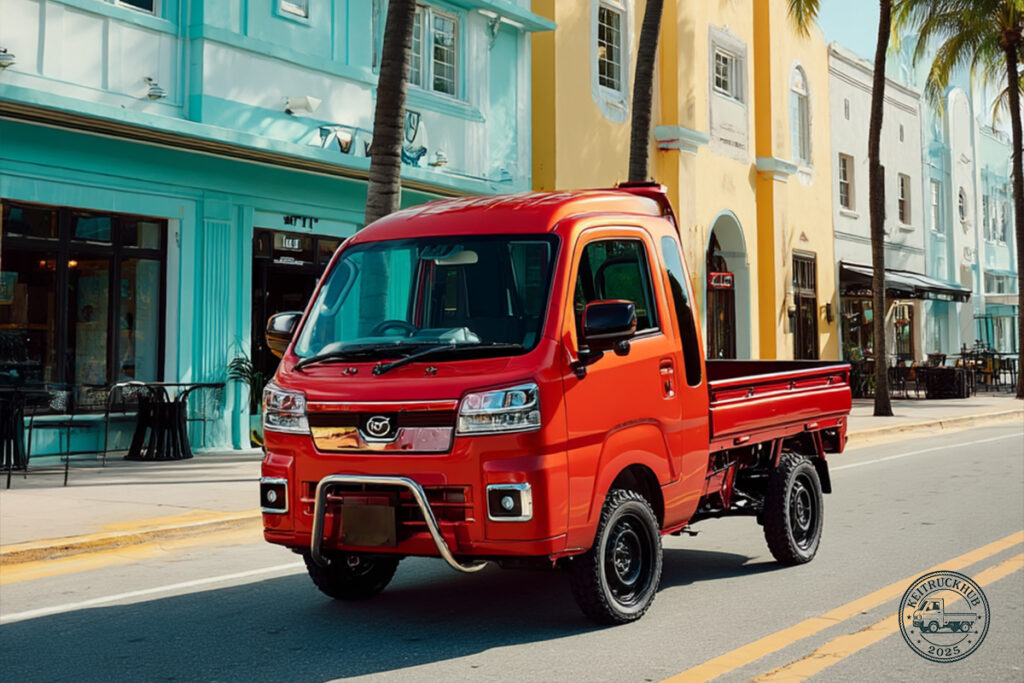
In crowded urban environments, vehicle size directly affects efficiency, safety, and daily usability.
Smaller vehicles naturally:
- Reduce stress on narrow roads
- Improve driver visibility
- Make better use of limited curb space
- Lower the risk of minor accidents in tight areas
Rather than forcing cities to adapt to oversized vehicles, choosing the right-sized vehicle is the more practical—and more sustainable—solution.
Quiet, Low-Impact, and City-Friendly
Noise pollution is a real quality-of-life issue in dense cities. Kei trucks help here, too.
Because their engines are smaller (typically 660cc), they run at lower RPMs and produce far less noise than large diesel trucks. That matters in cities where deliveries, construction, and street activity continue around the clock.
Electric kei trucks take this even further. With near-silent operation, they’re ideal for:
- Early-morning grocery deliveries
- Late-night restaurant restocking
- Hospital and residential-area logistics
- Hotel and event-venue service routes
Suzuki has already begun real-world testing of electric kei trucks on farms, and similar models are being explored for urban delivery use.
→ Suzuki Tests Electric Kei Truck on Farms—Real-World Results
Designed for Tight Urban Spaces
From an urban-design perspective, vehicle size plays a key role in safety and comfort.
Smaller vehicles help:
- Reduce blind spots around intersections
- Improve pedestrian visibility
- Create safer crosswalks and turning points
- Lower the impact in case of a low-speed collision
Modern cities are also made up of flexible, multi-use spaces. For example:
- Parking lots that turn into weekend markets
- Streets that change function depending on the time of day
- Pop-up commercial zones that appear and disappear
Kei trucks adapt easily to these dynamic environments. Their small footprint allows them to load, unload, and reposition with minimal disruption.
A Smarter Approach to Urban Logistics
From an environmental and operational standpoint, using multiple small vehicles instead of one large truck can dramatically improve efficiency.
This approach can:
- Reduce idle time at loading zones
- Shorten driving distances per delivery
- Lower overall fuel consumption
- Cut CO₂ emissions per package delivered
- Improve driver working conditions
Choosing between one large vehicle and several small ones isn’t just a logistics decision—it’s a balance between efficiency, cost, and environmental impact.
In many cities, the math increasingly favors smaller vehicles.
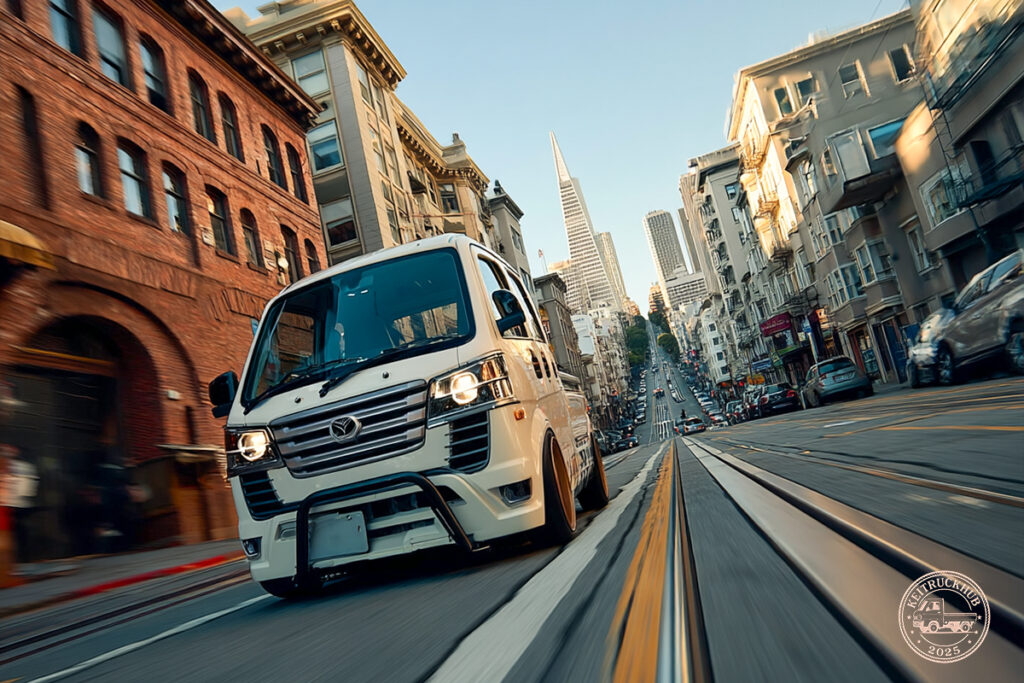
Smart Rules Make Kei Trucks Even More Effective
To unlock the full potential of kei trucks in cities, clear regulations and thoughtful urban planning are essential.
Cities need to consider:
- Designated loading and unloading zones
- Time-based delivery rules (morning vs. evening windows)
- Clear parking and stopping regulations
- Curb-space management for small commercial vehicles
When designed properly, kei trucks can reduce congestion and streamline urban logistics. Without clear rules, however, even small vehicles can contribute to illegal parking and inefficiency.
A great example is a shared delivery system. Instead of each business operating its own large truck, multiple shops can cooperate and share smaller vehicles. This reduces the number of large vehicles entering the city center and makes deliveries faster overall.
Think of a single kei truck as a “capillary” of the logistics system—efficiently moving goods across small areas that larger trucks simply can’t serve well.
A New Lifestyle for Individuals, Too
Kei trucks aren’t only useful for businesses. They also encourage a different lifestyle for individual owners.
By choosing a smaller vehicle, daily life often becomes simpler:
- Easier decisions about what to buy and carry
- Fewer oversized purchases that require large storage
- More flexibility in tight neighborhoods and apartment garages
- Lower fuel, insurance, and maintenance costs
This shift helps people rethink how much space and mobility they actually need—and many find that “less” really is “more.”
Why People Enjoy Customizing Kei Trucks
The Future of People-Friendly Cities
Looking ahead, kei trucks may play a key role in shaping more people-friendly cities.
Rather than dominating urban space, they fit into it—supporting safer streets, more compact neighborhoods, and more walkable communities. As electric and hybrid kei trucks become more common, their role in low-emission urban logistics will only grow.
For cities facing congestion, pollution, and rising parking costs, the kei truck isn’t just a quirky import from Japan. It may be one of the smartest urban vehicles available today.
Frequently Asked Questions
Q1. Are kei trucks legal to drive in U.S. cities? It depends on the state. Some states allow kei trucks on city streets with speed restrictions (typically under 55 mph), while others limit them to private property or specific roads. Always check your state and city regulations.
How to Make a Kei Truck Street Legal in the USA
Q2. Can kei trucks really replace larger delivery vehicles in cities? For last-mile delivery and small-business logistics, yes. They’re not designed to replace large freight trucks, but they excel at short-distance, high-frequency urban deliveries.
Q3. How fuel-efficient are kei trucks in city driving? Most kei trucks achieve 40–50 MPG, even in stop-and-go city traffic. This is significantly better than full-size pickups, which typically average 18–22 MPG.
Q4. Are electric kei trucks available? Yes. Japanese manufacturers including Suzuki and Mitsubishi are actively developing and testing electric kei truck models, with select versions already available in Japan.
Q5. What size load can a kei truck carry in a city? Most kei trucks carry up to 350 kg (about 770 lbs)—enough for typical small-business deliveries, restaurant supplies, retail restocking, and most residential use cases.
Next Steps
Want to learn more about kei trucks and how they fit into modern life? Explore these guides:
- Why America Fell in Love with Kei Trucks: 7 Reasons
- Are Kei Trucks Eco-Friendly? The Environmental Case
- Suzuki Tests Electric Kei Truck on Farms—Real-World Results
- How Kei Trucks Are Imported to the U.S.
- Top 8 Kei Trucks in 2025: Best Mini Trucks from Japan
Disclaimer
This article is for general informational purposes only. Traffic, parking, and delivery regulations vary by city, state, and country. Always verify local laws and consult with your city’s department of transportation or DMV before using a kei truck for commercial or urban delivery purposes.
Sources
- U.S. Environmental Protection Agency (EPA) — Vehicle Emissions Data
- Japan Mini Vehicles Association (JMVA) — Kei Truck Specifications
- NBC News (2024) — Kei Trucks Gaining Popularity in the U.S.
- CNN Business (2024) — The Tiny Truck Movement